




Introduction
The American automotive industry is going through a major technological transformation. For more than a century, gasoline-powered vehicles have dominated roads across the United States. Today, electric vehicles (EVs), advanced battery systems, smart charging networks, and software-powered cars are changing the way manufacturers design and build transportation.
Electric vehicles are no longer simply an alternative to traditional cars. They represent a broader shift toward connected mobility, energy storage, advanced computing, and new approaches to vehicle ownership.
In 2026, the US electric vehicle industry presents a mixed picture. Battery technology continues to improve, charging infrastructure is expanding, and automakers are exploring more affordable electric platforms. At the same time, changes in government incentives, vehicle prices, consumer preferences, and company strategies are influencing the pace of adoption.
According to the US Energy Information Administration (EIA), battery-electric vehicles accounted for approximately 6% of new light-duty vehicle sales in the United States during the first half of 2026, down from 7% during the same period in 2025. Hybrid vehicles gained market share as the market adjusted to changing economic and policy conditions. The federal clean-vehicle tax credits expired on September 30, 2025, contributing to a more challenging environment for EV sales.
Despite these challenges, innovation across batteries, charging hardware, vehicle software, and manufacturing continues.
This article explores the latest developments in electric vehicle technology in the USA in 2026, the companies shaping the market, the challenges consumers face, and the trends that may influence the future of American transportation.
What Is Electric Vehicle Technology?
Electric vehicle technology includes the systems that allow vehicles to operate using electricity rather than relying entirely on conventional gasoline or diesel engines.
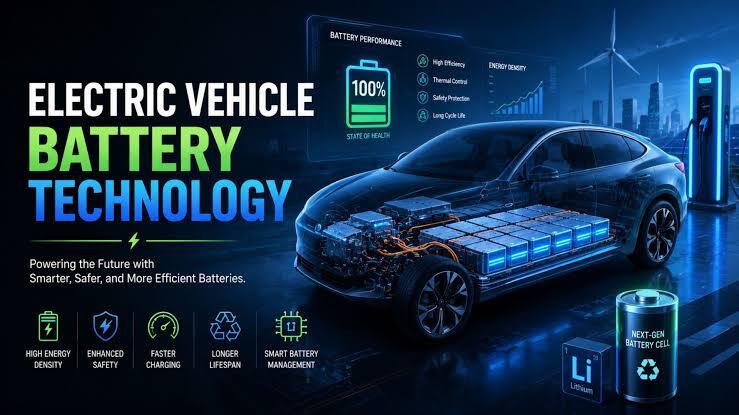
A typical battery-electric vehicle uses an electric motor powered by a rechargeable battery pack. The battery stores energy, while electronic controllers regulate how electricity flows through the vehicle’s powertrain.
Modern EVs also use sophisticated software to manage charging, battery temperature, energy consumption, safety systems, and driver information.
The main components include:
- Battery pack: Stores the electrical energy needed to power the vehicle.
- Electric motor: Converts electrical energy into mechanical motion.
- Power electronics: Control the flow of electricity between the battery, motor, and other systems.
- Battery management system: Monitors battery conditions and helps protect performance and safety.
- Charging system: Allows energy to enter the battery from an external power source.
- Regenerative braking: Recovers some energy during deceleration and returns it to the battery.
- Vehicle software: Manages features such as charging schedules, navigation, energy estimates, and selected driver-assistance functions.
Not every electric vehicle uses the same design. Battery-electric vehicles run entirely on electricity stored in a rechargeable battery, while plug-in hybrid vehicles combine an electric powertrain with an internal combustion engine.
Conventional hybrids also use electric motors and batteries, but they generally cannot recharge their batteries by plugging into an external power source.
Understanding these differences helps consumers compare vehicles and choose a technology that suits their driving habits.
Why Electric Vehicle Technology Matters in the USA in 2026
The United States has a large automotive market, extensive highway networks, major manufacturing facilities, and significant demand for personal transportation.
Electric vehicle technology matters because it connects several important industries, including automotive manufacturing, semiconductors, battery production, electricity generation, software development, and charging infrastructure.
1. Reducing Dependence on Gasoline
Electric vehicles use electricity instead of gasoline to power their electric motors.
For drivers who charge mainly at home, electricity can offer convenient and potentially lower operating costs than gasoline, depending on local electricity rates, vehicle efficiency, fuel prices, and charging habits.
EVs also have fewer routine powertrain maintenance requirements than conventional gasoline vehicles because they do not require engine oil changes and have fewer engine-related components.
However, electric vehicles are not maintenance-free. Tires, brakes, suspension components, cabin filters, cooling systems, and other parts still require attention.
Battery condition and replacement costs can also influence long-term ownership expenses.
2. Encouraging Automotive Innovation
EV development has encouraged automakers to rethink traditional vehicle architecture.
Electric powertrains can offer rapid acceleration, precise motor control, and flexible packaging options. Manufacturers can also integrate battery monitoring, navigation, and vehicle software into connected systems.
These capabilities create opportunities for new vehicle designs and improved driver experiences.
The challenge is making these technologies affordable, reliable, and practical for a wide range of American drivers.
3. Connecting Transportation With the Energy Sector
Electric vehicles are becoming more closely connected to the electricity system.
As more drivers charge their vehicles at home, workplaces, and public charging stations, utilities must understand when and where charging demand occurs.
Smart charging software can help drivers schedule charging during suitable periods, potentially reducing pressure on local electricity infrastructure.
Some vehicles and charging systems also support bidirectional power transfer, allowing compatible equipment to send electricity from a vehicle battery to a home or the grid.
These features require appropriate vehicle hardware, chargers, electrical installations, and utility arrangements. They are not available on every EV.
Major American Electric Vehicle Companies to Watch
Several US-based companies are competing in the EV market through vehicle design, battery technology, charging networks, and software.
Tesla
Tesla remains one of the most recognizable names in electric vehicle technology.
The company develops battery-electric cars, charging equipment, energy storage systems, and software designed to support its vehicles.
Its Supercharger network is an important part of the EV ownership experience, particularly for drivers who regularly travel long distances.
Tesla has also helped popularize over-the-air software updates, which allow supported vehicle features to be improved without requiring a traditional service visit for every update.
However, vehicle capabilities vary by model, hardware, software version, and region. Driver-assistance features should not be treated as a replacement for an attentive driver.
Tesla’s position in the US market is also influenced by pricing, competition, product availability, and changing consumer preferences.
Ford Motor Company
Ford is adapting its product strategy as it responds to changing demand for electric and hybrid vehicles.
The company has introduced electric vehicles such as the Mustang Mach-E and F-150 Lightning, while continuing to invest in vehicle software, battery systems, and manufacturing technology.
Ford is also exploring new vehicle platforms intended to make future electric models more affordable.
A key challenge for traditional automakers is balancing the costs of developing electric vehicles with customer expectations for price, range, reliability, and utility.
Pickup trucks present particular engineering challenges because buyers often expect strong towing capability, long-distance performance, and practical cargo capacity.
Battery performance under heavy loads and cold weather remains important when evaluating electric pickups.
General Motors
General Motors has invested in electric vehicle platforms, battery technology, and manufacturing capabilities across several brands.
The company’s EV portfolio includes vehicles under brands such as Chevrolet and Cadillac.
Its engineering work focuses on delivering different vehicle sizes and price points while improving charging capability, battery performance, and software integration.
Like other automakers, GM must manage manufacturing costs, consumer demand, and the complexity of transitioning existing production facilities toward electrification.
Rivian
Rivian is an American electric vehicle company known for electric pickups, SUVs, and commercial vehicle technology.
Its products are aimed at consumers and businesses interested in electric transportation with specific performance, utility, and design requirements.
The company also develops software and vehicle systems that support connected features and vehicle management.
As an EV manufacturer, Rivian must manage production efficiency, supplier costs, manufacturing capacity, and the economics of developing new models.
Lucid Motors
Lucid Motors focuses on premium electric vehicles and advanced powertrain efficiency.
Vehicle efficiency matters because a more efficient powertrain can travel farther using the same amount of stored energy, potentially reducing battery requirements for a given driving range.
Premium EV development also involves challenges related to pricing, production scale, service networks, and competition.
The company’s progress illustrates the difference between demonstrating advanced technology and manufacturing vehicles profitably at scale.
Battery Technology: The Foundation of Electric Mobility
Batteries are one of the most important parts of an electric vehicle.
The battery affects driving range, charging speed, vehicle weight, cost, safety, and long-term performance. Improvements in battery technology can therefore influence nearly every part of the EV ownership experience.
Lithium-Ion Batteries
Most modern battery-electric vehicles use lithium-ion battery technology.
These batteries store energy through electrochemical reactions and can provide the energy density required for passenger transportation.
Different battery chemistries offer different combinations of cost, energy density, durability, thermal behavior, and material requirements.
Manufacturers select battery designs according to vehicle type, price target, performance expectations, and supply availability.
Lithium Iron Phosphate Batteries
Lithium iron phosphate, commonly called LFP, is one of the battery chemistries used in electric vehicles.
LFP batteries avoid nickel and cobalt in their cathodes and can offer cost and durability advantages in suitable applications.
Their energy density is generally lower than that of some nickel-rich alternatives, so a vehicle may require a larger or heavier battery to achieve a comparable range.
However, LFP can be attractive for affordable EVs, fleet vehicles, and other applications where cost and durability are important considerations.
No single battery chemistry is ideal for every vehicle.
Solid-State Batteries
Solid-state batteries are an area of ongoing research and development.
They use a solid electrolyte rather than the conventional liquid or gel electrolyte used in many lithium-ion designs.
Researchers hope that certain solid-state designs could offer improvements in energy density, safety, charging performance, or packaging.
However, scaling these batteries into mass production is difficult. Manufacturers must address material stability, manufacturing yields, durability, cost, and performance across different temperatures.
In 2026, solid-state technology should be understood as a developing field rather than a universal replacement for existing EV batteries.
Battery Recycling and Second-Life Applications
Battery recycling is becoming increasingly important as the electric vehicle industry grows.
Used batteries may contain valuable materials that can potentially be recovered and reused in new products.
Recycling can help reduce waste and diversify material supplies, although the environmental and economic benefits depend on collection systems, chemistry, transportation, and processing methods.
Some batteries that no longer meet the range or power requirements of a vehicle may still be suitable for stationary energy storage.
These second-life applications require testing and appropriate controls because battery condition can vary significantly.
EV Charging Infrastructure in the United States
Charging infrastructure plays a major role in the practical adoption of electric vehicles.
A driver may be comfortable owning an EV if home charging is convenient, but people who live in apartments or regularly travel long distances may depend more heavily on public charging stations.
The United States continues to expand its charging network, even as EV sales face pressure.
The International Energy Agency reported in its Global EV Outlook 2026 that the number of public fast-charging points in the United States increased by approximately 30% in 2025, reaching nearly 70,000. Public slower charging points also expanded during that year. Source: International Energy Agency.
This expansion matters because charging access is a major factor in consumer confidence.
Level 1 Charging
Level 1 charging uses a standard household electrical outlet in the United States.
It is relatively convenient because many homes already have compatible outlets, but charging is slow.
This option may work for drivers who travel relatively short distances and can leave their vehicles plugged in for long periods.
Level 2 Charging
Level 2 charging uses higher-voltage equipment and can recharge a vehicle more quickly than Level 1 charging.
It is commonly installed in homes, workplaces, apartment complexes, hotels, and public parking areas.
For drivers with access to a dedicated home charger, overnight charging can make daily EV ownership convenient.
Installation may require an electrical assessment, suitable wiring, permits, and possible upgrades to the home’s electrical service.
DC Fast Charging
DC fast charging supplies direct current to the vehicle battery and can provide much higher charging power than ordinary AC charging.
These stations are particularly useful on highways and major travel routes.
Actual charging speed depends on the vehicle, battery temperature, state of charge, charger capacity, and other conditions.
Charging is often fastest when a compatible battery is at a lower state of charge and slows as the battery approaches full capacity.
This is one reason charging stops cannot always be calculated simply by dividing battery capacity by the charger’s maximum power.
Tesla’s Charging Network and Industry Compatibility
Charging compatibility has become an important consideration in the US market.
Automakers and charging providers are working toward broader access to charging networks, including adoption of the North American Charging Standard, or NACS, in supported vehicles and charging equipment.
Compatibility can depend on the vehicle model, production date, adapter, software, and charging-network arrangements.
Before purchasing an EV, drivers should verify which connectors their chosen vehicle supports and which networks they can access.
Public Charging Reliability
The number of charging stations is important, but reliability matters just as much.
A station that is unavailable, damaged, occupied, or unable to communicate with a vehicle can disrupt a journey.
Charging providers are therefore investing in equipment maintenance, network monitoring, payment systems, and customer support.
Public charging networks also need to serve different locations, including cities, apartment communities, shopping centers, and rural highways.
How Smart Software Is Changing Electric Vehicles
Electric vehicles are increasingly software-defined machines.
Their performance depends not only on batteries and motors but also on software that coordinates vehicle systems and helps drivers manage energy use.
Battery Management Software
Battery management systems monitor battery voltage, temperature, charging conditions, and other parameters.
These systems help protect the battery and keep its operation within suitable limits.
They can also estimate remaining charge and communicate information to the vehicle’s range display.
Range estimates remain predictions rather than guarantees. Driving speed, outside temperature, terrain, heating, air conditioning, and cargo weight can all affect energy consumption.
Over-the-Air Updates
Many modern EVs support software updates delivered wirelessly.
Depending on the vehicle, updates may improve navigation, charging behavior, infotainment, selected safety features, or system performance.
This can allow manufacturers to address some software issues without requiring a physical service visit.
However, over-the-air updates cannot fix every mechanical or hardware problem. Some repairs still require qualified technicians.
AI and Driver-Assistance Systems
AI and advanced sensors are helping automakers develop driver-assistance features such as adaptive cruise control, lane-centering support, parking assistance, and collision warnings.
These features vary considerably between vehicles.
A system marketed as driver assistance should not be assumed to be fully autonomous. Drivers must follow the vehicle manufacturer’s instructions and remain responsible for operating the vehicle unless a properly authorized system explicitly permits otherwise.
As vehicle software becomes more connected, cybersecurity and data privacy also become important considerations.
The Economic Benefits and Costs of Owning an EV
Electric vehicles can provide financial benefits, but the outcome depends on the complete cost of ownership.
Potential Savings on Fuel
Electricity can cost less per mile than gasoline in some regions.
For example, a driver who charges at home during lower-cost electricity periods may spend less on energy than a driver using gasoline.
However, savings depend on the local electricity rate, vehicle efficiency, gasoline prices, driving distance, and how much public fast charging is used.
Public charging can cost considerably more than home charging in some markets.
Maintenance Costs
EVs generally have fewer routine powertrain maintenance requirements because they do not have conventional engines, engine oil, or traditional exhaust systems.
Regenerative braking can also reduce wear on friction brakes in certain driving conditions.
Nevertheless, EVs still require tire maintenance, inspections, cabin filters, cooling-system servicing where applicable, and other routine work.
Tire wear can be influenced by vehicle weight, acceleration, tire design, and driving habits.
Purchase Price and Depreciation
Purchase price remains a major consideration.
Some EVs carry a higher initial price than comparable gasoline vehicles, although prices vary by model and promotions.
Resale values also depend on battery condition, new-vehicle pricing, software support, warranty coverage, demand, and changes in technology.
Consumers should compare the purchase price, financing, insurance, charging costs, maintenance, depreciation, and expected ownership period before making a decision.
Federal Incentives and Policy Changes
Government policy can influence EV affordability.
The federal clean-vehicle tax credits that previously reduced the purchase or lease cost of qualifying vehicles expired on September 30, 2025. State and local programs may differ, and eligibility requirements can change.
Consumers should verify current federal, state, utility, and local incentives before assuming that a rebate or tax credit is available.
Policy uncertainty is one reason automakers and charging companies are paying close attention to pricing and market demand in 2026.
Challenges Facing the US Electric Vehicle Industry
Despite improvements in technology, the EV market faces several obstacles.
1. Range Anxiety
Some consumers worry about running out of battery power before reaching a charging station.
This concern is more significant for people who regularly travel long distances, live in areas with limited public charging, or cannot charge at home.
Better navigation tools, reliable charging networks, and realistic range estimates can help reduce this concern.
2. Charging Time
Charging generally takes longer than refueling a gasoline vehicle.
Home charging can reduce the inconvenience because drivers can recharge while sleeping or working, but public charging still requires planning during longer journeys.
Battery and charger improvements may reduce charging times, although vehicle compatibility and battery conditions remain important.
3. Cold Weather Performance
Cold temperatures can reduce battery efficiency and slow charging.
Heating the passenger cabin also consumes energy, while a cold battery may need to warm up before accepting high charging power.
Many EVs use battery thermal management and preconditioning to reduce these effects.
Drivers in colder states should consider winter range, access to charging, and the vehicle’s heating system when comparing models.
4. Battery Material Supply Chains
Battery manufacturing depends on materials such as lithium, graphite, nickel, and other processed inputs, depending on the battery chemistry.
Mining, refining, processing, and battery production are geographically distributed.
Supply disruptions, price fluctuations, trade restrictions, and manufacturing bottlenecks can affect battery costs.
Companies are working to diversify suppliers, improve recycling, and develop alternative chemistries.
5. Charging Access for Apartment Residents
People who own detached homes may be able to install a charger more easily than people living in apartments or condominiums.
Multifamily properties may need electrical upgrades, parking changes, billing systems, and agreements between landlords, tenants, and utilities.
Expanding access to workplace and neighborhood charging could help make EV ownership more practical for people without private parking.
6. Uneven Consumer Demand
The US EV market is not growing at the same rate in every region or vehicle category.
Consumer preferences vary according to vehicle prices, driving habits, charging availability, climate, local electricity costs, and policy.
Automakers must therefore balance long-term technology investments with current demand.
The Future of Electric Vehicle Technology in the USA
Several developments could influence the American EV industry over the next five to ten years.
More affordable electric vehicles: Manufacturers are working on platforms and production methods intended to lower costs and make EVs accessible to a broader range of buyers.
Improved batteries: Research into LFP, high-nickel lithium-ion, sodium-ion, and solid-state designs may create more choices for different applications.
Faster charging: Improvements in battery chemistry, thermal management, charging equipment, and power electronics could reduce charging times in compatible vehicles.
Better charging networks: Providers are likely to continue improving station reliability, payment options, coverage, and compatibility.
Software-defined vehicles: Connected systems and over-the-air updates may allow manufacturers to improve selected features throughout a vehicle’s service life.
Vehicle-to-home technology: Compatible vehicles and bidirectional chargers may provide backup electricity to homes during certain outages, subject to installation and utility requirements.
Battery recycling: Improved collection and material recovery may support more circular battery supply chains.
Hybrid and electric powertrain choices: Automakers may continue offering a mixture of battery-electric, plug-in hybrid, and conventional hybrid vehicles to meet different customer needs.
The pace of these changes will depend on consumer demand, manufacturing economics, electricity infrastructure, regulation, and technical progress.
Career Opportunities in the American EV Industry
Electric vehicle development creates opportunities across several industries.
Potential career paths include:
- Battery research engineer.
- Electrical and electronics engineer.
- Automotive software developer.
- EV charging infrastructure specialist.
- Power electronics engineer.
- Battery manufacturing technician.
- Vehicle cybersecurity analyst.
- Automotive service technician.
- Manufacturing process engineer.
- Charging network operations specialist.
- Energy storage engineer.
- Electric power systems analyst.
Some roles require university degrees, while others can be reached through vocational training, apprenticeships, technical certificates, or manufacturer programs.
Students interested in EV careers can benefit from learning electronics, mathematics, programming, battery fundamentals, electrical safety, and vehicle diagnostics.
As EVs become more connected to electricity networks, skills in software, power systems, data analysis, and cybersecurity may also become increasingly valuable.
Conclusion
Electric vehicle technology in the USA in 2026 is developing in a market shaped by innovation, competition, policy changes, and changing consumer expectations.
Battery improvements, expanding charging infrastructure, connected vehicle software, and new manufacturing strategies are helping automakers refine their electric offerings. At the same time, purchase costs, charging access, cold-weather performance, and uneven demand remain important challenges.
The market’s future will not depend on a single battery breakthrough or one automaker. It will require progress across vehicles, electricity infrastructure, manufacturing, software, charging reliability, and customer experience.
For American consumers, the best electric vehicle is the one that meets their driving needs, budget, charging access, and long-term ownership expectations.
For businesses and technology professionals, the EV industry remains an important area to watch because it brings together automotive engineering, battery science, semiconductors, software, and energy infrastructure.
As these fields continue to develop, electric mobility is likely to remain a significant part of the broader conversation about the future of transportation in the United States.
Frequently Asked Questions (FAQs)
1. What is electric vehicle technology?
Electric vehicle technology includes rechargeable batteries, electric motors, power electronics, charging systems, battery management software, and other components that enable vehicles to operate using electricity.
2. Is the US electric vehicle market growing in 2026?
The market is experiencing mixed conditions. Battery-electric vehicle sales declined during the first half of 2026 compared with the same period in 2025, according to the EIA, while charging infrastructure continued expanding. Future adoption will depend on pricing, policy, technology, and consumer demand.
3. Which companies are leading the American EV industry?
Major US-based companies include Tesla, Ford, General Motors, Rivian, and Lucid Motors. Other important participants develop batteries, charging equipment, power electronics, and vehicle software.
4. How long does it take to charge an electric vehicle?
Charging time depends on battery size, charging power, temperature, and the vehicle’s charging limits. A household outlet may require many hours, a Level 2 charger is generally faster, and a compatible DC fast charger can add substantial range in a shorter stop.
5. Are electric vehicles cheaper to maintain?
EVs often require less routine powertrain maintenance than gasoline vehicles. However, total maintenance costs depend on the model, tires, repairs, battery condition, and local service costs.
6. What is the difference between an EV and a hybrid?
A battery-electric vehicle runs on electricity stored in a rechargeable battery and has no gasoline engine. A conventional hybrid combines an engine with electric assistance but generally cannot plug in to charge. A plug-in hybrid has a rechargeable battery that can be charged externally and can drive electrically for a limited distance.
7. Do electric vehicles work in cold weather?
Yes, EVs can operate in cold weather, but low temperatures may reduce range and slow charging. Battery preconditioning and thermal management can help, although winter performance varies by vehicle and conditions.
8. What is the future of electric vehicles in the USA?
Potential developments include more affordable models, improved batteries, faster charging, better charging coverage, connected vehicle software, and bidirectional charging. Adoption will depend on cost, infrastructure, consumer preferences, and policy.


