


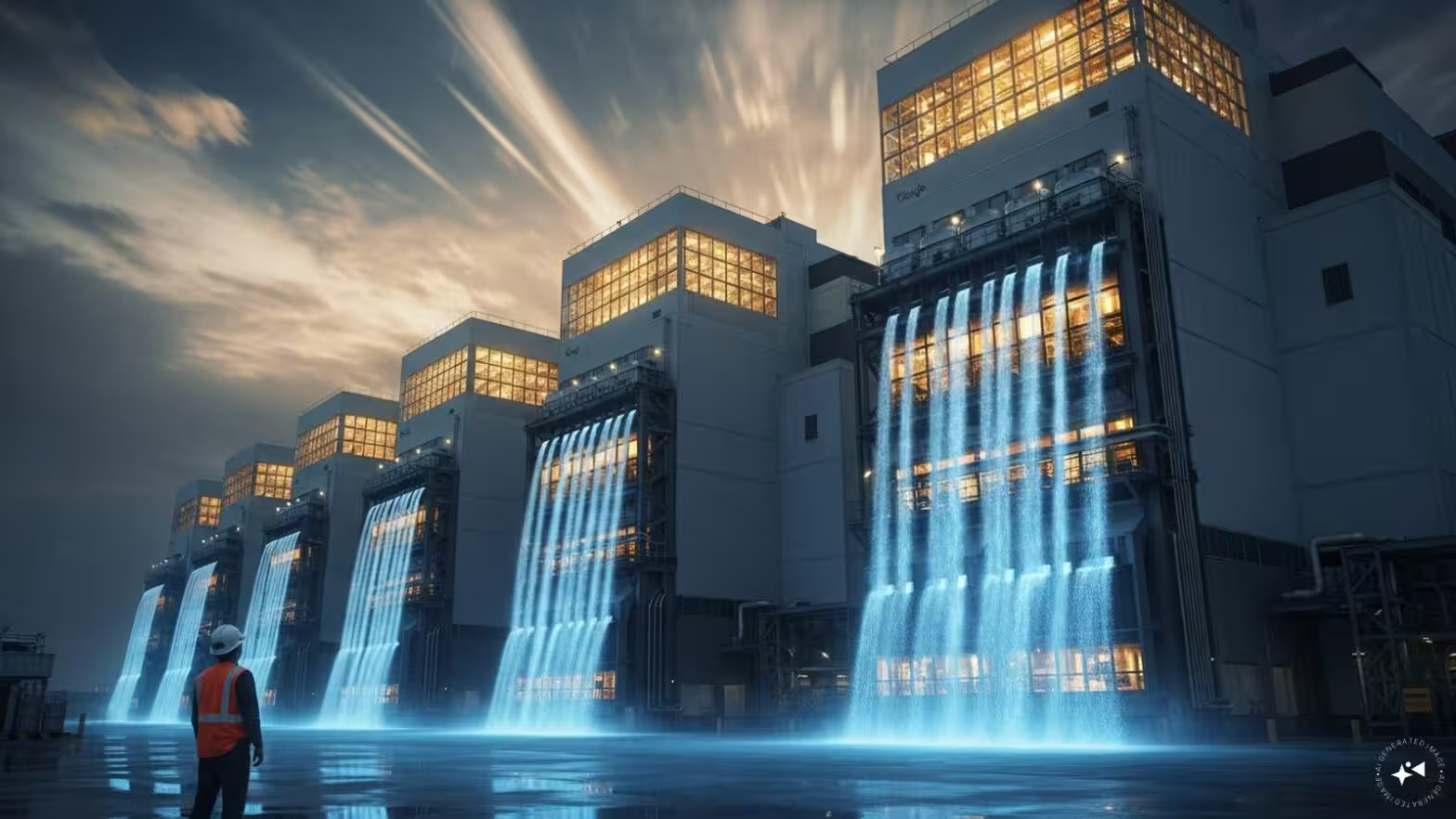


Water treatment technology in the USA in 2026 is becoming an increasingly important part of the country’s infrastructure, industrial development, and environmental planning. As demand for reliable water supplies grows, American cities, manufacturers, energy companies, and technology businesses are exploring smarter ways to treat wastewater, recycle used water, and protect freshwater resources.
Water is essential for nearly every part of modern life. Homes need it for drinking and sanitation, farms depend on it for irrigation, factories use it in production, and data centers require it for certain cooling systems. However, water availability varies considerably across the United States. Some regions face recurring drought conditions, while others must upgrade aging water infrastructure or manage growing industrial demand.
In response, water treatment and water reuse technologies are receiving renewed attention. Advanced filtration, reverse osmosis, automated monitoring, artificial intelligence, and water recovery systems are helping organizations investigate ways to use water more efficiently.
One important development came on April 16, 2026, when the U.S. Environmental Protection Agency (EPA) announced its Water Reuse Action Plan 2.0. The initiative emphasizes opportunities to expand water reuse across industry, technology, energy production, and other sectors while supporting public health and protecting water resources.
This article explores the major water treatment technologies shaping the United States in 2026, their practical applications, the companies and organizations contributing to innovation, and the challenges that could influence the industry’s future.
1. Why Water Treatment Technology Matters in the United States
Water management is no longer simply about supplying water to households and removing wastewater after use. It increasingly involves protecting existing supplies, improving treatment efficiency, recovering useful resources, and preparing infrastructure for future demand.
Several factors are driving interest in modern water treatment systems.
Growing demand from technology and manufacturing
The expansion of artificial intelligence, cloud computing, semiconductor manufacturing, and advanced industrial production has increased attention on the water requirements of modern facilities.
Semiconductor fabrication plants, for example, use highly purified water during manufacturing. Depending on the process, water must meet strict quality requirements because even small amounts of contamination can affect production.
Data centers can also require water for cooling, depending on their cooling design, location, and operating conditions. As demand for computing capacity grows, operators are examining cooling systems, water recycling, and alternative sources to reduce pressure on local freshwater supplies.
Aging infrastructure
Water infrastructure across the United States includes treatment plants, distribution networks, wastewater facilities, reservoirs, and underground pipes. Maintaining these systems requires significant investment and careful planning.
Older equipment can lead to leaks, higher operating costs, inefficient treatment, and difficulties meeting modern water-quality requirements. Digital monitoring and upgraded treatment processes can help utilities identify problems earlier and make better use of available resources.
Drought and regional water stress
Water availability differs from one region to another. Parts of the western United States have experienced long periods of water stress, while population growth and economic development can create additional pressure on local supplies.
Water recycling cannot eliminate every water shortage, but it can provide an additional source for appropriate applications. Communities can potentially reuse treated water for irrigation, industrial operations, landscaping, and, where permitted and properly treated, drinking-water supplies.
Environmental protection
Wastewater may contain organic matter, nutrients, microorganisms, industrial chemicals, and other contaminants. Treatment systems are designed to remove or reduce specific substances before water is discharged or reused.
Improved treatment can help protect rivers, lakes, groundwater, and other ecosystems. However, the correct approach depends on the original water source, the contaminants present, and the intended use of the treated water.
2. What Is Water Reuse Technology?
Water reuse technology involves collecting used water, treating it to an appropriate quality, and putting it to another beneficial use.
Instead of viewing wastewater only as something that must be discarded, water reuse systems treat it as a potential resource.
For example, a manufacturing facility may treat wastewater from equipment cleaning and reuse the resulting water for another cleaning operation. A city may treat wastewater for landscape irrigation, industrial applications, or other approved uses.
The EPA describes water reuse as a way to support water security, sustainability, and resilience. Its Water Reuse and Recycling program provides information about applications, technical resources, and implementation approaches.
Non-potable water reuse
Non-potable reuse means using treated water for purposes that do not involve drinking. Examples can include:
- Irrigating parks, golf courses, and landscaped areas.
- Supplying cooling towers and certain industrial processes.
- Washing equipment and vehicles.
- Supporting selected agricultural applications.
- Flushing toilets in buildings designed for recycled-water systems.
These applications can reduce demand for drinking-quality water when suitable infrastructure is available.
Potable water reuse
Potable reuse involves treating reclaimed water to meet the requirements for drinking-water use. Depending on the system and local regulations, this may involve adding purified recycled water to a drinking-water source or treating it through a more direct process before distribution.
Such systems require carefully designed treatment barriers, monitoring, operational controls, and regulatory oversight. Recycled water is not automatically safe to drink simply because it has passed through a wastewater treatment plant.
The central principle is that treatment must match the intended use, and water quality must be demonstrated through appropriate testing and monitoring.
3. Advanced Filtration and Membrane Technology
Filtration is one of the foundations of modern water treatment. Conventional filters remove many suspended particles, but more demanding applications may require advanced membrane systems.
Membranes separate water from selected particles, dissolved substances, or microorganisms according to their design and operating conditions.
Microfiltration and ultrafiltration
Microfiltration and ultrafiltration use membranes to remove many suspended particles and microorganisms. Their effectiveness depends on the membrane’s characteristics and the overall treatment process.
These technologies are often used as pretreatment steps, helping protect downstream equipment and improve water quality before additional purification.
Nanofiltration
Nanofiltration can remove a range of dissolved substances and some organic compounds. Its performance depends on the membrane, water chemistry, operating pressure, and target contaminants.
It may be useful when a facility needs a particular level of purification without using exactly the same process as a conventional reverse-osmosis system.
Reverse osmosis
Reverse osmosis uses pressure to move water through a semipermeable membrane. The membrane separates much of the water from dissolved salts and numerous other contaminants.
Reverse osmosis is widely used in desalination, industrial water purification, and advanced water reuse.
However, the process has operating costs. It consumes energy, requires maintenance, and produces a concentrated residual stream that must be managed responsibly. Membrane fouling and scaling can also reduce performance if systems are not properly operated.
For water reuse projects, engineers often combine multiple treatment processes rather than relying on a single technology.
4. Artificial Intelligence and Smart Water Management
Artificial intelligence and digital monitoring are creating new possibilities for water utilities and industrial operators. While AI cannot replace physical treatment processes, it can help organizations understand how those processes are performing.
Predictive maintenance
Water treatment facilities depend on pumps, motors, valves, membranes, sensors, and other equipment. Equipment failure can interrupt operations and increase maintenance expenses.
Predictive maintenance systems analyze operating data to identify unusual behavior that may indicate developing problems. For example, changes in pump vibration, pressure, energy use, or flow can help maintenance teams investigate equipment before a serious failure occurs.
The effectiveness of these systems depends on reliable sensor data, suitable analytical models, and qualified staff who can respond to alerts.
Detecting leaks and abnormal water use
Digital meters and connected sensors can help utilities identify unexpected changes in water flow. When combined with network information, these systems may help operators locate leaks or investigate unusual consumption.
Early detection can reduce water losses and prevent minor infrastructure problems from becoming expensive emergencies.
Optimizing treatment operations
Treatment plants must balance water quality, energy use, chemical consumption, and production capacity. Digital control systems can analyze these factors and help operators adjust processes within approved operating limits.
AI-supported forecasting may also help facilities anticipate changes in incoming wastewater, seasonal demand, and equipment performance.
These tools should operate with appropriate safeguards. Water-quality decisions must remain subject to validated monitoring, regulatory requirements, and qualified human oversight.
5. Water Recycling for AI Data Centers and Semiconductor Manufacturing
One of the most significant water-management questions in 2026 is how to support growing digital infrastructure without placing unnecessary pressure on freshwater resources.
AI data centers and semiconductor facilities are particularly relevant because their water needs vary by site, cooling technology, production process, and local conditions.
Water-efficient data center cooling
Data centers generate heat as servers process information. Some facilities use evaporative cooling, while others rely on air cooling, liquid cooling, or combinations of different technologies.
Water requirements differ substantially between these designs.
Operators can investigate reclaimed water for cooling applications where water quality, system design, and local approvals allow it. Reuse can reduce dependence on potable water, although it does not necessarily eliminate water consumption or the need to manage wastewater.
High-purity water for chip manufacturing
Semiconductor facilities need exceptionally clean water for specific production steps. Ordinary treated wastewater is not suitable for these processes without extensive additional purification.
Manufacturers may use multiple treatment stages to produce ultrapure water, recover suitable process water, and manage wastewater streams.
In September 2026, water technology company Gradiant announced $300 million in new contracts since the beginning of the year involving semiconductor manufacturing facilities in several U.S. states. The company said the projects included ultrapure water, wastewater treatment, and water recovery systems. This is an example of commercial investment in the water infrastructure supporting advanced manufacturing.
The broader opportunity is to design industrial facilities that recover more water, monitor consumption closely, and reduce avoidable freshwater demand.
6. The EPA’s Water Reuse Action Plan 2.0
Federal attention is helping bring water reuse into wider discussions about industrial growth and infrastructure planning.
On April 16, 2026, the EPA launched Water Reuse Action Plan 2.0, building on the earlier national framework. The renewed initiative emphasizes collaboration and practical opportunities for water reuse across multiple sectors.
According to the EPA, the plan focuses on areas including data center cooling, semiconductor manufacturing, electricity generation, agriculture, automotive manufacturing, and food and beverage production.
Why the initiative matters
A coordinated approach can help organizations share technical knowledge, identify barriers, and develop projects that are appropriate for local conditions.
Water reuse projects often require more than equipment. They can involve infrastructure financing, regulatory approvals, treatment standards, distribution systems, public communication, and agreements between water suppliers and industrial users.
A national framework can encourage collaboration, but individual projects still need appropriate technical design and compliance with applicable laws.
The importance of fit-for-purpose treatment
Not every application requires the same water quality.
Water used for certain industrial cleaning tasks may require a different treatment level from water used in a semiconductor process or drinking-water system.
Fit-for-purpose treatment means selecting the treatment and monitoring approach based on the water’s intended use and associated risks. This can help avoid both inadequate treatment and unnecessary processing.
The approach is important because excessive purification may increase energy use and costs when a less intensive, properly validated process would be sufficient.
7. Removing PFAS and Other Persistent Contaminants
Water treatment facilities must sometimes address contaminants that are difficult to remove using conventional methods. One major concern is PFAS, a broad group of human-made chemicals used in various industrial and consumer applications.
Certain PFAS can persist in the environment, and exposure to some of these substances is associated with health concerns. Their presence in a water source can create complex treatment and waste-management challenges.
Technologies used for PFAS treatment
The EPA identifies several technologies that can help remove regulated PFAS from drinking water, including:
- Granular activated carbon: Adsorbs certain chemicals onto the surface of carbon media.
- Anion exchange: Uses specialized resin to capture selected negatively charged contaminants.
- Reverse osmosis: Uses a membrane to separate water from many dissolved substances.
- Nanofiltration: Provides membrane-based separation for selected contaminants.
The right treatment depends on the specific PFAS compounds, their concentrations, the water’s chemistry, and the treatment system’s design.
The EPA also explains that treatment can create residuals, such as spent filter media, concentrated brine, or other waste streams. These must be managed properly so that contaminants are not simply transferred from water into another environmental pathway.
Why monitoring remains essential
A treatment system must be tested to confirm that it performs as intended. Maintenance, changing source-water conditions, and exhausted treatment media can affect performance.
For this reason, technology selection should be accompanied by suitable sampling, monitoring, operational procedures, and residual-waste management.
8. Industrial Wastewater Recycling and Resource Recovery
Industrial wastewater varies significantly between sectors. Food processing, manufacturing, chemical production, power generation, and equipment cleaning can each create different treatment requirements.
A system that works well for one industry may not be appropriate for another.
Ceramic membrane filtration
Ceramic membranes are one option for treating challenging industrial wastewater. Their suitability depends on the contaminants present, operating conditions, and the quality required for reuse.
In August 2026, LiqTech announced an order for a ceramic membrane filtration system for a U.S. industrial wastewater reuse application in Freeport, Texas. The planned system was intended to treat wastewater from equipment-cleaning operations so the water could be reused as wash water. This company-reported project illustrates how specialized filtration can be applied to a specific industrial need
Recovering useful materials
Some wastewater streams contain salts, metals, nutrients, or other substances that may be recoverable. Resource recovery can potentially reduce waste volumes and provide useful materials for other applications.
However, recovery is not always economically or environmentally practical. The value of recovered materials, treatment energy requirements, residual handling, and market demand all affect project feasibility.
Reducing freshwater demand
When a facility can reuse treated water internally, it may reduce the amount of fresh water it needs to purchase or withdraw.
The financial benefit depends on local water prices, discharge costs, treatment expenses, and infrastructure investment. A thorough evaluation should compare the full operating costs of reuse with the costs and risks of continuing to rely on fresh water.
9. The Economic Opportunities in America’s Water Technology Sector
Water treatment innovation supports a range of industries, including engineering, manufacturing, environmental services, sensor development, software, and infrastructure construction.
Opportunities for technology companies
Businesses can develop monitoring systems, advanced membranes, filtration equipment, automated controls, water-quality analytics, and specialized treatment processes.
Industrial customers may seek solutions that address a particular challenge, such as recovering water from cleaning operations or improving cooling-system efficiency.
Opportunities for engineering and construction firms
New treatment facilities and upgrades require planning, design, installation, commissioning, and long-term maintenance. Engineering and construction companies can contribute by adapting technology to local water conditions and operational needs.
Opportunities for utilities and communities
Water reuse can diversify supply options and improve resilience when it is carefully planned. Communities may also benefit from reduced freshwater withdrawals or lower wastewater discharge volumes.
Nevertheless, projects require financial planning. Costs may include pipelines, pumping stations, treatment equipment, monitoring systems, operator training, and ongoing maintenance.
A technically effective solution is not automatically affordable. Long-term performance and lifecycle cost should be considered before major investments are made.
10. Major Challenges Facing Water Treatment Technology
Despite rapid innovation, several barriers can slow the adoption of advanced water treatment and reuse systems.
High initial investment
Advanced treatment plants and distribution networks can require substantial capital. Smaller communities and industrial facilities may struggle to finance projects without grants, loans, partnerships, or other funding arrangements.
Energy consumption
Pumping water through membranes and operating advanced treatment processes can require significant energy. Efficient equipment, optimized operations, and renewable electricity may help reduce the environmental footprint, but the result depends on the specific system.
Waste and concentrate management
Filtration and purification do not always destroy contaminants. Some processes transfer them into concentrated streams or spent materials that require additional treatment or controlled disposal.
A complete project design must address these outputs rather than focusing only on the quality of the treated water.
Regulation and public confidence
Water reuse requirements differ by application and jurisdiction. Utilities must understand the applicable state and local rules, public-health protections, and monitoring obligations.
Public communication also matters. Communities need clear explanations of where reused water comes from, how it is treated, how quality is checked, and what uses are approved.
Skilled workforce requirements
Advanced facilities require trained operators, engineers, laboratory personnel, maintenance teams, and cybersecurity specialists. Digital systems also introduce new responsibilities for protecting operational data and keeping connected equipment secure.
11. What the Future of Water Treatment in the USA May Look Like
Several trends are likely to influence the next phase of American water technology.
More connected treatment plants: Sensors, automated controls, and analytics may help operators detect problems earlier and manage resources more efficiently.
Greater industrial water reuse: Businesses facing supply constraints may increasingly evaluate on-site treatment and recycling, especially when process water can be safely reused.
More advanced purification: Membrane systems, adsorption materials, and combinations of treatment technologies will remain important for applications requiring high water quality.
Improved resource recovery: Research and commercial development may create additional opportunities to recover useful materials from selected wastewater streams.
Better integration with infrastructure planning: Water reuse projects may be increasingly considered alongside new manufacturing facilities, energy infrastructure, housing developments, and data centers.
More emphasis on measurable results: Investors, utilities, regulators, and local communities will need credible data about water savings, treatment performance, energy use, costs, and waste generation.
These are developing trends rather than guaranteed outcomes. Their pace will depend on technology performance, financing, regulation, local water conditions, and the ability of organizations to operate systems reliably over time.
Conclusion
Water treatment and reuse technology in the USA in 2026 is becoming an important part of the country’s approach to infrastructure, manufacturing, environmental protection, and economic development.
Advanced filtration, reverse osmosis, AI-assisted monitoring, PFAS treatment, and industrial water recycling offer different ways to address specific water-quality and supply challenges. Federal initiatives such as the EPA’s Water Reuse Action Plan 2.0 are also encouraging greater attention to water reuse in sectors ranging from semiconductor manufacturing to energy production.
However, success depends on more than adopting new equipment. Projects need appropriate engineering, reliable monitoring, responsible waste management, regulatory compliance, sustainable financing, and public confidence.
As American communities and businesses plan for future demand, the most effective water solutions will be those that combine technological innovation with practical operating requirements. By treating water as a resource that can often be recovered and reused safely, the United States can explore new ways to strengthen water resilience while supporting modern industry and protecting the environment.
Frequently Asked Questions (FAQs)
1. What is water reuse technology?
Water reuse technology collects used water, treats it to an appropriate quality, and supplies it for another approved purpose. Applications include irrigation, industrial processes, cooling, and, with appropriate advanced treatment and regulatory approval, drinking-water supplies.
2. What water treatment technologies are used in the USA in 2026?
Common technologies include conventional filtration, membrane filtration, reverse osmosis, activated carbon, ion exchange, disinfection, automated monitoring, and advanced wastewater treatment. The right combination depends on the water source, contaminants, and intended use.
3. How does AI help water treatment plants?
AI and data analytics can help identify unusual operating conditions, support predictive maintenance, detect potential leaks, and optimize certain treatment processes. These tools complement physical treatment systems and require reliable data and appropriate human oversight.
4. Why do data centers need water treatment?
Some data centers use water in cooling systems, and water quality can affect equipment performance and maintenance. Water treatment and reuse can help facilities use suitable reclaimed water where system design and local requirements permit it.
5. Can recycled wastewater become drinking water?
Yes, properly designed potable reuse systems can treat reclaimed water for drinking-water applications. They require suitable treatment barriers, monitoring, and compliance with applicable regulations. Ordinary treated wastewater should not be assumed safe to drink without the required additional treatment.
6. What is the EPA Water Reuse Action Plan 2.0?
It is an EPA initiative announced on April 16, 2026, intended to advance water reuse through collaboration and practical applications across industry, technology, energy, and other sectors. Details are available on the official EPA website.
7. Which technologies can remove PFAS from water?
Depending on the PFAS compounds and water conditions, treatment options can include granular activated carbon, anion exchange, reverse osmosis, and nanofiltration. Proper residual management and ongoing performance monitoring are essential.
8. Is water recycling expensive?
Costs vary with the treatment method, facility size, source-water quality, energy requirements, infrastructure, and maintenance needs. Reuse may offer long-term benefits in suitable locations, but each project requires an economic and technical assessment.
9. What is the future of water treatment technology in America?
Potential growth areas include smart monitoring, industrial wastewater reuse, advanced membrane systems, contaminant removal, resource recovery, and more efficient treatment operations. Adoption will depend on costs, regulations, performance, and local water needs.
10. Why is water reuse important for the American economy?
Water reuse can diversify water supplies, support industrial activity, reduce demand for some freshwater sources, and improve resilience in water-stressed areas. Its benefits depend on safe implementation, suitable infrastructure, and effective long-term management.


