


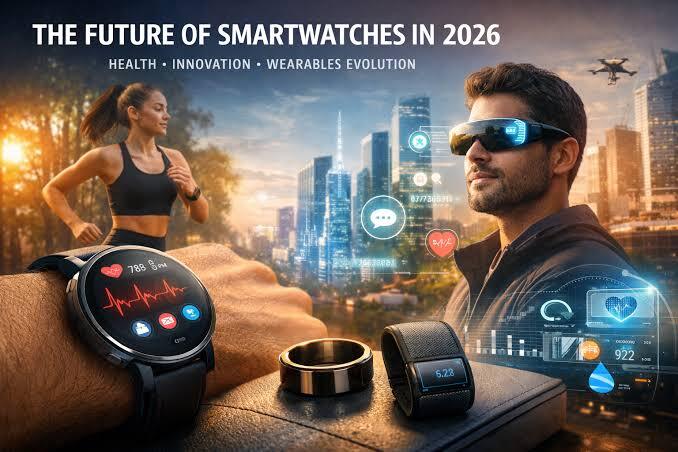


Introduction: How Wearable Technology Is Changing Everyday Life in America
Technology is becoming increasingly integrated into everyday life in the United States. Smartphones, connected vehicles, smart home systems, and cloud-based services have already changed how people communicate, work, shop, and manage their schedules. Now, another category of technology is bringing digital information even closer to users: wearable devices.
Wearable technology includes electronic devices that people wear on their bodies to collect information, provide notifications, support communication, or perform specialized tasks. Common examples include smartwatches, fitness trackers, smart rings, health-monitoring patches, connected glasses, and certain medical sensors.
In 2026, wearable technology is evolving beyond basic step counting and smartphone notifications. Modern devices can track selected activity and sleep measurements, record heart rate, provide workout guidance, and connect users with digital health platforms. Some specialized medical devices can monitor particular health indicators continuously and provide information that supports treatment decisions.
Artificial intelligence is also creating new possibilities. Software can analyze patterns in collected information, summarize trends, and offer personalized feedback. However, the reliability and usefulness of these features depend on the device, its sensors, the algorithms it uses, and the purpose for which it was designed.
The United States is an important market for wearable technology because of its established consumer electronics industry, digital health ecosystem, fitness market, and medical device sector. According to Pew Research Center’s June 2026 report, 37% of US adults surveyed said they owned a smartwatch. This indicates substantial adoption, while also showing that most adults did not report owning one.
Wearable technology still faces challenges, including privacy concerns, battery limitations, inconsistent measurements, device costs, and difficulties integrating personal data into healthcare systems.
What Is Wearable Technology?
Wearable technology refers to electronic devices designed to be worn on the body. These devices may use sensors, wireless communication, software, and rechargeable batteries to collect information or provide services.
Some wearables are designed mainly for convenience and entertainment. Others focus on fitness, workplace safety, communication, or medical monitoring.
The difference matters because not every wearable is intended to perform a medical function. A consumer smartwatch that estimates activity levels should not automatically be treated as equivalent to a medical device designed and authorized for a specific clinical purpose.
The Main Types of Wearable Devices
1. Smartwatches
Smartwatches combine timekeeping with features such as notifications, fitness tracking, heart-rate measurements, workout records, and smartphone connectivity. Some models also offer additional health-related features, depending on the device and market.
2. Fitness trackers
Fitness trackers focus on activity measurements such as steps, movement, workout duration, and estimated energy expenditure. Some also measure sleep-related indicators and heart rate.
3. Smart rings
Smart rings use miniature sensors to collect selected measurements related to activity, sleep, and physiological signals. Their compact design appeals to users who prefer a less noticeable alternative to a watch.
4. Medical monitoring devices
These devices are designed for specific medical applications. Examples include continuous glucose monitoring systems and certain wearable cardiac monitoring technologies.
Their intended uses, accuracy requirements, and regulatory status differ from those of general wellness products.
5. Smart glasses and connected eyewear
Connected glasses may offer cameras, audio, voice interaction, navigation assistance, or AI-powered features. Capabilities vary considerably across products.
6. Wearable patches and biosensors
Some medical and research devices use patches or other body-worn sensors to monitor selected physiological measurements. Depending on the system, they may transmit information to a mobile application or a clinical platform.
Together, these categories illustrate how wearable technology is expanding into consumer electronics, healthcare, workplace operations, and specialized professional applications.
Why Wearable Technology Is Growing in the USA in 2026
Several factors are contributing to continued interest in wearable devices across the American market.
Greater Interest in Personal Health Information
Many consumers want to understand their activity patterns, sleep routines, and exercise performance. Wearable devices make selected information available throughout the day without requiring users to manually record every activity.
The data can help people observe patterns over time, although measurements are not always exact and should be interpreted in context.
Better Sensors and Smaller Components
Advances in electronics have made it possible to place sensors and computing components inside relatively compact devices.
This has enabled a wider range of designs, from watches and rings to specialized patches and connected eyewear.
Integration With Smartphones and Cloud Services
Wearables often work alongside smartphone applications and online platforms. These systems can store historical records, display trends, synchronize settings, and provide notifications.
Connectivity can make devices more useful, but it also raises questions about data ownership, third-party access, and the security of personal information.
Artificial Intelligence and Personalized Feedback
AI can help summarize large amounts of sensor data, identify patterns, and generate personalized recommendations. These capabilities are increasingly relevant to fitness tracking and selected health applications.
However, AI-generated feedback is not automatically accurate. Users should understand what the system measures, how its conclusions are generated, and when professional advice is necessary.
Expanding Digital Health Research
Healthcare organizations and researchers are investigating how wearable data could support remote monitoring, clinical research, and more personalized care.
A major challenge is ensuring that information collected outside a medical setting is reliable, relevant, and presented in a way that healthcare professionals can interpret.
AI-Powered Smartwatches and Fitness Trackers
Smartwatches and fitness trackers remain among the most recognizable forms of wearable technology.
In the United States, products from companies such as Apple, Google, Samsung, and Garmin illustrate the different ways manufacturers approach connected devices. Some emphasize smartphone integration, others focus on fitness and outdoor activities, and others combine multiple functions in a single product.
Activity Tracking and Workout Analysis
Wearable devices can use motion sensors and software to estimate steps, distance, workout duration, and other activity measurements.
More advanced models may recognize different exercise types and summarize training patterns. This can help users maintain records and compare their activity over time.
However, estimated calorie expenditure, distance, and workout intensity may differ from actual values. Accuracy depends on sensor placement, the type of activity, device design, and the algorithms used.
Heart-Rate Monitoring
Many smartwatches use optical sensors to estimate heart rate by measuring changes in blood flow near the skin.
These readings can be useful for observing trends during everyday activities and exercise. Some devices also offer specialized functions intended to identify certain heart rhythm patterns.
Nevertheless, a general heart-rate reading is not a comprehensive cardiovascular assessment. Users should follow the instructions for any feature intended to support medical decision-making and seek professional evaluation when appropriate.
Sleep Tracking
Wearables may estimate sleep duration and patterns using movement, heart rate, and other available signals.
These estimates can help users compare routines across several nights. They may also highlight patterns associated with irregular schedules or insufficient time in bed.
Consumer sleep trackers do not necessarily measure every sleep stage with clinical accuracy. Their results are best treated as estimates rather than definitive diagnoses of sleep disorders.
AI-Based Coaching
Some wearable applications use algorithms to generate workout suggestions, activity reminders, or recovery summaries.
These systems may help users organize exercise routines and understand how their activity changes over time.
The recommendations should still reflect the user’s circumstances. Automated guidance should not override medical advice or encourage unsafe exercise.
Medical Wearables and Remote Patient Monitoring
One of the most important developments in wearable technology is its expanding role in healthcare.
Medical wearables can collect information outside traditional clinical environments. Depending on the device, the information may help healthcare professionals monitor selected conditions, assess treatment response, or identify changes that deserve further evaluation.
The US Government Accountability Office published its report, Wearable Technologies: Potential Benefits and Challenges in Clinical Decision-Making, on August 6, 2026. It examined the potential use of wearable data in clinical decisions and how AI could expand those applications.
The report also discusses limitations, including differences in device reliability and challenges integrating wearable data into clinical workflows.
Continuous Glucose Monitoring
Continuous glucose monitoring systems measure glucose levels through a sensor designed for that purpose. These devices can provide information about glucose trends and may send alerts according to their design and settings.
They can support diabetes management when used as directed by the manufacturer and healthcare professional.
Some glucose-monitoring systems are intended for specific patient groups or uses, so users should check the product’s labeling and authorization status.
New Developments in Combined Glucose and Ketone Monitoring
An important US regulatory development occurred on August 25, 2026, when the Food and Drug Administration announced authorization of the Libre Duo 10 Day Continuous Dual Glucose Ketone Monitoring System.
According to the FDA announcement, the device is designed to continuously monitor both glucose and ketone levels in people with diabetes aged two years and older. The agency described it as the first wearable device in the United States to continuously monitor ketone levels and the first worldwide to continuously monitor both measurements together in one device.
The FDA explains the announcement in its official update: FDA authorizes first wearable device that continuously monitors both ketone levels and blood sugar.
This development illustrates how wearable medical technology is moving beyond general fitness monitoring toward more specialized health applications.
It should not be interpreted as meaning that all wearables can detect medical emergencies or replace established treatment plans. The benefits and limitations of a device depend on its intended use, clinical evidence, and instructions.
Cardiac Monitoring
Certain wearable devices can record or analyze cardiac signals for specific purposes. Depending on the system, they may help users or clinicians investigate selected heart rhythm concerns.
These features have different capabilities from ordinary heart-rate tracking. A smartwatch’s pulse measurement does not provide the same information as every form of clinical cardiac testing.
If a device generates an alert, the user should follow its instructions and seek appropriate medical advice rather than assuming the result is a confirmed diagnosis.
Remote Patient Monitoring
Wearable devices may support remote monitoring by collecting selected measurements and transmitting them to a healthcare platform.
This can help care teams review information between appointments, particularly when a device is appropriate for the patient’s condition and the clinical team has a clear plan for responding to results.
However, remote monitoring requires reliable data, suitable technology, secure information sharing, and a process for handling alerts. Collecting more data does not necessarily improve care unless the information can be interpreted and acted upon.
The Role of Artificial Intelligence in Wearable Technology
AI is becoming an important part of wearable software because sensors can generate more information than users can easily interpret on their own.
Algorithms can analyze trends, classify activities, identify unusual readings, and summarize patterns. More advanced systems may combine several types of information to generate contextual feedback.
Pattern Recognition
An AI system may compare measurements across different days and identify changes in activity or other signals.
For example, a fitness application might notice that a user’s recorded exercise duration has declined over several weeks. This could prompt the user to review their routine, although the system cannot automatically determine why the change occurred.
Personalized Recommendations
Some applications use historical information to suggest workout adjustments, recovery periods, or activity goals.
The quality of these suggestions depends on the available data and the logic behind the recommendations. Users should have the ability to understand and adjust settings rather than treating automated feedback as unquestionable advice.
Medical Risk Assessment
In regulated medical applications, algorithms may analyze wearable signals to support a specific clinical purpose.
Such systems require appropriate validation and regulatory oversight. Their performance should be assessed for the intended patient population and use case.
AI Limitations and False Alerts
AI models can misinterpret noisy signals, produce inaccurate summaries, or perform differently across users and circumstances.
An alert may indicate a real issue, a temporary variation, or a measurement problem. Conversely, the absence of an alert does not prove that a medical condition is absent.
For this reason, users and healthcare professionals need clear information about the system’s capabilities and limitations.
Wearable Technology Companies and the American Market
The US wearable ecosystem includes consumer electronics manufacturers, specialized fitness companies, medical device developers, software platforms, and healthcare technology providers.
Apple
Apple’s smartwatch ecosystem combines smartphone connectivity with activity tracking and selected health-related features. Its products demonstrate how wearable devices can be integrated with mobile applications and other consumer electronics.
Medical functionality varies by model, jurisdiction, and feature, so users should consult the relevant product information.
Google and Fitbit
Google’s wearable ecosystem includes Fitbit products and software, alongside the Pixel Watch line.
Fitness tracking, activity records, and connected services are important elements of this market. Product capabilities and subscription features can change over time.
Samsung
Samsung develops connected watches and other consumer devices that integrate with its smartphone and software ecosystem.
Its wearable products include fitness and wellness features, with specific functions varying across models and markets.
Garmin
Garmin is known for wearables aimed at fitness, outdoor recreation, endurance sports, and navigation-related activities.
Its products illustrate the demand for specialized tracking and performance information among runners, cyclists, hikers, and other active users.
Medical Device Developers
The medical wearable sector also includes companies developing glucose monitors, cardiac monitoring systems, and other specialized sensor-based products.
These products operate under different technical and regulatory requirements from general consumer wearables.
The FDA maintains a resource on medical devices incorporating sensor-based digital health technology. The resource helps users and developers identify certain authorized wearable medical devices, although the agency notes that its lists are not comprehensive.
Smart Rings, Connected Glasses, and New Wearable Designs
Wearable technology is no longer limited to wrist-based devices. Manufacturers are exploring alternative designs intended to provide information in different situations.
Smart Rings
Smart rings offer a compact form factor that may be more comfortable for people who do not want to wear a smartwatch throughout the day.
Depending on the product, a ring may record activity, sleep-related measurements, or selected physiological signals.
The small size creates engineering trade-offs involving battery capacity, sensor placement, display options, and interaction methods. Many smart rings rely on a smartphone application rather than an integrated screen.
Smart Glasses
Connected glasses can combine traditional eyewear with cameras, microphones, speakers, wireless connectivity, or AI-powered assistance.
Potential uses include hands-free communication, navigation, translation, and contextual information. More specialized products may support industrial or professional workflows.
Privacy is a particularly important issue when glasses can record images or audio. Users should understand the device’s recording indicators, permissions, and rules governing its use in public or private settings.
Wearable Patches
Medical and research patches can attach to the skin and collect selected measurements. Depending on their purpose, they may be used for monitoring, research, or specific clinical applications.
These devices can offer a different approach to monitoring when a wrist-based design is unsuitable. Their accuracy and clinical value depend on the specific sensor and intended use.
The Importance of Practical Design
A technically impressive wearable will not necessarily succeed if it is uncomfortable, difficult to charge, expensive to maintain, or confusing to use.
Comfort, battery life, accessibility, software support, and ease of interpreting the data are all important factors in adoption.
Privacy and Security Challenges in Wearable Technology
Wearables can collect sensitive information about activity, location, sleep, health indicators, and personal routines.
Depending on the product, data may be stored on the device, transferred to a smartphone, processed by a cloud service, or shared with other applications.
This creates important privacy and security considerations for consumers and organizations.
Personal Data Collection
Before buying or using a wearable, users should understand what information it collects and which features require additional permissions.
A device may collect information beyond the measurements that are most visible in its application. Users should review the privacy policy and settings to understand how their information is handled.
Cloud Storage and Third-Party Access
Some wearable platforms store information on remote servers or share selected data with connected services.
Users should review whether data is shared with advertising partners, analytics providers, healthcare platforms, or other third parties.
The terms and available controls vary between products.
Account and Device Security
Wearable accounts can contain personal records and may be connected to other digital services.
Using strong, unique passwords, enabling multifactor authentication where available, installing updates, and securing the associated smartphone can reduce some common risks.
Workplace Monitoring
Employers may use wearables for certain safety or productivity applications. Such deployments raise questions about employee consent, data access, retention, and whether collected information is appropriate for the stated purpose.
Organizations should establish clear policies and limit access to information that is genuinely needed.
Regulatory Considerations
Different legal protections may apply depending on the type of data, the organization collecting it, and the purpose of the system.
For example, not every consumer wearable or fitness application is automatically covered by the same healthcare privacy requirements. Users should not assume that all information collected by a consumer product receives identical legal protection.
Challenges Facing Wearable Technology in 2026
Despite advances in sensors and software, several practical problems continue to affect wearable devices.
Battery Life
Frequent sensor measurements, bright displays, GPS use, and wireless communication can consume battery power.
Users may need to balance features against battery life, particularly when traveling or using devices for extended outdoor activities.
Measurement Accuracy
Wearable sensors collect information under changing conditions. Movement, skin contact, device placement, and environmental factors can influence measurements.
Accuracy may also differ between activities and user groups. Devices should be used according to their instructions, and important medical decisions should not rely on unverified consumer measurements.
Cost and Accessibility
Premium smartwatches, specialized medical devices, and subscription-based software can be expensive.
Not every user needs the most advanced device. The appropriate choice depends on the intended purpose, compatibility, accessibility, and overall cost of ownership.
Data Overload
Frequent notifications and large amounts of tracking information can become distracting.
Users may benefit from selecting only the measurements and alerts that support their goals rather than attempting to monitor everything continuously.
Integration With Healthcare Systems
Healthcare professionals may receive data from many different devices and platforms, each with its own formats and reliability characteristics.
The US Government Accountability Office’s 2026 assessment identifies integration and reliability as important challenges for using wearable information in clinical decision-making.
Healthcare organizations need workflows for reviewing relevant information, identifying meaningful changes, and deciding when further evaluation is appropriate.
How to Choose the Right Wearable Device
Choosing a wearable is easier when the intended use is clear from the beginning.
Step 1: Define Your Main Goal
Decide whether you want a device for exercise tracking, everyday notifications, outdoor navigation, sleep estimates, or a specific medical application.
A product designed for endurance sports may offer different features from a device focused on smartphone connectivity or medical monitoring.
Step 2: Check Compatibility
Confirm that the wearable works with your smartphone, operating system, and preferred applications.
Some features may require a particular phone model, account, subscription, or regional service.
Step 3: Understand the Measurements
Review what the device actually measures and what it estimates.
If the product makes health-related claims, check the intended use, relevant regulatory status, and instructions. Do not assume that every health-related feature has been evaluated for diagnosing or treating a medical condition.
Step 4: Compare Battery Life and Comfort
Consider how often the device needs charging, whether it is comfortable to wear during sleep or exercise, and whether it is suitable for your daily routine.
A simpler device that fits your routine may be more useful than a feature-rich product you rarely wear.
Step 5: Review Privacy Settings
Check the manufacturer’s privacy policy, data export options, account security controls, and settings for sharing information with other services.
Consider whether you can delete your records or restrict data collection when necessary.
Step 6: Evaluate the Total Cost
Look beyond the initial purchase price. Include subscriptions, replacement bands, accessories, charging equipment, and possible service costs.
For medical devices, check whether the product requires specific supplies, compatible applications, or professional support.
The Future of Wearable Technology in the USA
Wearable technology is likely to continue developing as sensors become more capable and computing systems improve.
The most important progress will not necessarily involve adding more features to every device. It may instead involve making existing measurements more reliable, reducing friction for users, and ensuring that the collected information supports useful decisions.
More Specialized Medical Wearables
Medical devices may continue to expand into specialized monitoring applications as developers demonstrate safety and effectiveness for particular uses.
The FDA’s recent authorization of a combined glucose and ketone monitoring system illustrates this direction. Future progress will depend on clinical evidence, regulatory review, usability, and the ability to integrate information into appropriate care.
Better AI-Assisted Interpretation
AI may help users and clinicians summarize trends, identify unusual patterns, and prioritize information that deserves attention.
For these systems to be trustworthy, developers will need to test performance, communicate limitations, and protect sensitive data.
Greater Integration With Digital Health Services
Wearables may become more closely connected with remote patient monitoring platforms and other digital health tools.
However, successful integration requires common data standards, reliable measurements, secure information sharing, and clear responsibilities for reviewing alerts.
More Comfortable and Less Intrusive Devices
Smart rings, patches, and screenless trackers demonstrate demand for alternatives to traditional wrist-based products.
Future designs may emphasize smaller components, longer battery life, and more discreet interaction.
More Attention to Consumer Privacy
As wearable devices collect increasingly detailed information, consumers may place greater importance on transparency and control.
Clearer explanations of data use, stronger security controls, and meaningful privacy settings will be important for building trust.
Conclusion: Wearable Technology Is Becoming More Personal and Connected
Wearable technology is an important part of the digital transformation taking place across the United States. Smartwatches and fitness trackers help users record activity and observe trends, while specialized medical wearables can support particular monitoring and treatment needs.
Artificial intelligence is expanding the ways collected information can be analyzed and presented. At the same time, new designs such as smart rings, connected glasses, and wearable patches are creating alternatives to traditional wrist-based devices.
The technology still has limitations. Sensors can produce inaccurate readings, batteries require regular charging, personal data can create privacy risks, and healthcare systems may struggle to integrate information from different devices.
For consumers, the best wearable is not necessarily the one with the most features. It is the one that meets a clear need, works reliably in everyday situations, protects personal information, and presents its measurements honestly.
For developers and healthcare organizations, future success will depend on building systems that are secure, usable, appropriately validated, and genuinely helpful.
As wearable technology continues to evolve in 2026 and beyond, its value will depend on how effectively it connects useful measurements with informed decisions—without overstating what the technology can do.
Frequently Asked Questions (FAQs)
1. What is wearable technology?
Wearable technology includes electronic devices designed to be worn on the body. Examples include smartwatches, fitness trackers, smart rings, connected glasses, and specialized medical sensors.
2. What are the main wearable technology trends in the USA in 2026?
Important trends include AI-assisted fitness analysis, specialized health monitoring, smart rings, connected glasses, remote patient monitoring, and greater integration with smartphone applications and digital health platforms.
3. How does AI improve wearable devices?
AI can analyze sensor readings, identify patterns, summarize activity, and provide personalized feedback. Its reliability depends on the quality of the measurements and the system’s design.
4. Can wearable devices detect health problems?
Some specific medical wearables are designed to monitor particular measurements or support detection of defined conditions. Capabilities vary, and ordinary fitness trackers should not be treated as comprehensive diagnostic tools.
5. What is the difference between a smartwatch and a medical wearable?
A smartwatch typically focuses on consumer functions, activity tracking, and general wellness. A medical wearable is designed for a specific medical purpose and may be subject to additional regulatory requirements.
6. Are wearable health measurements always accurate?
No. Accuracy depends on the sensor, device placement, activity, user characteristics, and measurement method. Users should follow the manufacturer’s instructions and consult healthcare professionals about important medical concerns.
7. Are wearable devices safe for personal data?
Security varies by product and service. Users should review privacy policies, limit unnecessary permissions, protect their accounts, and understand how their information may be stored or shared.
8. What are smart rings used for?
Depending on the model, smart rings can record selected activity, sleep-related measurements, and physiological signals. They often connect to a smartphone application for viewing results.
9. Can wearable technology support remote healthcare?
Yes. Certain medical wearables can transmit selected measurements to healthcare platforms, helping clinicians review information between appointments. Effective use requires reliable data and an appropriate clinical workflow.
10. What is the future of wearable technology?
Future developments may include more specialized medical sensors, better AI-assisted analysis, longer battery life, discreet device designs, and improved integration with digital health services.


