




Introduction
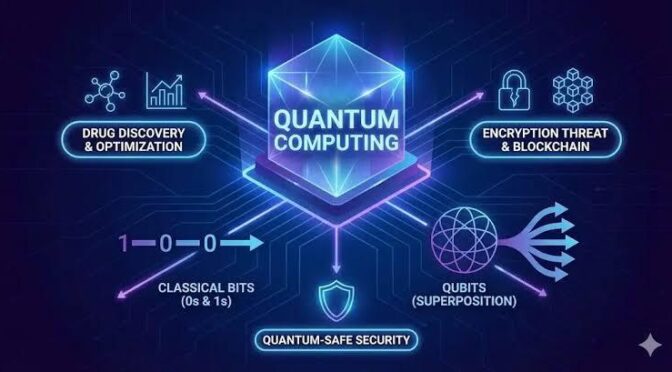
Quantum computing is rapidly emerging as one of the most exciting technologies shaping the future of the United States. While traditional computers process information using binary bits represented as either 0 or 1, quantum computers use quantum bits, or qubits, allowing them to solve extremely complex problems far faster than conventional systems.
Over the past few years, government agencies, universities, and private technology companies have invested billions of dollars into quantum research. In 2026, the United States continues expanding quantum computing capabilities to strengthen scientific research, healthcare, financial modeling, national security, artificial intelligence, and advanced manufacturing.
Experts believe that although quantum computing is still developing, its long-term potential could transform industries worldwide.
What Is Quantum Computing?
Quantum computing is an advanced form of computing that uses the principles of quantum mechanics to perform calculations.
Unlike traditional computers, quantum computers can evaluate multiple possibilities simultaneously, making them ideal for solving problems that would normally take conventional computers years to complete.
Major applications include:
- Drug discovery
- Climate modeling
- Artificial intelligence
- Financial simulations
- Cybersecurity
- Logistics optimization
- Material science
- Space research
Why the United States Is Investing in Quantum Technology
America views quantum computing as a strategic technology that will influence future economic growth and national competitiveness.
Major investment areas include:
- Research laboratories
- University partnerships
- Semiconductor development
- AI integration
- Secure communications
- Quantum networking
- Cloud-based quantum platforms
These investments aim to position the United States as a global leader in next-generation computing.
Quantum Computing and Artificial Intelligence
Artificial Intelligence requires enormous computational resources.
Quantum computing could dramatically improve:
- Machine learning
- Pattern recognition
- Data optimization
- Scientific simulations
- Large language model training
- Medical diagnostics
Researchers believe combining AI with quantum computing may unlock entirely new capabilities over the coming decade.
Cybersecurity and Quantum Computing
Quantum computing presents both opportunities and challenges for cybersecurity.
Benefits include:
- Faster encryption analysis
- Secure quantum communications
- Improved threat detection
- Advanced cryptography
At the same time, organizations are preparing for “post-quantum cryptography” to protect sensitive information against future quantum attacks.
Healthcare Innovation
Quantum technology may revolutionize healthcare through:
- Faster drug discovery
- Personalized medicine
- Protein simulation
- Genomic analysis
- Disease modeling
Medical researchers expect quantum systems to significantly reduce research timelines.
Challenges
Despite rapid progress, challenges remain:
- Hardware stability
- Error correction
- High costs
- Skilled workforce shortages
- Infrastructure requirements
Continued investment will be necessary before widespread commercial adoption becomes possible.
Future Outlook
Industry experts expect quantum computing to become one of the defining technologies of the next decade. As hardware improves and research accelerates, businesses across finance, healthcare, manufacturing, logistics, and AI are expected to benefit from quantum-powered innovation.
Conclusion
Quantum computing is no longer science fiction. It represents one of America’s most ambitious technology investments and has the potential to redefine computing, cybersecurity, healthcare, and artificial intelligence for generations to come.


