


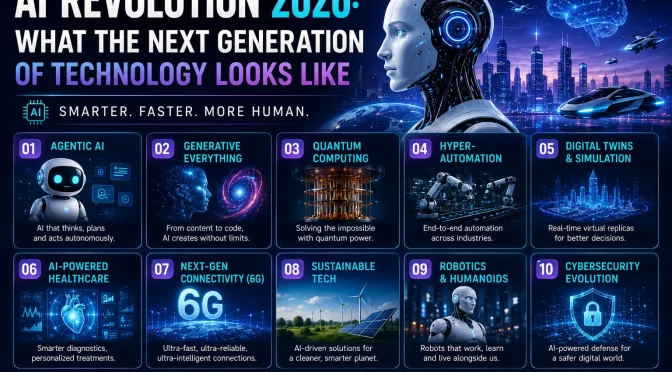


Artificial Intelligence (AI) has become the driving force behind the next generation of innovation in the United States. In 2026, AI is no longer limited to research labs or technology giants it is reshaping industries, improving productivity, and changing how millions of Americans work, communicate, shop, learn, and receive healthcare.
From intelligent virtual assistants and autonomous systems to AI-powered business automation and advanced cybersecurity, artificial intelligence is now at the center of the country’s digital transformation. Organizations across the United States are investing heavily in AI infrastructure, cloud computing, machine learning models, and skilled talent to remain competitive in an increasingly technology-driven economy.
According to industry analysts, AI spending in the United States continues to grow as businesses recognize the technology’s potential to improve efficiency, reduce operational costs, and create entirely new products and services.
What Is Artificial Intelligence?
Artificial Intelligence refers to computer systems designed to perform tasks that typically require human intelligence. These tasks include learning from data, recognizing patterns, understanding language, solving problems, making decisions, and generating content.
Unlike traditional software, AI systems improve over time by analyzing large volumes of information and adapting to new situations.
Common AI technologies include:
- Machine Learning (ML)
- Deep Learning
- Natural Language Processing (NLP)
- Computer Vision
- Speech Recognition
- Generative AI
- Robotics
- Predictive Analytics
Today, AI powers everything from recommendation engines and fraud detection systems to autonomous vehicles and smart assistants.
Why AI Is Growing Rapidly in the United States
Several factors are accelerating AI adoption across the country.
Massive Investments
Technology companies and investors continue funding AI research, cloud infrastructure, semiconductor development, and startup innovation.
Better Computing Power
Modern AI models require advanced GPUs, high-speed networking, and large-scale data centers that are becoming more accessible through cloud platforms.
Growing Business Demand
Organizations are adopting AI to automate repetitive tasks, improve customer service, analyze data, and streamline operations.
Government and Research Support
Universities, research institutions, and public-private partnerships continue advancing AI innovation while exploring ethical and secure AI development.
Generative AI Changes the Way People Work
One of the biggest technology trends is the rapid growth of generative AI.
These AI systems can create:
- Articles
- Emails
- Marketing content
- Computer code
- Images
- Videos
- Business reports
- Product descriptions
Businesses are using generative AI to increase productivity, reduce manual work, and accelerate content creation.
Rather than replacing employees, many organizations are using AI as a productivity tool that helps professionals complete tasks faster and focus on higher-value work.
AI Is Revolutionizing Healthcare
Healthcare remains one of the fastest-growing sectors for AI adoption.
Hospitals and healthcare providers use AI for:
- Medical imaging analysis
- Early disease detection
- Drug discovery
- Clinical decision support
- Personalized treatment planning
- Administrative automation
AI helps healthcare professionals analyze complex medical information more efficiently while improving patient outcomes.
Researchers continue developing AI systems capable of identifying diseases earlier than traditional diagnostic methods.
Artificial Intelligence in Financial Services
Banks, insurance companies, and investment firms increasingly rely on AI-powered technologies.
Applications include:
- Fraud detection
- Credit risk analysis
- Investment forecasting
- Customer service chatbots
- Regulatory compliance
- Personalized financial recommendations
AI enables financial institutions to process large amounts of data quickly while improving operational efficiency and customer experiences.
AI Strengthens Cybersecurity
Cybersecurity has become another major area benefiting from artificial intelligence.
Modern AI security platforms can:
- Detect unusual network behavior
- Identify malware
- Monitor user activity
- Block cyberattacks
- Analyze threat intelligence
- Automate security responses
As cyber threats become more sophisticated, AI helps organizations respond faster and reduce the impact of attacks.
AI and Cloud Computing Work Together
Cloud computing has made advanced AI technologies more accessible than ever.
Businesses no longer need expensive hardware to deploy AI applications.
Cloud platforms provide:
- Machine learning tools
- AI development environments
- Large-scale computing power
- Data storage
- AI model deployment
- API-based AI services
This combination allows businesses of every size to adopt artificial intelligence efficiently.
AI Improves Manufacturing
Manufacturers across the United States use AI to optimize production processes.
Applications include:
- Predictive maintenance
- Quality inspection
- Industrial robotics
- Supply chain optimization
- Inventory forecasting
- Smart factories
AI reduces downtime while improving productivity and product quality.
AI in Education
Educational institutions continue integrating AI into classrooms and online learning platforms.
Benefits include:
- Personalized learning
- Intelligent tutoring systems
- Automated grading
- Language translation
- Accessibility improvements
- Student performance analytics
Teachers can spend more time supporting students while AI assists with routine administrative tasks.
AI Drives Retail Innovation
Retail companies use AI to improve customer experiences.
Popular applications include:
- Personalized product recommendations
- Inventory management
- Demand forecasting
- Customer service automation
- Smart pricing strategies
- Visual product search
AI enables retailers to better understand consumer behavior and optimize business operations.
Responsible AI and Ethics
As AI adoption grows, organizations are increasingly focused on responsible AI development.
Key priorities include:
- Transparency
- Fairness
- Privacy protection
- Bias reduction
- Human oversight
- Secure AI systems
Building trust in AI is essential for long-term adoption across industries.
Challenges Facing AI
Despite rapid progress, several challenges remain.
Data Privacy
Organizations must protect sensitive customer information while complying with evolving regulations.
Workforce Skills
Demand for AI engineers, data scientists, and machine learning specialists continues to exceed supply.
Infrastructure Costs
Training advanced AI models requires significant computing resources and energy.
Regulation
Governments continue developing policies that encourage innovation while protecting consumers and ensuring responsible AI use.
The Future of Artificial Intelligence in the United States
Industry experts believe AI will continue transforming nearly every sector of the economy.
Emerging technologies expected to shape the future include:
- AI-powered robotics
- Autonomous transportation
- Advanced language models
- AI-assisted scientific research
- Digital healthcare assistants
- Smart manufacturing
- AI-driven software development
- Intelligent business automation
As innovation continues, AI is expected to become an essential part of everyday life for businesses and consumers alike.
Conclusion
The US Artificial Intelligence industry is entering a new era of growth and innovation. From healthcare and finance to cybersecurity, education, and manufacturing, AI is improving efficiency, enabling smarter decision-making, and creating new opportunities across the American economy.
While challenges related to regulation, privacy, and workforce development remain, continued investment in AI research and infrastructure positions the United States as a global leader in artificial intelligence. Businesses that embrace responsible AI today will be better prepared for the opportunities of tomorrow.


