


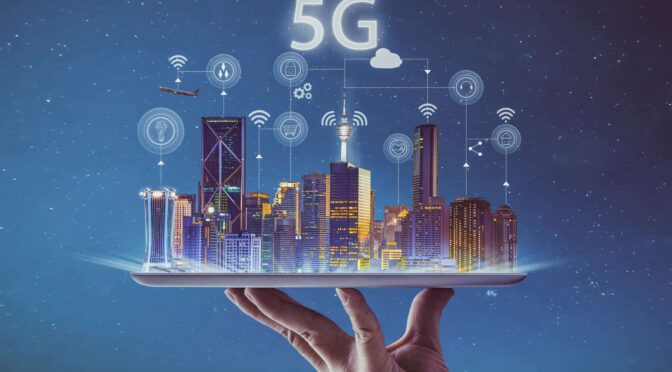


The United States is entering a new era of digital innovation, and 5G technology is at the center of this transformation. Over the last few years, next-generation wireless networks have expanded rapidly across cities, suburbs, and many rural communities, giving businesses and consumers access to faster internet speeds, lower latency, and more reliable connectivity than ever before.
Unlike previous generations of wireless communication, 5G is not simply about downloading movies faster or improving mobile browsing. It serves as the backbone for technologies such as artificial intelligence (AI), cloud computing, edge computing, autonomous vehicles, smart cities, industrial automation, and the Internet of Things (IoT). These innovations rely on real-time data transmission, and 5G provides the speed and reliability required to support them.
Technology companies, telecom providers, healthcare organizations, manufacturers, educational institutions, and government agencies across the United States are investing billions of dollars to expand 5G infrastructure. As network coverage improves, experts believe 5G will continue to reshape industries, create new business opportunities, and improve the daily lives of millions of Americans.
What Is 5G Technology?
5G, or fifth-generation wireless technology, is the latest evolution of mobile communication networks. It is designed to deliver significantly faster speeds, lower latency, greater capacity, and more reliable connectivity than previous generations such as 4G LTE.
At its core, 5G allows millions of devices to communicate simultaneously with minimal delay. This capability makes it possible to support everything from smartphones and laptops to autonomous vehicles, smart factories, connected medical devices, and intelligent transportation systems.
Unlike earlier wireless technologies that mainly focused on improving mobile internet speeds, 5G is designed to connect an entire digital ecosystem. It enables real-time communication between people, machines, sensors, and software applications.
How Does 5G Technology Work?
5G networks use a combination of advanced radio frequencies, small cell technology, fiber-optic infrastructure, and intelligent network management systems to deliver high-speed connectivity.
The technology operates across different spectrum bands:
Low-Band Spectrum
Provides wide coverage and reliable connectivity across large geographic areas. While speeds are moderate, it ensures consistent service for users in suburban and rural locations.
Mid-Band Spectrum
Offers a balance between speed and coverage, making it one of the most widely used frequencies for commercial 5G deployments.
High-Band Spectrum (Millimeter Wave)
Delivers ultra-fast speeds capable of supporting data-intensive applications such as augmented reality, virtual reality, and industrial automation. However, its coverage area is smaller and requires additional infrastructure.
Together, these spectrum bands create a flexible and scalable wireless network capable of supporting diverse applications across different environments.
The Evolution from 4G to 5G
Every generation of mobile technology has introduced major improvements.
1G enabled analog voice communication.
2G introduced digital voice and text messaging.
3G brought mobile internet access.
4G transformed smartphones by enabling HD streaming, mobile applications, and online gaming.
Now, 5G is taking connectivity to an entirely new level by supporting intelligent devices, autonomous systems, and real-time machine communication.
Compared with 4G, 5G provides:
- Much faster download and upload speeds
- Lower network latency
- Better performance in crowded areas
- Higher network capacity
- Improved energy efficiency
- Support for billions of connected devices
These improvements make 5G the foundation for future digital innovation.
Why 5G Matters for the US Economy
The expansion of 5G technology is expected to generate significant economic benefits across the United States.
Businesses are using faster wireless networks to improve productivity, reduce operational costs, and create innovative digital services. The deployment of 5G infrastructure also creates thousands of jobs in engineering, construction, cybersecurity, telecommunications, and software development.
Many industries that depend on real-time data—including manufacturing, logistics, healthcare, and transportation—are becoming more efficient through 5G-enabled technologies.
For startups, 5G lowers barriers to innovation by making advanced technologies such as AI, robotics, and IoT more accessible.
As digital transformation continues, 5G is expected to remain one of the strongest drivers of economic growth in the technology sector.
Key Features of 5G Technology
Ultra-Fast Speeds
One of the most recognized advantages of 5G is its exceptional speed. Users can download large files, stream ultra-high-definition videos, and access cloud applications much faster than before.
For businesses, faster connectivity enables quicker collaboration, efficient cloud computing, and seamless digital workflows.
Extremely Low Latency
Latency refers to the time it takes for data to travel between devices.
5G dramatically reduces latency, enabling real-time communication required for applications such as:
- Autonomous vehicles
- Remote robotic surgery
- Industrial automation
- Smart traffic management
- Online gaming
- Virtual reality
This near-instant response time is one of the defining characteristics of 5G.
Massive Device Connectivity
Unlike earlier wireless networks, 5G can support millions of connected devices within a relatively small area.
This capability is essential for:
- Smart homes
- Smart factories
- Connected vehicles
- Healthcare devices
- Agricultural sensors
- Smart city infrastructure
The growing Internet of Things depends heavily on this expanded network capacity.
Greater Network Reliability
5G networks are designed to deliver stable and reliable connectivity even during periods of high demand.
This is particularly important for emergency services, healthcare systems, financial institutions, and industrial operations where uninterrupted communication is critical.
Major Benefits of 5G Technology
The impact of 5G extends well beyond faster mobile internet.
Businesses across the United States are experiencing measurable improvements in efficiency, productivity, and customer experiences.
Some of the most important benefits include:
Faster Business Operations
Organizations can transfer massive datasets within seconds, improving collaboration and reducing delays in critical workflows.
Better Cloud Performance
Cloud applications perform more efficiently over high-speed 5G connections, enabling employees to work from virtually anywhere.
Improved Video Communication
Remote work has increased demand for reliable video conferencing. 5G provides smoother virtual meetings with fewer interruptions.
Enhanced Customer Experiences
Retailers, banks, healthcare providers, and service organizations use 5G to deliver faster and more personalized digital services.
Support for Emerging Technologies
Innovations such as AI, IoT, robotics, augmented reality, virtual reality, and autonomous transportation rely heavily on the low latency and high bandwidth offered by 5G.
5G and Artificial Intelligence: A Powerful Combination Driving Innovation
Artificial Intelligence (AI) and 5G technology are two of the most transformative innovations shaping the digital economy in the United States. While AI enables machines to analyze data, recognize patterns, and make intelligent decisions, 5G provides the ultra-fast and low-latency connectivity needed to process that information in real time.
The combination of these technologies is unlocking new possibilities across multiple industries.
For example, AI-powered surveillance systems equipped with 5G connectivity can instantly analyze live video feeds to identify unusual activities or security threats. In manufacturing, AI algorithms running on 5G-connected machines monitor equipment performance, detect potential failures, and schedule maintenance before costly breakdowns occur.
Retail businesses use AI and 5G to personalize customer experiences by analyzing shopping behavior and delivering customized product recommendations instantly. Similarly, logistics companies optimize delivery routes using AI while relying on 5G networks to transmit real-time traffic and weather updates.
As AI models become more sophisticated, 5G will continue providing the infrastructure needed to support real-time decision-making at scale.
Cloud Computing and 5G: Building the Future of Digital Infrastructure
Cloud computing has become the backbone of modern businesses, and 5G is making cloud services even more powerful.
Traditionally, businesses depended on fixed broadband connections to access cloud applications. With widespread 5G availability, organizations can securely access cloud platforms from virtually anywhere while maintaining high performance.
The benefits include:
- Faster cloud application performance
- Better collaboration among remote teams
- Reduced infrastructure costs
- Real-time data synchronization
- Improved disaster recovery
- Increased flexibility for businesses
Cloud computing combined with 5G also enables businesses to deploy advanced technologies such as machine learning, big data analytics, and Internet of Things (IoT) solutions without investing heavily in local infrastructure.
How 5G Is Transforming Healthcare in the United States
Healthcare is one of the industries benefiting most from 5G technology.
Modern hospitals rely on connected medical devices, electronic health records, telemedicine platforms, and AI-assisted diagnostics. These systems require fast, reliable communication to deliver quality patient care.
Some key healthcare applications include:
Telemedicine
Doctors can conduct high-quality virtual consultations with patients living in remote areas, reducing travel time and improving access to healthcare.
Remote Patient Monitoring
Wearable devices continuously monitor heart rate, blood pressure, oxygen levels, and other health metrics. With 5G, this data is transmitted instantly to healthcare providers.
AI-Powered Diagnostics
Medical imaging systems analyze X-rays, MRIs, and CT scans faster with cloud-based AI platforms connected through high-speed 5G networks.
Emergency Response
Emergency medical teams can transmit patient information to hospitals while en route, helping doctors prepare treatment before patients arrive.
These innovations improve healthcare efficiency while enhancing patient outcomes.
5G Is Revolutionizing Smart Manufacturing
Manufacturing companies across the United States are embracing Industry 4.0 technologies, and 5G plays a central role in this transformation.
Smart factories use connected sensors, industrial robots, AI software, and automated production systems to increase productivity.
Benefits include:
- Predictive maintenance
- Real-time equipment monitoring
- Automated quality inspections
- Improved worker safety
- Reduced production downtime
- Higher operational efficiency
Manufacturers can monitor thousands of machines simultaneously and respond immediately to equipment issues, significantly reducing maintenance costs.
Autonomous Vehicles and Connected Transportation
Transportation is undergoing one of its biggest transformations thanks to 5G.
Connected vehicles continuously exchange information with:
- Other vehicles
- Traffic signals
- Road infrastructure
- Navigation systems
- Emergency services
This communication enables:
- Collision avoidance
- Traffic optimization
- Real-time navigation
- Improved fuel efficiency
- Enhanced passenger safety
Autonomous vehicles require extremely low latency to make split-second driving decisions, making 5G essential for their future success.
Smart Cities Powered by 5G
Many cities across the United States are investing in smart city initiatives designed to improve public services and sustainability.
Examples include:
Intelligent Traffic Management
Traffic lights adjust automatically based on traffic flow, reducing congestion.
Smart Street Lighting
Connected lighting systems reduce energy consumption by adjusting brightness according to activity levels.
Public Safety
Connected surveillance cameras help law enforcement monitor public spaces more efficiently.
Waste Management
Smart sensors notify sanitation departments when waste bins need collection, reducing unnecessary trips.
Environmental Monitoring
Air quality, water quality, and weather conditions are monitored continuously using connected sensors.
These innovations improve quality of life while reducing operational costs for municipalities.
The Role of 5G in Education
Educational institutions are increasingly integrating 5G into digital learning environments.
Students benefit from:
- Faster online learning
- Interactive virtual classrooms
- Augmented reality lessons
- Virtual science laboratories
- AI tutoring platforms
- Better collaboration tools
Teachers can provide engaging educational experiences while improving accessibility for remote learners.
Cybersecurity Challenges in the 5G Era
While 5G creates enormous opportunities, it also introduces new cybersecurity challenges.
As billions of connected devices join wireless networks, organizations must strengthen digital security.
Key security measures include:
- End-to-end encryption
- Multi-factor authentication
- Zero Trust Architecture
- AI-powered threat detection
- Continuous monitoring
- Secure device authentication
Businesses must invest in cybersecurity alongside 5G deployment to protect sensitive information and maintain customer trust.
Challenges Slowing 5G Expansion
Despite significant progress, several challenges remain.
Infrastructure Costs
Building nationwide 5G networks requires substantial investment in fiber optics, antennas, and small cell infrastructure.
Rural Coverage
Providing reliable service in rural communities remains more challenging than in densely populated urban areas.
Device Compatibility
Consumers and businesses must upgrade to 5G-compatible devices to take full advantage of new capabilities.
Energy Consumption
Expanding network infrastructure increases electricity demand, encouraging providers to invest in energy-efficient technologies.
Future Trends Shaping the US 5G Industry
Experts expect several major trends to define the future of 5G.
These include:
- AI-powered network management
- Expansion of private 5G networks
- Increased edge computing adoption
- Smart factories
- Connected healthcare systems
- Advanced robotics
- Autonomous transportation
- Smart agriculture
- Immersive augmented and virtual reality experiences
- 6G research and development
The United States is expected to remain a global leader in wireless innovation as these technologies mature.
Frequently Asked Questions
What is 5G technology?
5G is the fifth generation of wireless communication technology, offering faster speeds, lower latency, greater reliability, and support for billions of connected devices.
Why is 5G important?
It supports emerging technologies such as AI, IoT, cloud computing, autonomous vehicles, and smart cities.
Is 5G faster than 4G?
Yes. 5G delivers significantly higher download and upload speeds while reducing network latency.
Which industries benefit the most from 5G?
Healthcare, manufacturing, finance, transportation, education, agriculture, retail, logistics, and entertainment.
Is 5G secure?
5G includes advanced security features, but organizations must implement strong cybersecurity practices to protect connected systems.
Conclusion
The expansion of 5G technology in the United States represents far more than an upgrade to mobile networks—it is laying the foundation for the country’s next wave of digital transformation. By enabling faster communication, lower latency, and reliable connectivity, 5G is accelerating innovation in healthcare, manufacturing, transportation, education, retail, and smart city development.
When combined with artificial intelligence, cloud computing, edge computing, and the Internet of Things, 5G empowers businesses to automate operations, deliver better customer experiences, and unlock new opportunities for growth. Although challenges such as infrastructure investment, cybersecurity, and rural coverage remain, ongoing advancements continue to strengthen America’s position as a global technology leader.
As adoption expands, 5G will play a central role in shaping the future of work, communication, and innovation. Organizations that embrace this technology today will be better prepared to compete in tomorrow’s increasingly connected digital economy.


