




Introduction
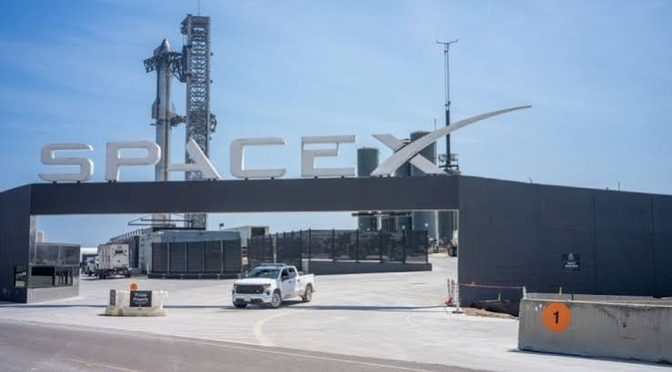
SpaceX is quietly building something almost as ambitious as the Starship rocket itself: a factory designed to mass-produce it.
In September 2026, construction crews at Starbase in Boca Chica, Texas, were working around the clock on a major expansion of the Starfactory—the massive facility where Starship vehicles are assembled. The project includes a 700,000-square-foot addition and a third high bay that will allow SpaceX to increase production rates significantly.
The expansion is driven by a simple requirement: NASA’s Artemis III mission, scheduled for 2027, will need multiple Starship vehicles ready for flight. The current production rate isn’t fast enough.
What Is the Starfactory?
The Starfactory is SpaceX’s primary Starship manufacturing facility at Starbase. It’s a sprawling complex where steel rings are stacked into rocket sections, welded together, and outfitted with engines, avionics, and thermal protection systems.
Unlike traditional aerospace manufacturing, which often relies on custom-built components and slow, meticulous assembly, the Starfactory operates more like an automotive plant. SpaceX has emphasized vertical integration—building as much as possible in-house—and rapid iteration. The company has repeatedly compared its approach to mass production rather than bespoke craftsmanship.
The factory currently produces Starship vehicles for test flights. But with Artemis III on the horizon, SpaceX needs to shift from prototype production to something closer to operational manufacturing.
The 700,000-Square-Foot Expansion
The centerpiece of the current construction effort is a massive expansion that will add roughly 700,000 square feet to the Starfactory complex. That’s equivalent to about 12 football fields.
The expansion is designed to increase production capacity across the board—more workstations, more storage, more space for subassemblies. SpaceX has not disclosed the exact number of additional vehicles the expansion will enable, but the goal is clear: increase output to support the flight rate that Artemis III and future missions will demand.
A third high bay is also under construction. High bays are the tall, vertical structures where Starship sections are stacked and integrated. The existing two high bays have been sufficient for test flight production, but adding a third will allow SpaceX to work on more vehicles simultaneously.
One Starship Per Month
SpaceX has set a target of producing one Starship per month by the end of 2026. That’s an ambitious goal. For context, the company has produced roughly one Starship every two to three months over the past year.
The challenge isn’t just building the rocket. It’s building it in a way that can be replicated reliably. Each Starship involves thousands of welds, hundreds of components, and complex integration work. Scaling production means standardizing processes, training workers, and building supply chains that can deliver materials and parts at higher volumes.
SpaceX has been hiring aggressively at Starbase to support the expansion. The company has also been investing in automation and tooling to reduce labor hours per vehicle.
Why Artemis III Changes Everything
The production expansion is directly tied to NASA’s Artemis III mission. Under the current plan, SpaceX will provide a Starship test article that will dock with the Orion spacecraft in low Earth orbit in 2027. The mission will test docking procedures, communications, and controllability between the two vehicles.
For Artemis III, SpaceX will use a Starship Version 3 vehicle “off the line” with a docking adapter installed on its nose, rather than a purpose-built lunar lander prototype. This approach reduces the number of unique systems required and allows SpaceX to leverage its existing production line.
But that means the production line must be capable of delivering a vehicle on the timeline NASA requires. If the factory can’t produce vehicles fast enough, Artemis III slips—and with it, the 2028 lunar landing target for Artemis IV.
The Broader Production Challenge
The Starfactory expansion is part of a larger effort to scale Starship production across multiple facilities. SpaceX is also building a second Starship factory at Kennedy Space Center in Florida, where the company plans to launch Starship from Launch Complex 39A.
The Florida facility, combined with the Texas expansion, will give SpaceX two production sites capable of building Starship vehicles. That redundancy matters for a program as ambitious as Artemis, where a single facility failure could delay missions.
SpaceX has not disclosed its total production targets for 2027 and beyond. But the company’s public statements suggest that producing multiple Starships per month will be necessary to support both NASA missions and SpaceX’s own Starlink deployment plans.
What Comes Next
The Starfactory expansion is expected to be completed in phases through late 2026 and into 2027. SpaceX has not announced a specific completion date for the full project.
For now, the focus is on getting the third high bay operational and ramping up production to meet the one-per-month target. If SpaceX hits that goal, it will represent a significant milestone in the company’s evolution from a rocket developer to an aerospace manufacturer operating at industrial scale.
The Artemis III mission depends on that evolution succeeding. So does SpaceX’s broader vision of a fully reusable, rapidly reusable launch system. The Starfactory is where that vision either becomes reality or remains a prototype.


