




Introduction
Edge computing has become one of the fastest-growing technology trends in the United States. As businesses generate enormous amounts of data through connected devices, cloud platforms alone are no longer enough to meet the demand for real-time processing.
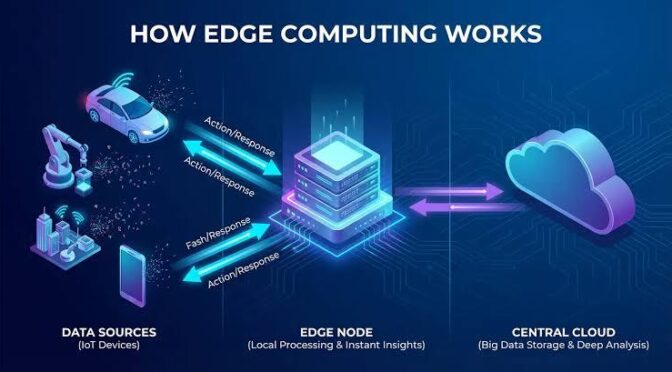
Instead of sending every piece of information to centralized cloud servers, edge computing processes data closer to where it is generated. This significantly reduces latency, improves performance, strengthens security, and enables faster decision-making.
In 2026, edge computing is helping businesses improve manufacturing, healthcare, transportation, retail, telecommunications, and smart city infrastructure.
What Is Edge Computing?
Edge computing is a distributed computing model where data processing occurs near the source instead of relying entirely on distant cloud data centers.
Examples include:
- Smart cameras
- IoT sensors
- Industrial robots
- Connected vehicles
- Medical devices
- Retail checkout systems
This approach enables near-instant responses for time-sensitive applications.
Why Edge Computing Is Growing
Businesses adopt edge computing because it provides:
- Lower latency
- Faster processing
- Reduced bandwidth costs
- Better reliability
- Improved customer experiences
- Enhanced cybersecurity
These benefits make edge computing ideal for modern AI applications.
AI and Edge Computing
Artificial Intelligence becomes even more powerful when combined with edge computing.
Applications include:
- Facial recognition
- Smart surveillance
- Predictive maintenance
- Autonomous vehicles
- Medical diagnostics
- Industrial automation
Real-time AI decisions improve speed while reducing dependence on cloud infrastructure.
Industries Using Edge Computing
Healthcare
Hospitals analyze patient data immediately using connected medical devices.
Manufacturing
Factories monitor production equipment to prevent failures before they occur.
Retail
Stores improve inventory management and customer experiences through smart systems.
Transportation
Connected vehicles process road conditions instantly for safer driving.
Telecommunications
5G networks rely heavily on edge infrastructure to deliver faster digital services.
Edge Computing and Cybersecurity
Keeping sensitive information closer to users helps organizations reduce certain security risks.
Modern edge security includes:
- Device authentication
- Encryption
- AI-powered monitoring
- Secure firmware updates
- Identity management
Organizations combine edge computing with Zero Trust security models.
Future Trends
Experts expect rapid growth in:
- Edge AI
- Smart factories
- Autonomous robotics
- 5G integration
- Smart cities
- Industrial IoT
- Intelligent healthcare
Edge computing will become one of the core technologies supporting America’s digital transformation.
Conclusion
As businesses demand faster, more intelligent digital services, edge computing is becoming an essential technology across the United States. Combined with AI, cloud computing, and 5G, edge computing will continue driving innovation throughout 2026 and beyond.


