


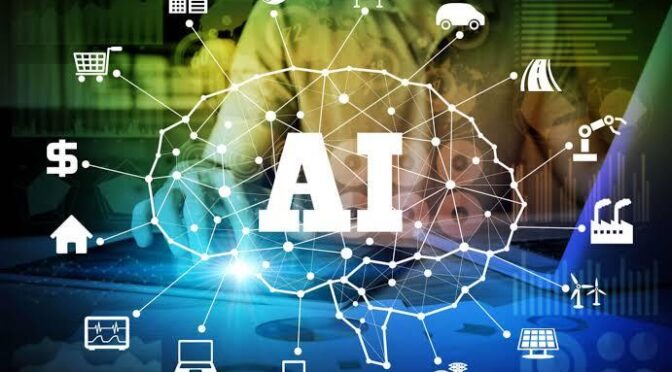


Artificial Intelligence (AI) has become one of the most influential technologies of the modern era, reshaping industries, improving productivity, and transforming how people interact with digital systems. Across the United States, organizations of every size are investing heavily in AI-powered solutions to automate workflows, analyze vast amounts of data, strengthen cybersecurity, improve customer experiences, and accelerate innovation.
In 2026, AI is no longer limited to research laboratories or large technology companies. It is embedded in smartphones, cloud platforms, autonomous vehicles, hospitals, banks, factories, retail stores, and even smart home devices. Businesses use AI to make faster decisions, reduce operational costs, and gain valuable insights from data that would be impossible to analyze manually.
The United States continues to lead global AI development through world-class universities, innovative startups, government research programs, and investments from major technology companies. AI is expected to contribute trillions of dollars to the global economy over the coming decade, making it one of the fastest-growing sectors in the technology industry.
What Is Artificial Intelligence?
Artificial Intelligence is a branch of computer science focused on creating systems capable of performing tasks that normally require human intelligence. These tasks include learning from data, recognizing speech, understanding language, solving problems, making decisions, and identifying patterns.
Unlike traditional software that follows fixed instructions, AI systems improve over time by analyzing data and adapting to new information. This ability allows AI to automate complex processes and deliver more accurate results as it gains experience.
Modern AI technologies include:
- Machine Learning (ML)
- Deep Learning
- Natural Language Processing (NLP)
- Computer Vision
- Robotics
- Generative AI
- Predictive Analytics
- Intelligent Automation
These technologies power many of the digital services people use every day, from virtual assistants and recommendation engines to fraud detection systems and autonomous machines.
How Artificial Intelligence Works
AI systems rely on large datasets, powerful algorithms, and advanced computing infrastructure to learn patterns and make predictions.
The basic process includes:
Data Collection
AI gathers information from databases, sensors, images, documents, videos, and user interactions.
Data Processing
The information is cleaned, organized, and prepared for analysis.
Model Training
Machine learning algorithms analyze historical data to identify relationships and patterns.
Prediction
Once trained, AI models make predictions, classify information, or generate recommendations based on new data.
Continuous Learning
Many AI systems improve automatically by learning from additional information over time.
This continuous learning capability makes AI increasingly accurate and valuable across different industries.
Types of Artificial Intelligence
AI can be categorized into several levels based on capability.
Narrow AI
Narrow AI performs specific tasks such as facial recognition, voice assistants, fraud detection, and recommendation systems. Most AI applications available today belong to this category.
General AI
General AI refers to systems capable of performing any intellectual task that a human can accomplish. This level has not yet been achieved but remains a major research goal.
Super AI
Super AI is a theoretical concept describing machines that surpass human intelligence in every field. While frequently discussed, it remains speculative and is not a current technology.
Why Artificial Intelligence Is Growing Rapidly in the USA
Several factors continue driving AI adoption across America.
Digital Transformation
Businesses are modernizing operations using intelligent automation and predictive analytics.
Cloud Computing
Cloud platforms provide affordable access to powerful AI tools without requiring expensive infrastructure.
Big Data
Organizations generate enormous amounts of information that AI can analyze for valuable business insights.
Skilled Workforce
The United States has a strong ecosystem of AI researchers, engineers, universities, and technology companies.
Government Investment
Public and private investments continue supporting AI research and innovation.
Benefits of Artificial Intelligence
Organizations adopting AI gain numerous competitive advantages.
Improved Productivity
AI automates repetitive tasks, allowing employees to focus on higher-value work.
Better Decision-Making
Advanced analytics help businesses make informed decisions based on real-time data.
Cost Reduction
Automation reduces operational expenses while improving efficiency.
Enhanced Customer Experience
AI-powered chatbots and virtual assistants provide instant support 24/7.
Faster Innovation
Businesses accelerate research, software development, and product design using AI.
Machine Learning and Deep Learning
Machine Learning enables computers to learn patterns from data without being explicitly programmed.
Deep Learning, a subset of Machine Learning, uses neural networks with multiple layers to solve more complex problems such as image recognition, language translation, and speech processing.
AI in Healthcare: Improving Patient Care and Medical Innovation
Artificial Intelligence is transforming healthcare across the United States by improving diagnostics, streamlining hospital operations, and supporting medical research. Hospitals and healthcare providers are increasingly using AI-powered tools to analyze medical images, predict patient outcomes, and assist doctors in making faster, more accurate decisions.
One of the biggest advantages of AI in healthcare is early disease detection. Machine learning algorithms can analyze X-rays, CT scans, MRI images, and pathology reports to identify abnormalities that might be difficult for humans to detect in the early stages.
AI is also accelerating drug discovery by analyzing millions of chemical compounds and biological interactions. Pharmaceutical companies use AI to identify potential treatments faster, reducing research costs and bringing new medicines to market more efficiently.
Other healthcare applications include:
Virtual Health Assistants
AI-powered virtual assistants help patients schedule appointments, answer common health questions, and provide medication reminders.
Predictive Healthcare
AI analyzes patient history to predict health risks and recommend preventive care strategies.
Hospital Resource Management
Hospitals optimize staff scheduling, bed management, and medical equipment utilization using AI-powered analytics.
As AI technology continues evolving, healthcare organizations are expected to provide more personalized, efficient, and accessible patient care.
AI in Financial Services
Banks, insurance companies, and investment firms rely on Artificial Intelligence to improve security, automate operations, and deliver better customer experiences.
Financial institutions use AI for:
Fraud Detection
Machine learning continuously monitors financial transactions to detect suspicious activities in real time.
Credit Risk Assessment
AI evaluates customer data more accurately, helping lenders make informed loan approval decisions.
Investment Analysis
AI-powered systems analyze market trends, economic indicators, and financial reports to support investment strategies.
Customer Service
AI chatbots provide 24/7 assistance for account inquiries, payment issues, and financial guidance.
Regulatory Compliance
Financial organizations use AI to automate compliance monitoring and reduce operational risks.
These technologies improve efficiency while strengthening financial security.
AI in Manufacturing
Manufacturing companies across the United States are integrating AI into production facilities to improve efficiency and product quality.
AI applications include:
Predictive Maintenance
Sensors and AI algorithms detect equipment failures before they occur, reducing downtime and maintenance costs.
Automated Quality Inspection
Computer vision systems inspect products with exceptional speed and accuracy, identifying defects during production.
Robotics
AI-powered robots perform repetitive tasks safely and consistently, increasing manufacturing productivity.
Supply Chain Optimization
AI forecasts demand, manages inventory, and optimizes logistics to reduce operational costs.
These innovations help manufacturers remain competitive while improving sustainability and operational performance.
AI in Retail and E-Commerce
Retailers are using AI to create personalized shopping experiences and improve operational efficiency.
Examples include:
- Product recommendations
- Personalized marketing campaigns
- Smart inventory management
- Dynamic pricing
- Customer behavior analysis
- Voice commerce
- AI-powered search
- Automated customer support
Retail businesses also use AI to forecast demand, reducing overstocking and inventory shortages.
As e-commerce continues expanding, AI will play an increasingly important role in improving customer satisfaction.
AI and Cybersecurity
Cybersecurity has become one of AI’s fastest-growing applications.
AI systems monitor millions of network events every second to identify cyber threats before they spread.
Applications include:
- Threat detection
- Malware analysis
- Email security
- Behavioral analytics
- Identity verification
- Fraud prevention
- Automated incident response
Although cybercriminals also use AI, defensive AI technologies continue improving digital security across businesses and government organizations.
Challenges Facing Artificial Intelligence
Despite its enormous potential, AI presents several important challenges.
Data Privacy
Organizations must protect sensitive customer information while complying with privacy regulations.
Ethical Concerns
AI systems should operate fairly, transparently, and without harmful bias.
Workforce Transformation
Automation changes job requirements, increasing demand for digital skills and AI expertise.
Cybersecurity Risks
AI systems themselves can become targets of cyberattacks if not properly secured.
High Implementation Costs
Developing advanced AI systems often requires significant investment in computing infrastructure and skilled professionals.
Addressing these challenges will be essential for responsible AI adoption.
Future Trends Shaping Artificial Intelligence in the USA
Artificial Intelligence continues advancing rapidly.
Experts expect several major trends to shape the future.
Generative AI Expansion
Businesses will increasingly use generative AI to create content, software code, marketing materials, and business reports.
AI-Powered Automation
Organizations will automate more routine tasks across finance, healthcare, manufacturing, and customer service.
Edge AI
AI processing will increasingly occur directly on devices rather than relying entirely on cloud computing.
Explainable AI
Future AI systems will become more transparent, helping users understand how decisions are made.
Responsible AI
Greater emphasis will be placed on fairness, accountability, privacy, and ethical AI development.
AI and Robotics
More intelligent robots will assist industries such as manufacturing, logistics, agriculture, and healthcare.
AI in Scientific Research
Researchers will use AI to accelerate discoveries in medicine, climate science, advanced materials, and energy technologies.
The future of AI will focus on collaboration between humans and intelligent systems rather than replacing human expertise.
Frequently Asked Questions (FAQs)
What is Artificial Intelligence?
Artificial Intelligence is the ability of computer systems to perform tasks that typically require human intelligence, such as learning, reasoning, and problem-solving.
Why is AI important?
AI improves productivity, automates repetitive tasks, enhances decision-making, and helps organizations analyze large amounts of data efficiently.
Which industries benefit most from AI?
Healthcare, finance, manufacturing, retail, education, transportation, agriculture, and cybersecurity are among the biggest adopters.
What is Machine Learning?
Machine Learning is a branch of AI that enables computers to learn patterns from data and improve performance without explicit programming.
Is AI replacing human jobs?
AI automates some repetitive tasks, but it also creates new career opportunities in technology, data science, cybersecurity, and AI development.
How does AI improve cybersecurity?
AI detects cyber threats, analyzes suspicious behavior, prevents fraud, and automates incident response much faster than traditional systems.
What is Generative AI?
Generative AI creates new content such as text, images, videos, music, and software code based on user prompts and training data.
Is AI safe?
AI can be safe when developed responsibly with proper security, privacy protection, ethical standards, and human oversight.
What challenges does AI face?
Major challenges include data privacy, ethical concerns, cybersecurity risks, implementation costs, and workforce adaptation.
What is the future of Artificial Intelligence?
Future developments include smarter automation, responsible AI, edge AI, generative AI, robotics, scientific research, and personalized digital experiences.
Conclusion
Artificial Intelligence has become one of the most powerful forces driving technological innovation in the United States. From healthcare and finance to manufacturing, retail, and cybersecurity, AI is transforming how organizations operate, solve problems, and deliver value to customers. By combining machine learning, deep learning, natural language processing, and advanced analytics, businesses can improve efficiency, reduce costs, and make faster, data-driven decisions.
Although challenges such as privacy, ethics, and workforce transformation remain, continued investment in research and responsible AI development will unlock even greater opportunities in the years ahead. As AI technologies become more accessible and integrated into everyday applications, organizations that embrace innovation today will be better prepared to compete in tomorrow’s digital economy.
Artificial Intelligence is not simply a technology trend—it is a long-term foundation for economic growth, scientific discovery, and digital transformation across the United States.


