


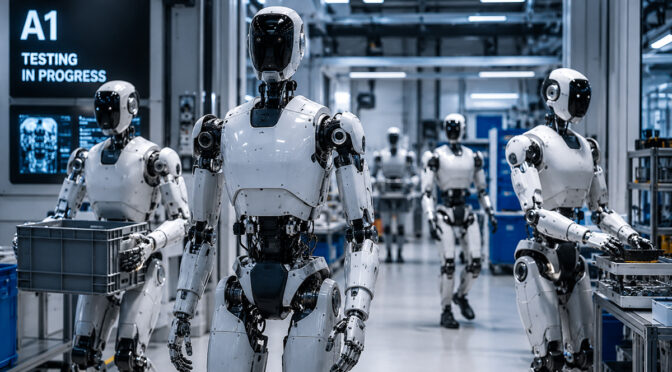


Artificial Intelligence (AI) and robotics are no longer futuristic concepts—they have become an essential part of modern American industries. Across the United States, intelligent robots are changing how businesses manufacture products, deliver healthcare, manage warehouses, grow crops, and even explore space. What once required constant human effort is now being supported by AI-powered machines capable of learning, analyzing, and making decisions in real time.
The rapid evolution of robotics is being fueled by advancements in artificial intelligence, cloud computing, computer vision, machine learning, edge computing, and high-speed 5G connectivity. These technologies allow robots to understand their surroundings, recognize objects, communicate with other systems, and perform complex tasks with greater accuracy than ever before.
In 2026, the United States remains one of the world’s largest markets for robotics innovation. Technology companies, research institutions, healthcare providers, manufacturers, logistics firms, and government agencies are investing billions of dollars to develop next-generation robotic systems that improve efficiency, reduce costs, and solve labor shortages.
From autonomous warehouse robots moving thousands of packages every hour to surgical robots assisting doctors during delicate medical procedures, robotics has become one of the strongest pillars of America’s digital transformation.
This comprehensive guide explores how AI-powered robotics works, where it is being used, the benefits it offers, the challenges it faces, and why experts believe robotics will reshape the future of nearly every industry.
What Are AI-Powered Robots?
AI-powered robots are intelligent machines designed to perform tasks automatically using artificial intelligence. Unlike traditional robots that follow fixed programming, modern robots can analyze information, recognize patterns, adapt to new environments, and continuously improve their performance through machine learning.
These robots use advanced technologies such as sensors, cameras, computer vision, natural language processing, and cloud computing to interact with the physical world.
For example, an AI-powered warehouse robot can detect obstacles, calculate the fastest route, avoid collisions, and transport inventory without human assistance. Similarly, a surgical robot can assist doctors with highly precise movements during complex operations.
The integration of AI allows robots to make decisions based on data rather than simply executing predefined commands, making them far more flexible and capable.
How Artificial Intelligence Makes Robots Smarter
Artificial intelligence serves as the “brain” of modern robotic systems.
Instead of relying solely on programmed instructions, AI enables robots to:
- Learn from previous experiences
- Recognize faces and objects
- Understand spoken language
- Analyze large amounts of data
- Make real-time decisions
- Predict future outcomes
- Improve task performance over time
Machine learning algorithms allow robots to become more accurate as they process additional information. This ability is transforming industries where precision, speed, and adaptability are critical.
For example, an AI-powered quality inspection robot in a manufacturing plant can identify tiny product defects that human inspectors might overlook. As it analyzes thousands of products, its accuracy continues improving.
Why AI Robotics Is Growing Rapidly in the United States
Several factors are accelerating robotics adoption across America.
Labor Shortages
Many industries struggle to recruit enough skilled workers. Robotics helps businesses maintain productivity while filling repetitive or physically demanding roles.
Advances in Artificial Intelligence
Modern AI systems have dramatically improved robots’ ability to understand complex environments and make intelligent decisions.
Faster Cloud Computing
Cloud platforms provide nearly unlimited computing power, enabling robots to process enormous datasets without relying solely on onboard hardware.
5G Connectivity
High-speed wireless communication allows robots to exchange information instantly with cloud systems and other connected devices.
Rising Business Automation
Organizations seek greater efficiency, consistency, and cost savings by automating repetitive tasks.
Technologies Powering Modern Robotics
Today’s intelligent robots combine multiple advanced technologies.
Machine Learning
Allows robots to improve performance by learning from data.
Computer Vision
Enables robots to recognize people, products, traffic signs, medical images, and industrial components.
Edge Computing
Processes data locally to reduce delays and improve response times.
Cloud Robotics
Robots access cloud servers to perform complex calculations and receive software updates.
Internet of Things (IoT)
Connected sensors allow robots to communicate with machines, buildings, and industrial equipment.
Together, these technologies create highly intelligent robotic systems capable of operating in dynamic environments.
Benefits of AI-Powered Robotics
Robotics offers significant advantages across nearly every industry.
Higher Productivity
Robots perform repetitive tasks continuously without fatigue, increasing production capacity.
Improved Accuracy
AI systems reduce human errors, leading to higher-quality products and services.
Enhanced Workplace Safety
Dangerous jobs involving hazardous chemicals, heavy equipment, or extreme temperatures can be performed by robots instead of people.
Lower Operating Costs
Although robotic systems require upfront investment, businesses often reduce long-term labor, maintenance, and production costs.
Better Customer Experiences
AI-powered service robots improve response times and provide faster customer support.
AI Robotics in Manufacturing
Manufacturing remains one of the largest users of industrial robotics.
Modern factories use robots for:
- Welding
- Painting
- Packaging
- Assembly
- Quality inspection
- Material handling
- Inventory movement
Unlike traditional industrial robots, AI-powered systems continuously optimize production processes.
For example, computer vision systems automatically inspect products for microscopic defects while machine learning algorithms identify production bottlenecks before they affect output.
Manufacturers benefit from:
- Increased efficiency
- Reduced downtime
- Higher product quality
- Lower waste
- Improved worker safety
As Industry 4.0 expands, robotics will continue transforming American manufacturing.
Healthcare Robotics Is Improving Patient Care
Healthcare organizations across the United States increasingly rely on robotic systems to improve medical outcomes.
Applications include:
Surgical Robots
Assist surgeons during minimally invasive procedures with exceptional precision.
Rehabilitation Robots
Help patients recover mobility following injuries or surgeries.
Hospital Delivery Robots
Transport medications, laboratory samples, and medical supplies throughout hospitals.
AI Diagnostic Systems
Analyze medical images and assist physicians with faster disease detection.
Elder Care Robots
Support aging populations by providing reminders, monitoring health, and assisting with daily activities.
Healthcare robotics continues reducing workloads while improving patient care.
Warehouse Automation Is Transforming Logistics
The rapid growth of e-commerce has dramatically increased demand for warehouse automation.
AI-powered warehouse robots now:
- Transport inventory
- Scan products
- Organize shelves
- Prepare shipments
- Monitor stock levels
- Optimize warehouse layouts
Instead of replacing human workers, many businesses use robots to perform repetitive physical tasks while employees focus on higher-value responsibilities such as customer service and operations management.
Warehouse automation has significantly improved order accuracy and delivery speed across the United States.
AI-Powered Robotics in Agriculture: Revolutionizing American Farming
Agriculture has always been one of the most important industries in the United States, and AI-powered robotics is helping farmers improve productivity while reducing labor costs. Modern farms are becoming highly automated, using intelligent machines to monitor crops, analyze soil conditions, and optimize harvesting.
AI-driven agricultural robots use computer vision, GPS technology, drones, and sensors to collect real-time information about fields. This allows farmers to make data-driven decisions that improve crop quality and reduce waste.
Some of the most common agricultural robotics applications include:
Autonomous Tractors
Self-driving tractors perform plowing, planting, and harvesting with minimal human supervision. These machines follow GPS-guided routes, improving accuracy while reducing fuel consumption.
Drone-Based Crop Monitoring
Agricultural drones equipped with AI cameras capture aerial images of fields to detect pests, diseases, irrigation issues, and nutrient deficiencies before they become serious problems.
Smart Irrigation Systems
IoT-connected robotic irrigation systems automatically adjust water usage based on soil moisture and weather forecasts, conserving water while maintaining healthy crops.
Fruit and Vegetable Harvesting Robots
AI-powered harvesting robots identify ripe fruits and vegetables using computer vision and carefully pick them without damaging produce.
As climate change and food demand continue increasing, robotics will play a vital role in making American agriculture more sustainable and productive.
Defense and Military Robotics
The defense sector is another area where AI-powered robotics continues to evolve rapidly.
Military organizations use intelligent robotic systems to enhance national security while reducing risks for human personnel.
Examples include:
- Autonomous surveillance drones
- Bomb disposal robots
- Underwater robotic vehicles
- Border monitoring systems
- Reconnaissance robots
- AI-assisted cybersecurity systems
Robotic technologies help military teams gather intelligence, inspect hazardous environments, and perform dangerous missions without placing soldiers directly in harm’s way.
Although autonomous military systems continue advancing, human oversight remains essential for critical decision-making.
Retail Robotics: Creating Smarter Shopping Experiences
Retail businesses across the United States are increasingly deploying AI-powered robots to improve customer service and streamline operations.
In modern stores, robots perform tasks such as:
- Inventory monitoring
- Shelf scanning
- Product location assistance
- Floor cleaning
- Price verification
- Warehouse inventory management
Some customer service robots greet shoppers, answer frequently asked questions, and guide visitors to specific products.
Behind the scenes, robotic automation helps retailers process online orders faster while maintaining accurate inventory records.
The result is a smoother shopping experience for customers and greater operational efficiency for businesses.
Robotics in Education and Scientific Research
Educational institutions and research laboratories are preparing students for the future by integrating robotics into classrooms and innovation centers.
Students learn programming, engineering, artificial intelligence, and automation through hands-on robotics projects.
Universities across the United States also use advanced robotic systems in scientific research, including:
- Space exploration
- Ocean research
- Biomedical engineering
- Environmental monitoring
- Renewable energy development
Robotics education encourages creativity, critical thinking, and problem-solving while preparing the next generation of technology professionals.
Humanoid Robots: The Next Frontier of AI
One of the most exciting developments in robotics is the emergence of humanoid robots.
Unlike traditional industrial machines, humanoid robots are designed to perform tasks in environments built for humans.
Potential applications include:
- Elder care assistance
- Hotel services
- Warehouse operations
- Retail support
- Household assistance
- Healthcare support
- Manufacturing
These robots combine AI, computer vision, natural language processing, and advanced mobility to interact naturally with people.
Although widespread commercial adoption is still developing, many technology companies continue investing heavily in humanoid robotics research.
Experts believe these intelligent assistants may eventually become common in workplaces and homes.
Challenges Facing AI-Powered Robotics
Despite impressive technological progress, robotics still faces several challenges.
High Initial Costs
Developing and deploying advanced robotic systems requires significant investment in hardware, software, maintenance, and employee training.
Cybersecurity Risks
Connected robots can become targets for cyberattacks if organizations fail to implement strong security practices.
Workforce Adaptation
Automation changes job responsibilities. Businesses must invest in employee training and reskilling to help workers transition into new technology-focused roles.
Ethical Considerations
Questions surrounding privacy, autonomous decision-making, accountability, and responsible AI remain important topics for policymakers and technology companies.
Technical Limitations
Although AI continues improving rapidly, robots still struggle with unpredictable environments that require advanced human judgment and emotional understanding.
Future Trends Shaping AI Robotics in America
The future of robotics looks incredibly promising.
Experts predict rapid growth in several areas:
AI-Driven Industrial Automation
Factories will become increasingly autonomous through intelligent robotic systems.
Collaborative Robots (Cobots)
Unlike traditional industrial robots, collaborative robots safely work alongside human employees to improve productivity.
Healthcare Robotics Expansion
Hospitals will continue adopting robots for diagnostics, surgery, patient monitoring, and rehabilitation.
Smart Warehouses
AI-powered logistics systems will automate nearly every stage of warehouse operations.
Robotics-as-a-Service (RaaS)
Businesses will increasingly subscribe to robotic solutions instead of purchasing expensive equipment outright.
Edge AI Robotics
Processing AI locally within robots will reduce delays while improving reliability.
Human-Robot Collaboration
Future workplaces will combine human creativity with robotic precision, creating more productive and efficient teams.
Frequently Asked Questions (FAQs)
What are AI-powered robots?
AI-powered robots are machines that use artificial intelligence to analyze data, learn from experience, and perform tasks with minimal human intervention.
Which industries use robotics the most?
Manufacturing, healthcare, logistics, agriculture, retail, defense, construction, and education are among the largest users of robotic technology.
Will robots replace human jobs?
Robots are expected to automate many repetitive tasks, but they also create demand for new roles in programming, maintenance, engineering, AI development, cybersecurity, and robotics management.
How does AI improve robots?
Artificial intelligence enables robots to recognize objects, understand environments, make decisions, adapt to new situations, and improve performance through machine learning.
What is a collaborative robot?
A collaborative robot, or cobot, is designed to safely work alongside humans rather than replacing them entirely.
Are AI robots safe?
When designed, tested, and maintained properly, AI-powered robots can improve workplace safety by handling dangerous or repetitive tasks. However, organizations still need strong safety standards and cybersecurity protections.
Why is robotics important for businesses?
Robotics helps improve productivity, reduce operational costs, enhance product quality, minimize errors, and support business growth through automation.
How is robotics used in healthcare?
Robotics assists with minimally invasive surgeries, rehabilitation, hospital logistics, patient monitoring, and AI-supported medical diagnostics.
What role does 5G play in robotics?
5G provides fast, low-latency communication that allows robots to exchange data in real time, supporting autonomous systems and remote operations.
What is the future of AI-powered robotics?
The future includes smarter industrial automation, humanoid robots, collaborative robots, robotics-as-a-service, AI-driven healthcare solutions, and increased use of robots in everyday life.
Conclusion
Artificial intelligence and robotics are reshaping industries across the United States at an unprecedented pace. From manufacturing and healthcare to agriculture, logistics, retail, and education, intelligent robots are helping organizations improve productivity, reduce costs, and deliver better services.
Rather than simply replacing human workers, modern robotics is transforming the nature of work by automating repetitive tasks while creating opportunities for higher-skilled careers in AI, engineering, software development, cybersecurity, and robotics management.
As innovations in machine learning, computer vision, cloud computing, edge computing, and 5G continue accelerating, AI-powered robots will become even more capable, efficient, and accessible. Businesses that invest in robotics today will be better positioned to compete in the rapidly evolving digital economy.
The future of robotics in America is no longer a distant vision—it is already becoming a reality, driving innovation and shaping the next generation of technology across every major sector.


