




Introduction
For the past three years, the biggest constraint on American AI development was chips. Nvidia couldn’t make GPUs fast enough. Data center operators waited months for delivery. Startups begged for allocation.
That constraint is easing. The new bottleneck is electricity.
In September 2026, the scale of the problem became impossible to ignore. Moody’s estimated that roughly $110 billion in new power generation investment is needed to meet U.S. data center demand. By 2030, American data centers are expected to consume 426 terawatt-hours annually—roughly the entire electricity consumption of a country like the United Kingdom.
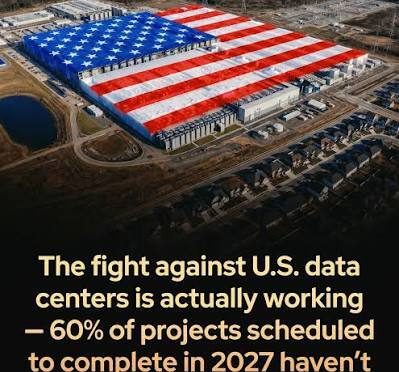
The problem isn’t just generation. Transmission networks are strained. Permitting timelines stretch to seven years. And local communities, once eager for the tax revenue that data centers bring, are increasingly organized against them.
The result is a speed mismatch that is reshaping the AI industry: data centers can be built in 18 to 24 months, but the power infrastructure to run them takes much longer.
The $110 Billion Generation Gap
The numbers behind the power crunch are stark. According to Moody’s, the U.S. needs approximately $110 billion in new generation capacity to serve data center demand. That’s on top of the transmission investment required to move power from where it’s generated to where it’s needed.
The challenge is that the U.S. grid wasn’t designed for this kind of concentrated, rapidly growing demand. Data centers cluster in specific regions—Northern Virginia, Texas, Arizona, Ohio—where land, fiber, and tax incentives are favorable. Those regions are now facing capacity constraints that didn’t exist five years ago.
On one grid covering 67 million users—including the swing state of Pennsylvania and the Senate battleground of Ohio—data center demand growth pushed costs up by $9.3 billion in a single year, a 174% increase. That figure has made electricity prices a political issue in a way they haven’t been for decades.
The Political Backlash Is Real
The politics of data centers have shifted dramatically in 2026. In September, the U.S. House of Representatives passed the Ratepayer Protection Act by a vote of 417 to 3. The bill would require state utility regulators to ensure that data centers bear the costs of new generation and transmission, rather than passing those costs to residential customers.
A 417-3 vote in a polarized Congress is remarkable. It signals that the data center power issue has become a rare point of bipartisan agreement.
The political pressure is coming from multiple directions. Texas Governor Greg Abbott has frozen new data center projects pending a study of their impact on power and water. New York has imposed a one-year moratorium on new hyperscale data centers. In at least 20 races across 18 states, candidates have aired TV ads mentioning data centers, split almost evenly between Democrats and Republicans.
Local opposition is also intensifying. In Brazoria, Texas, resident Melissa Burnett told Agence France-Presse that a 17-megawatt facility near her home sounds “like a freight train coming at you forever.” Water consumption, noise, and tax breaks for wealthy tech companies have all become flashpoints.
AI Companies Are Building Their Own Power
Faced with grid constraints, major tech companies are shifting from passive customers to active power investors.
Google announced a €13 billion investment in Finland in September 2026, including new data centers and clean energy projects. The company also signed a 22-year power purchase agreement with Finland’s Fortum, securing up to 50% of the output from the Loviisa nuclear plant—its first nuclear deal outside the United States.
Microsoft signed a 20-year PPA with Constellation Energy to support the restart of an 835 MW nuclear unit at Three Mile Island in Pennsylvania. Reports suggest Microsoft plans to expand its global data center capacity to roughly 38 GW by 2032.
Meta announced partnerships with Vistra, TerraPower, and Oklo, supporting up to roughly 6.6 GW of nuclear capacity by 2035. The company has also committed over 1 GW of deployment for its custom MTIA 450 AI chips, which are designed to reduce energy consumption for AI inference.
Amazon invested $500 million in small modular reactor company X-energy, targeting more than 5 GW of next-generation nuclear capacity by 2039. AWS also secured up to 1.9 GW of existing nuclear output from the Susquehanna plant in Pennsylvania.
The industry calls this approach BYOP—Bring Your Own Power. It’s a recognition that the grid cannot scale fast enough to meet AI demand.
Behind-the-Meter Power: The Bridge Solution
Nuclear solves the long-term baseload problem, but AI data center expansion can’t wait years. Natural gas and behind-the-meter generation are filling the gap.
According to SemiAnalysis, there are roughly 75 GW of firm behind-the-meter power orders globally for AI compute, with about 20 GW originating in the second quarter of 2026 alone. Natural gas turbines and energy storage systems are being deployed at data center sites to provide power independently of the grid.
This approach has advantages beyond speed. Behind-the-meter generation avoids the transmission bottlenecks that slow grid-connected projects. It also gives data center operators more control over their power costs and reliability.
The trade-off is environmental. Natural gas generation produces emissions, and some states are scrutinizing whether behind-the-meter plants should be subject to the same permitting requirements as utility-scale facilities.
The Semiconductor Connection
The power crunch is also affecting semiconductor manufacturing. SK Hynix is reportedly in talks with Intel to manufacture memory chips in the United States, potentially leasing part of Intel’s long-planned Ohio semiconductor facility.
The discussions reflect pressure from the Trump administration, which has suggested that companies not manufacturing in the U.S. could face higher tariffs. Commerce Secretary Howard Lutnick said in September that the policy is “basically ‘if you build here, you don’t pay; if you don’t build here, expect to pay to enter the greatest market in the world.’”
SK Hynix already broke ground in August 2026 on a $3.87 billion advanced packaging facility in West Lafayette, Indiana, targeting mass production of high-bandwidth memory in the second half of 2029. That facility will package DRAM produced in South Korea into HBM for U.S. AI chip customers.
Manufacturing memory wafers in the U.S. would be a significant escalation. High-bandwidth memory and advanced DRAM are classified as national core technologies in South Korea, meaning any overseas production plans require government approval.
What This Means for AI’s Future
The power constraint is changing the economics of AI infrastructure. For years, the cost of AI compute was dominated by chips. Now, electricity is becoming a larger share of total cost of ownership. Companies that can secure reliable, affordable power will have a structural advantage.
The grid investment gap also creates opportunities. Utilities that can accelerate generation and transmission projects will benefit. Companies that provide behind-the-meter solutions—natural gas turbines, energy storage, small modular reactors—are seeing unprecedented demand.
For AI developers, the message is clear: the constraint isn’t just silicon anymore. It’s watts. The companies that recognize this early and build power strategies alongside chip strategies will be the ones that scale.


