




Introduction
Apple has been the last major holdout in the foldable phone market. Samsung, Google, Huawei, and Motorola have all shipped foldables for years, while Apple watched, waited, and—according to the company’s own logic—refined. On September 9, 2026, at a launch event at Apple Park, that patience finally ended.
The iPhone Duo is Apple’s first foldable smartphone, and it comes with a starting price of $1,999 . That is not a typo. It costs more than most laptops, more than a MacBook Air, and roughly twice the price of a flagship iPhone Pro. Apple is betting that a significant number of people will pay a premium for a device that folds in half.
The question is whether that bet makes sense. Foldables have existed for years without becoming mainstream. Apple’s entry doesn’t change the physics of the category. But it does change the software, the chip, and the ecosystem—and that might be enough to matter.
The Hardware: A Passport-Sized Computer
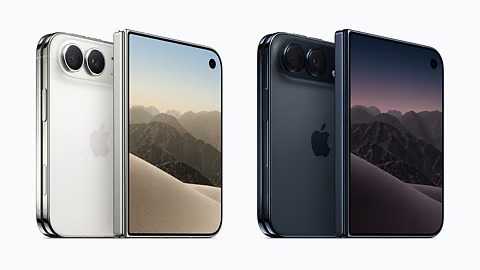
The iPhone Duo’s design is straightforward in concept and complex in execution. When closed, it is roughly the size of a passport . When opened, it reveals a 7.6-inch inner display—the largest ever on an iPhone—paired with a 5.4-inch outer display .
Apple says the device is its thinnest iPhone to date when unfolded, and it’s built from Grade 5 titanium with a “precision hinge” . The inner and outer Super Retina XDR displays share the same aspect ratio, which means content scales proportionally as you move between screens. That’s a small detail with significant implications: it means apps designed for the outer screen don’t need to be rebuilt for the inner screen. They just scale.
The device also uses a dual-battery architecture and a custom vapor chamber for thermal management. Apple claims up to 31 hours of video playback on the inner display and 44 hours on the outer display . Those numbers suggest that the foldable form factor doesn’t come at the cost of battery life, which has been a persistent concern with competing devices.
The A20 Pro Chip: Built for On-Device AI
The iPhone Duo is powered by Apple’s new A20 Pro chip, the same processor used in the iPhone 18 Pro models . The chip is built on a 2-nanometer process and features a six-core CPU, a seven-core GPU, and a dual 16-core Neural Engine designed to support on-device AI workloads .
The emphasis on on-device AI is deliberate. Apple has been positioning itself as the privacy-conscious alternative to cloud-based AI services, and the A20 Pro’s Neural Engine is designed to run AI models locally rather than sending data to servers. That matters for both privacy and latency—on-device processing is faster and doesn’t require a network connection.
The 2nm process is also significant. It represents the most advanced semiconductor manufacturing technology available, and it gives Apple a performance and efficiency advantage over competitors still using 3nm or 4nm processes. The A20 Pro is not just a chip for a foldable phone. It’s a statement about Apple’s manufacturing partnerships and its ability to secure leading-edge capacity.
iOS 27 and Split View: The Software Makes the Difference
Hardware alone doesn’t make a foldable compelling. The software experience determines whether a foldable feels like a phone that happens to fold or a new category of device entirely. Apple has redesigned parts of iOS 27 to accommodate the foldable form factor .
The centerpiece is a new Split View feature that allows users to run two apps side by side on an iPhone for the first time. It also enables opening two windows of the same app . That’s a capability that has existed on iPad for years, but bringing it to a phone-sized device—even a foldable one—changes how the device can be used.
The iPhone Duo also ships with Apple Intelligence and Siri AI. Apple says Siri AI will begin rolling out as a beta with iOS 27 on September 14 for supported devices set to English, with additional languages following in October . The timing matters: Apple is shipping the foldable with its AI assistant still in beta, which suggests the company is prioritizing the hardware launch over waiting for software maturity.
The Pricing Question
At **$1,999**, the iPhone Duo is not competing with other foldables on price. Samsung’s Galaxy Z Fold series starts at around $1,800, and Google’s Pixel Fold is similarly priced. Apple’s entry is at the top of the range, not the bottom.
The storage options go up to 2TB, which suggests Apple expects professional users and creatives to be the primary buyers . The phone will be available in star white and night sky .
Pre-orders begin October 16 in more than 70 countries, with availability starting October 23. An additional 28 countries will get the device on October 30 .
What This Means for the Foldable Market
Apple’s entry into foldables is unlikely to make the category mainstream overnight. The price is too high, the form factor is still unfamiliar to most users, and the software ecosystem for foldables remains underdeveloped compared to traditional smartphones.
But Apple’s entry does change the dynamics in a few important ways.
First, it validates the category. For years, foldables were seen as a niche product for early adopters. Apple’s entry signals that the company believes there is a sustainable market for devices with larger, foldable screens.
Second, it raises the bar for software. Apple’s Split View implementation and the proportional scaling between inner and outer displays set a standard that other manufacturers will need to match. Foldables are only as good as their software.
Third, it brings developer attention. With Apple in the market, developers have a new incentive to optimize their apps for foldable form factors. That could accelerate the maturity of the ecosystem in ways that competing platforms couldn’t achieve alone.
The iPhone Duo is not a cheap device. It is not for everyone. But it is Apple’s answer to a question that has been asked since the first foldable phones appeared: what happens when the world’s most valuable technology company decides a form factor is worth pursuing?
The answer, it turns out, costs $1,999.


