




Introduction
The American energy industry is entering a period of significant change. Electricity demand is increasing, manufacturers are looking for ways to reduce industrial emissions, and businesses are exploring alternatives to conventional fossil fuels. While solar power, wind energy, nuclear technology, and battery storage receive considerable attention, another technology is becoming an important part of the energy conversation: clean hydrogen.
Hydrogen is not a new industrial material. It has been used for decades in petroleum refining, chemical manufacturing, fertilizer production, and other industrial processes. What is changing is the way companies are trying to produce, store, transport, and use it.
In 2026, clean hydrogen technology is attracting attention across the United States because it could help address energy challenges that are difficult to solve with direct electrification alone. Heavy industry, chemical production, certain transportation applications, and long-duration energy storage are among the areas where hydrogen may have a role.
American companies are developing electrolyzers, fuel cells, hydrogen storage equipment, and integrated production facilities. Energy providers are also testing ways to combine renewable electricity, hydrogen production, storage, and power generation.
Recent developments illustrate this progress. Plug Power announced a new utility-scale electrolyzer plant offering in November 2026, with a proposed 280-megawatt hydrogen project in Texas as its first customer. Duke Energy Florida also demonstrated a system designed to produce, store, and use green hydrogen for electricity generation.
However, the industry still faces significant challenges. Hydrogen production can be expensive, infrastructure is limited, and the environmental benefits depend heavily on how the gas is produced. Government incentives, project financing, electricity prices, and customer demand will all influence the industry’s development.
What Is Clean Hydrogen Technology?
Hydrogen is a chemical element that can be used as an industrial feedstock, an energy carrier, or a fuel. It can be produced through several different processes, and those processes do not all have the same environmental impact.
The term clean hydrogen generally refers to hydrogen produced through methods that meet defined emissions criteria. It is important to understand that hydrogen itself is not automatically clean simply because it produces no carbon dioxide at the point of use.
The production process, electricity source, natural gas supply, and carbon-management system all affect its overall environmental footprint.
Green Hydrogen
Green hydrogen is generally produced by using electricity from renewable sources to split water into hydrogen and oxygen through a process called electrolysis.
Solar and wind electricity can power this process. When the electricity supply is genuinely low-carbon, green hydrogen can offer a pathway to producing hydrogen with low lifecycle emissions.
The main challenge is cost. Electrolyzers require investment, and electricity is a major operating expense. Developers need reliable access to affordable power and customers willing to purchase the hydrogen.
Blue Hydrogen
Blue hydrogen is commonly produced from natural gas using processes such as steam methane reforming, combined with carbon capture and storage.
The carbon capture system is intended to prevent some of the carbon dioxide generated during production from entering the atmosphere. However, the total environmental impact depends on capture performance, energy consumption, methane leakage, and the treatment of captured carbon dioxide.
Blue hydrogen is therefore not automatically emissions-free. Its actual environmental performance must be evaluated using lifecycle emissions data.
Other Hydrogen Production Methods
Researchers and businesses are also exploring additional approaches, including biomass-based hydrogen, waste-derived hydrogen, and emerging electrochemical processes.
Different production methods may become suitable for different locations and industrial requirements. The most practical option will depend on available energy resources, feedstocks, infrastructure, costs, and emissions standards.
Why Clean Hydrogen Is Important for the United States
The United States has a large industrial economy with energy requirements that cannot always be met easily through direct electricity use.
Some industrial processes require high-temperature heat or chemical reactions involving hydrogen. Steelmaking, fertilizer production, refining, and chemical manufacturing are examples of sectors where hydrogen could support changes in production methods.
Hydrogen may also help connect different parts of the energy system. Renewable electricity can be used to produce hydrogen, which can then be stored and used later in industrial processes or certain power-generation applications.
This does not mean hydrogen should replace every other energy technology. Batteries are often more efficient for short-duration electricity storage, and direct electrification is usually preferable when practical. Hydrogen may be most valuable in applications where other alternatives are difficult, expensive, or technically unsuitable.
The US Department of Energy identifies hydrogen production, delivery, storage, conversion, and end-use applications as important areas of research and development. Its hydrogen initiatives also include regional hub development and efforts to improve electrolyzer performance and affordability.
Major Clean Hydrogen Developments in the USA in 2026
The American hydrogen sector is progressing through technology development, industrial demonstrations, and commercial project announcements.
1. Plug Power Introduces a New Large-Scale Electrolyzer Plant Offering
One of the notable developments in November 2026 came from Plug Power.
On November 17, 2026, the company announced the commercial launch of GenEco Scale, an integrated electrolyzer plant offering designed for utility-scale hydrogen production.
The system uses proton exchange membrane technology, commonly known as PEM electrolysis. Its proposed architecture is based on standardized 20-megawatt modules that can be combined for larger installations.
Plug identified Arcadia eFuels’ proposed 280-megawatt Project ARC in Texas as the first customer project for the new offering.
The project is designed to produce renewable hydrogen as a feedstock for electro-sustainable aviation fuel. According to the announcement, the facility is intended to support annual production of approximately 23.2 million gallons of e-SAF once operational.
The company’s approach focuses on simplifying large installations through pre-engineered equipment and integrated supporting systems. This could help developers reduce engineering complexity and improve construction planning.
However, a commercial product announcement and a proposed customer project do not mean that the facility is already operating. Financing, permitting, construction, electricity supply, and other project requirements will determine whether and when the project becomes operational.
This development is important because large hydrogen projects need more than individual electrolyzer units. They require complete systems that integrate electricity, water treatment, gas processing, cooling, safety equipment, and controls.
2. Duke Energy Florida Demonstrates Green Hydrogen for Power Generation
Another important development came from Duke Energy Florida.
In January 2026, the company unveiled its DeBary Hydrogen Production Storage System in Volusia County, Florida.
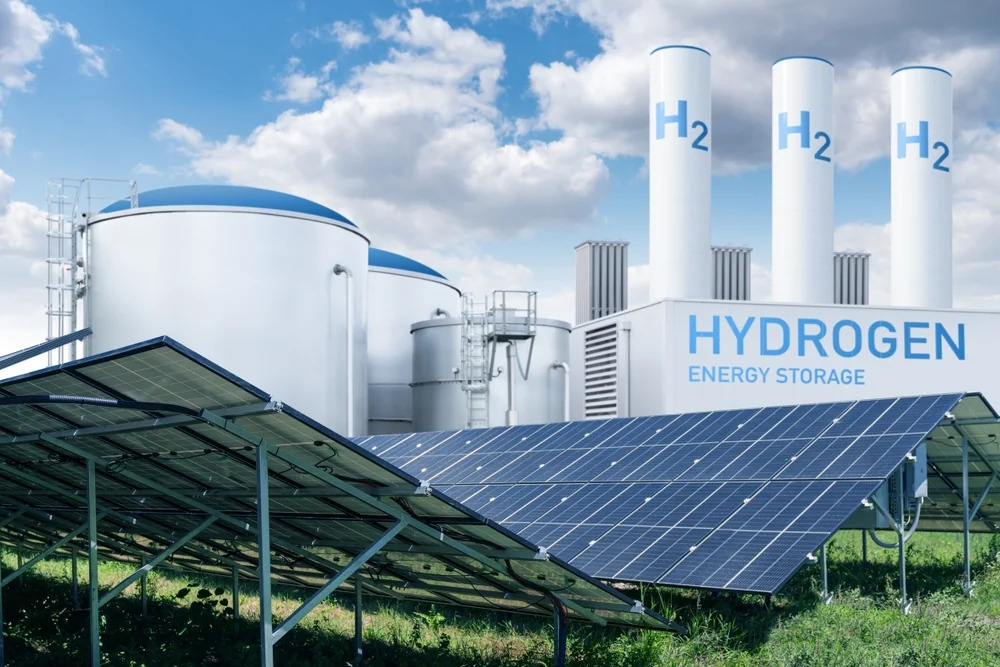
The demonstration combines solar electricity, electrolyzers, hydrogen storage, and an upgraded combustion turbine. Solar power supplies electricity to electrolyzer units, which separate water into hydrogen and oxygen.
The hydrogen is stored in reinforced containers and can later be supplied to a turbine designed to operate on a blend of natural gas and hydrogen or up to 100% hydrogen.
The system is notable because it demonstrates several parts of the hydrogen energy chain together:
- Renewable electricity used for hydrogen production.
- Electrolyzer equipment for splitting water.
- Storage equipment for holding the hydrogen.
- Turbine technology for converting stored hydrogen into electricity.
This type of system could help energy providers investigate how hydrogen might complement renewable electricity.
Solar and wind generation can vary with weather conditions and time of day. Stored hydrogen may provide another option for generating electricity when renewable output is lower, although the overall efficiency and cost of the complete process remain important considerations.
3. EVOLOH and 3M Explore Industrial Hydrogen Production
In May 2026, US-based electrolyzer company EVOLOH announced a commercial-scale pilot project involving a 2.5-megawatt packaged hydrogen system at a 3M manufacturing facility.
The proposed project is intended to demonstrate electrolyzer performance in an industrial environment and support emissions-reduction applications.
EVOLOH’s technology uses anion exchange membrane electrolysis, or AEM. This approach is being developed as an alternative to established electrolyzer technologies.
The company says its system uses materials and manufacturing methods intended to reduce equipment costs and support domestic production.
The project is especially relevant because industrial demonstrations can reveal how equipment performs under real operating conditions. Factors such as reliability, maintenance requirements, electricity consumption, and production consistency are difficult to evaluate fully through laboratory testing alone.
The project is planned for operation in 2027, subject to necessary approvals and other requirements.
How Electrolyzer Technology Works
Electrolyzers are among the most important components of green hydrogen production.
Their purpose is to use electricity to split water into hydrogen and oxygen. Although the basic chemical reaction is relatively straightforward, producing hydrogen efficiently at commercial scale requires advanced materials, electrical systems, thermal management, water treatment, and safety controls.
There are several important electrolyzer technologies.
Proton Exchange Membrane Electrolyzers
PEM electrolyzers use a polymer membrane to conduct protons while separating the hydrogen and oxygen production sides.
They can respond relatively quickly to changes in electricity supply, which makes them attractive for applications involving variable renewable energy.
Their challenges include equipment cost, durability, and the use of certain expensive materials.
Alkaline Electrolyzers
Alkaline electrolysis is an established method that uses an alkaline liquid electrolyte.
The technology has been used in industrial applications for many years. It is an important option for large-scale hydrogen production, particularly where steady operating conditions are available.
Anion Exchange Membrane Electrolyzers
AEM technology is being developed to combine some advantages of alkaline and membrane-based systems.
Researchers and manufacturers are working to improve membrane performance, durability, efficiency, and manufacturing scalability.
If these systems become commercially competitive, they could expand the range of equipment available to hydrogen project developers.
Solid Oxide Electrolyzers
Solid oxide electrolysis uses high-temperature steam and ceramic materials to produce hydrogen.
Because it operates at elevated temperatures, it may offer efficiency advantages in facilities that can supply suitable heat. However, durability, materials performance, and system complexity remain important engineering considerations.
No single electrolyzer technology is ideal for every project. Developers must compare operating conditions, electricity prices, equipment lifetime, maintenance, and total system cost.
Major Applications of Clean Hydrogen in the USA
Hydrogen can support several industries, but its value depends on whether it offers a practical advantage over available alternatives.
1. Steel Manufacturing
Traditional steel production can involve substantial carbon emissions, particularly when coal-based processes are used.
Hydrogen-based direct reduced iron is one alternative being investigated. In this process, hydrogen can act as a reducing agent to remove oxygen from iron ore.
When low-emissions hydrogen is available, this method may help reduce the carbon footprint of steel production.
The challenge is that steel plants require enormous and consistent supplies of energy and raw materials. Hydrogen supply, production costs, and new industrial equipment must all be considered before large-scale adoption becomes practical.
2. Fertilizer and Ammonia Production
Hydrogen is already an important ingredient in ammonia manufacturing.
Ammonia is widely used to produce nitrogen-based fertilizers, making hydrogen essential to a major part of the agricultural supply chain.
Replacing conventional hydrogen production with lower-emissions alternatives could reduce the carbon footprint of ammonia manufacturing.
This is one reason fertilizer facilities are often considered potential early customers for clean hydrogen. They already consume hydrogen as part of their industrial processes, so the challenge is partly about changing how that hydrogen is produced.
3. Heavy-Duty Transportation
Long-distance trucks, buses, and certain commercial vehicles are sometimes discussed as possible hydrogen fuel-cell applications.
A hydrogen fuel cell converts hydrogen into electricity, which can power an electric motor. The vehicle’s main operating emissions are water and heat rather than carbon dioxide from fuel combustion.
Hydrogen vehicles may offer advantages in certain operations where rapid refueling and vehicle utilization are important.
However, battery-electric vehicles are already a strong option for many transportation applications. Hydrogen vehicles also need fueling stations, reliable fuel supplies, and competitive operating costs.
The best technology will depend on vehicle type, route length, payload, local infrastructure, and energy prices.
4. Aviation and Sustainable Aviation Fuel
Aviation is difficult to decarbonize because aircraft require energy-dense fuels and must operate over long distances.
Hydrogen can be used as a feedstock for producing synthetic aviation fuels when combined with an appropriate source of carbon.
These fuels are often called e-fuels or electro-sustainable aviation fuels.
The Project ARC announcement involving Plug Power and Arcadia eFuels is an example of how hydrogen production equipment may support the development of alternative aviation fuels.
Commercial success will depend on the availability and cost of renewable electricity, hydrogen production efficiency, carbon sourcing, fuel certification, and airline demand.
5. Electricity Generation and Energy Storage
Hydrogen can be stored and later converted into electricity using fuel cells or combustion turbines designed for hydrogen operation.
This may provide another option for balancing electricity supply and demand, particularly in energy systems with substantial renewable generation.
However, converting electricity into hydrogen and then back into electricity involves energy losses. Battery storage is generally more efficient for many shorter-duration applications.
Hydrogen-based storage may be more relevant where longer storage periods, industrial demand, or existing gas-generation infrastructure create a specific advantage.
6. Chemical and Industrial Manufacturing
Chemical facilities use hydrogen in multiple processes, including refining and the production of industrial materials.
These facilities may provide important opportunities for clean hydrogen because they already have equipment, trained personnel, and established demand.
Replacing conventional hydrogen with a lower-emissions supply can be more practical than trying to create an entirely new market.
Hydrogen Storage and Transportation Infrastructure
Producing hydrogen is only one part of building a hydrogen economy. The gas must also be stored, transported, and delivered safely.
Hydrogen has a low volumetric energy density under ordinary conditions. This means that storing useful quantities requires specialized systems.
Compressed Hydrogen Storage
Hydrogen can be compressed and stored in specially designed high-pressure tanks.
This approach is used in certain vehicle fueling systems and industrial applications.
Storage vessels must be designed for hydrogen service and inspected according to appropriate safety requirements.
Liquid Hydrogen Storage
Hydrogen can also be cooled to extremely low temperatures until it becomes liquid.
Liquid hydrogen occupies less space than the same quantity of gaseous hydrogen at ordinary conditions, but liquefaction requires considerable energy and specialized equipment.
It may be suitable for selected transportation and industrial supply chains.
Hydrogen Pipelines
Pipelines may provide an efficient way to move large quantities of hydrogen between production facilities and industrial customers.
However, hydrogen can create materials and engineering challenges for some existing pipeline systems. Developers must evaluate compatibility, leakage, compression, safety, and regulatory requirements before using existing infrastructure.
Regional Hydrogen Hubs
The US Department of Energy’s regional hydrogen hub initiative is designed to connect hydrogen producers, consumers, and infrastructure.
The objective is to support regional networks where production and demand can develop together.
For example, a region with chemical manufacturers, transportation operators, energy providers, and suitable electricity resources may be able to support a connected hydrogen supply chain.
The success of these hubs depends on actual customer demand, project financing, infrastructure construction, and long-term operating economics.
Government Policies and Financial Incentives
Government policy plays an important role in the development of clean hydrogen projects.
Hydrogen production facilities often require significant initial investment. Incentives and tax rules can influence project economics, especially during the early stages of commercial deployment.
The Clean Hydrogen Production Tax Credit
The federal Section 45V Clean Hydrogen Production Tax Credit was established to support qualifying clean hydrogen production.
The credit structure is tied to the lifecycle greenhouse gas emissions associated with hydrogen production. Eligibility and the amount of credit depend on applicable requirements, including emissions intensity and certain labor standards.
The rules have also been affected by subsequent federal legislation and implementation decisions. Project developers should review current IRS guidance and consult qualified tax professionals rather than relying on older summaries of the incentive.
A project that appears economically attractive under one policy scenario may become less attractive if eligibility rules, deadlines, or financing assumptions change.
Department of Energy Research and Development
The Department of Energy supports research into hydrogen production, storage, transportation, fuel cells, and industrial applications.
Its research programs involve national laboratories, universities, and private-sector partners.
A major focus is improving electrolyzer efficiency, durability, manufacturing processes, and system costs.
These improvements matter because hydrogen must compete with conventional fuels and other low-carbon technologies. Reducing the cost of production and delivery is essential for broader commercial adoption.
The Importance of Policy Stability
Large industrial energy projects often require years of planning, engineering, permitting, financing, and construction.
Investors therefore need confidence that the policy environment will remain sufficiently predictable.
A March 2026 Congressional Research Service analysis discussed the Section 45V credit and the effects of changes to federal hydrogen policy. It also highlighted how project economics and eligibility requirements influence development decisions.
Policy uncertainty can delay investment, change project designs, or cause developers to reconsider whether a proposed facility is financially viable.
Business Opportunities in the American Hydrogen Industry
The hydrogen sector creates opportunities for companies across several parts of the supply chain.
Electrolyzer manufacturing: Businesses can develop stacks, membranes, power electronics, and integrated production systems.
Storage equipment: Manufacturers can supply pressure vessels, cryogenic systems, valves, sensors, and safety equipment.
Industrial engineering: Engineering firms can design hydrogen facilities, pipelines, processing equipment, and control systems.
Fuel-cell development: Companies can build fuel cells for stationary power, specialized vehicles, and backup applications.
Hydrogen transportation: Logistics providers can develop specialized delivery systems and distribution services.
Digital monitoring: Software companies can create systems for monitoring equipment performance, detecting leaks, managing energy use, and optimizing production.
These opportunities are not guaranteed sources of profit. Companies must consider customer demand, capital requirements, equipment reliability, regulation, competition, and the availability of affordable energy.
Challenges That Could Slow Hydrogen Adoption
Despite its potential, clean hydrogen faces several obstacles.
High Production Costs
Producing hydrogen through electrolysis requires electricity, water, and expensive industrial equipment.
If electricity prices are high, the cost of hydrogen can become difficult to justify.
Manufacturers are working to improve efficiency and reduce equipment costs, but commercial economics vary considerably by location and project design.
Limited Infrastructure
Many regions do not yet have extensive hydrogen pipelines, storage facilities, or fueling stations.
Without infrastructure, it can be difficult for producers to reach customers. At the same time, investors may hesitate to build infrastructure before demand is established.
This creates a coordination challenge between producers, customers, and logistics providers.
Energy Efficiency
Hydrogen is an energy carrier rather than a primary energy source.
When electricity is converted into hydrogen, stored, transported, and converted back into electricity, energy is lost at each stage.
For this reason, direct electricity use or battery storage may be more efficient in many applications.
Hydrogen is most promising where its chemical properties or storage characteristics provide a meaningful advantage.
Water and Resource Requirements
Electrolysis requires water, and large facilities need reliable supplies of suitable quality.
Projects in water-stressed areas may need additional treatment, recycling, or alternative water sourcing arrangements.
The full environmental impact should therefore consider local water availability and the electricity used by the facility.
Safety and Technical Standards
Hydrogen is highly flammable and requires appropriate engineering, monitoring, ventilation, and emergency procedures.
Industrial facilities need trained personnel and equipment designed for hydrogen service.
Strong safety standards and well-maintained infrastructure are essential for building public and commercial confidence.
Uncertain Customer Demand
A hydrogen plant needs customers who are willing and able to purchase its output over an extended period.
Announcements and proposed agreements do not always translate into completed projects. Financing, permits, construction costs, and changing market conditions can delay or cancel developments.
The Future of Clean Hydrogen Technology in the USA
The next several years could be important for determining which hydrogen technologies become commercially competitive.
More Efficient Electrolyzers
Electrolyzer manufacturers will continue working to improve conversion efficiency, durability, manufacturing scale, and system integration.
Better performance could help reduce the cost of producing hydrogen, particularly when electricity prices are favorable.
Integration with Renewable Energy
Hydrogen facilities may increasingly be designed around renewable electricity resources.
Projects could use solar and wind power directly or through carefully structured electricity supply arrangements.
Flexible electrolyzers may help producers respond to changing electricity availability, although equipment utilization and operating costs must be balanced.
Industrial Hydrogen Demand
Chemical manufacturers, fertilizer producers, steel companies, and fuel developers could become important customers.
Existing industrial demand may offer a more practical starting point than trying to create entirely new hydrogen markets.
Hydrogen-Based Synthetic Fuels
Hydrogen may support the production of synthetic aviation fuels and other industrial products.
This could become important in sectors where direct electrification is challenging.
Better Storage and Distribution
New storage materials, improved pressure vessels, pipeline engineering, and monitoring systems could make hydrogen delivery more practical.
Regional infrastructure development will be especially important because production facilities need dependable access to customers.
Digital Controls and Artificial Intelligence
AI and industrial software may help hydrogen producers manage electricity consumption, monitor electrolyzer health, predict maintenance needs, and optimize production schedules.
Digital monitoring could also help operators identify unusual operating conditions and improve equipment reliability.
However, industrial control systems must be designed with appropriate cybersecurity and safety protections.
Conclusion
Clean hydrogen technology is becoming an important part of the United States’ energy and industrial innovation landscape in 2026. Companies are developing new electrolyzers, testing renewable hydrogen production, and exploring applications in manufacturing, aviation fuels, transportation, and electricity generation.
Recent developments from Plug Power, Duke Energy Florida, and EVOLOH demonstrate the range of activity taking place across the industry. They also show that hydrogen is moving beyond laboratory research into commercial equipment development and real-world demonstrations.
Nevertheless, the industry’s future is not guaranteed. Production costs, electricity prices, infrastructure, customer demand, environmental performance, and government policy will determine which projects succeed.
Hydrogen should not be viewed as a universal replacement for electricity, batteries, or conventional energy systems. Its greatest value may come from applications where it can solve specific industrial and energy challenges that are difficult to address through other technologies.
As equipment improves and more projects demonstrate reliable performance, clean hydrogen could become a valuable part of America’s future energy system. The coming years will reveal whether the industry can turn promising technology and investment announcements into sustainable, commercially successful operations.
Frequently Asked Questions (FAQs)
1. What is clean hydrogen technology?
Clean hydrogen technology includes the equipment and processes used to produce, store, transport, and use hydrogen with relatively low lifecycle greenhouse gas emissions. It includes electrolyzers, fuel cells, storage systems, pipelines, and industrial applications.
2. What is green hydrogen?
Green hydrogen is generally produced by splitting water through electrolysis using renewable electricity, such as solar or wind power. Its environmental performance depends on the electricity supply and the full production process.
3. Which US companies are working on hydrogen technology?
Companies involved in the American hydrogen sector include Plug Power, industrial technology developers such as EVOLOH, and energy companies such as Duke Energy. Their activities range from electrolyzer development to power-generation demonstrations.
4. How is hydrogen produced using solar energy?
Solar panels generate electricity that can power an electrolyzer. The electrolyzer uses that electricity to split water into hydrogen and oxygen. The resulting hydrogen can be stored or supplied to an industrial customer.
5. Can hydrogen be used to generate electricity?
Yes. Hydrogen can generate electricity through fuel cells or specially designed combustion turbines. The overall efficiency depends on how the hydrogen was produced, stored, and converted into electricity.
6. Is hydrogen better than battery storage?
Neither technology is universally better. Batteries are generally more efficient for many short-duration electricity storage applications. Hydrogen may be useful for selected industrial processes, chemical feedstocks, and longer-duration or specialized energy applications.
7. What is the biggest challenge for clean hydrogen in the USA?
High production costs and limited infrastructure are major challenges. Developers also need dependable customers, affordable electricity, suitable storage systems, and predictable regulatory conditions.
8. What is an electrolyzer?
An electrolyzer is a device that uses electricity to separate water into hydrogen and oxygen. It is a central technology for producing green hydrogen.
9. What is the role of the US Department of Energy in hydrogen development?
The Department of Energy supports research, technology development, demonstration projects, and infrastructure initiatives. Its programs focus on improving production, storage, transportation, and hydrogen applications.
10. What is the future of clean hydrogen in America?
The future will depend on production costs, industrial demand, infrastructure, technological improvements, and policy conditions. Hydrogen could become especially valuable in industrial sectors and applications where direct electrification is difficult.


