




Introduction: The Rise of Autonomous Vehicles in America
The automotive industry is entering a new phase in which software, artificial intelligence, sensors, and advanced computing are becoming just as important as engines, batteries, and vehicle design. Autonomous vehicles are at the center of this transformation. These vehicles use combinations of cameras, radar, lidar, navigation systems, and computer software to understand their surroundings and perform some or all driving tasks.
In the United States, self-driving technology is moving from research laboratories and controlled demonstrations into selected commercial services and real-world transportation networks. Robotaxis, advanced driver assistance systems, autonomous freight vehicles, and automated parking technologies are helping shape the next generation of mobility.
Companies such as Tesla, Waymo, Aurora, Zoox, and other technology and automotive businesses are pursuing different approaches. Some focus on driverless passenger rides, while others are developing autonomous trucking systems or software that assists human drivers.
However, the industry is not advancing without challenges. Safety concerns, government oversight, software reliability, cybersecurity, and public trust remain important issues. In October 2026, scrutiny of autonomous driving safety continued, illustrating why commercial expansion must be supported by transparent reporting and effective oversight.
This article explores autonomous vehicle technology in the USA in 2026, including how self-driving systems work, leading companies, robotaxi services, autonomous trucking, regulatory developments, career opportunities, and the technologies likely to influence the future of American transportation.
1. What Are Autonomous Vehicles?
Autonomous vehicles are vehicles equipped with technologies that can perform certain driving tasks with varying levels of human involvement. The term includes cars that assist drivers with steering and speed as well as vehicles designed to operate without a human driver within specific conditions.
The Society of Automotive Engineers (SAE) defines six levels of driving automation, ranging from Level 0 to Level 5.
- Level 0: The human driver performs the driving task, although warning systems may be available.
- Level 1: The vehicle provides assistance with either steering or speed control under defined conditions.
- Level 2: The vehicle can assist with steering and speed simultaneously, but the driver must remain attentive and responsible.
- Level 3: The automated system can perform the driving task under specified conditions, with a human expected to respond when requested.
- Level 4: The vehicle can perform the driving task without human intervention within its defined operating conditions.
- Level 5: The vehicle is designed to perform the driving task in all conditions that a human driver could reasonably handle, without needing a human driver.
These distinctions are important because not every vehicle marketed with advanced driving technology is fully autonomous.
For example, a driver assistance system may help maintain a lane and adjust speed to surrounding traffic, but it does not necessarily permit the driver to stop watching the road. A driverless robotaxi operating within an approved service area represents a different category of automation.
Understanding these differences helps consumers evaluate claims about self-driving technology and determine what responsibilities remain with the driver.
2. How Self-Driving Car Technology Works
Autonomous vehicles combine multiple technologies to interpret the environment, predict what may happen next, and decide how to move safely.
Cameras and computer vision
Cameras capture visual information about roads, lane markings, traffic signals, pedestrians, cyclists, and other vehicles. AI-based computer vision software processes these images to identify objects and estimate their movement.
Camera systems can provide valuable visual detail, but their performance can be affected by darkness, glare, heavy rain, snow, dirt, and obstructed views.
Radar and lidar
Radar uses radio waves to help estimate the distance and relative speed of objects. Lidar uses laser pulses to measure distances and can produce detailed representations of the surrounding environment.
Different manufacturers combine these sensors in different ways. Some rely heavily on cameras and AI, while others use multiple sensor types to create overlapping sources of information.
No individual sensor is perfect in every environment. The system’s overall reliability depends on sensor quality, software, testing, and how it handles conflicting or incomplete information.
Artificial intelligence and machine learning
AI systems process sensor information to recognize road users, interpret traffic situations, and estimate possible movements. Machine learning can help improve object detection and other capabilities using carefully developed training and validation processes.
The system must also decide when to accelerate, brake, change lanes, or remain stationary. These decisions require more than recognizing an object: the software must consider road rules, vehicle behavior, and potential hazards.
GPS and high-definition mapping
Satellite navigation helps determine a vehicle’s approximate location. Some autonomous systems also use detailed maps, landmarks, and other positioning techniques to estimate their location more accurately.
GPS alone is not sufficient for every driving task. Urban buildings, tunnels, signal interference, and changing road conditions can affect positioning. Autonomous vehicles therefore need suitable localization methods and fallback procedures.
Computing and vehicle control
Powerful onboard computers combine information from the vehicle’s sensors and run software that supports driving decisions. The resulting commands are sent to systems responsible for steering, braking, and acceleration.
For safe operation, manufacturers must test not only normal driving but also unexpected situations, component failures, and conditions outside the system’s intended operating range.
3. Waymo and the Expansion of Driverless Robotaxis
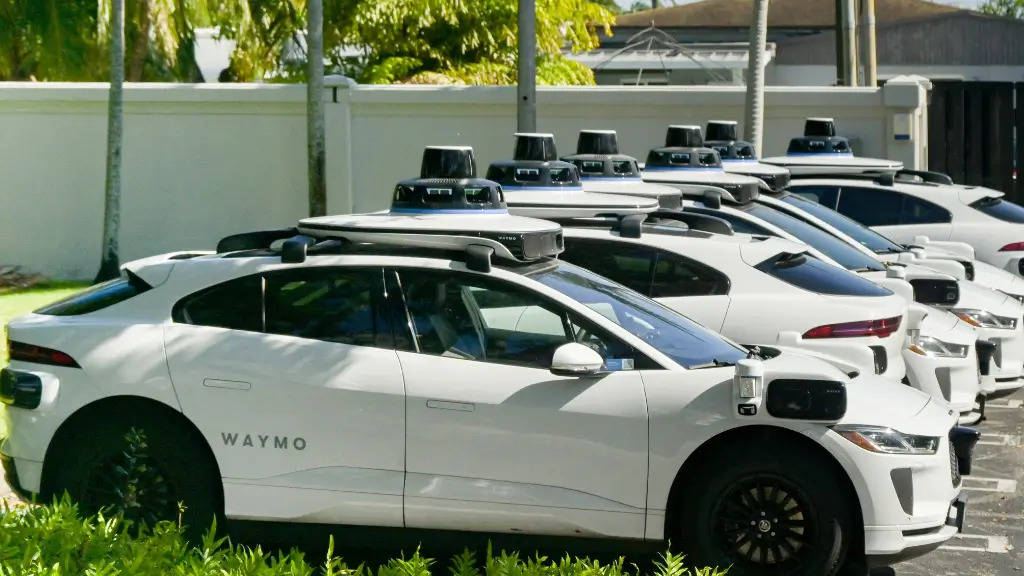
Waymo, associated with Alphabet, is one of the most prominent companies developing driverless ride-hailing services in the United States.
A robotaxi is a vehicle designed to transport passengers through an automated driving system. Depending on the service and its approved operating conditions, a robotaxi may complete trips without a human driver behind the steering wheel.
Waymo’s approach combines autonomous driving software, vehicle sensors, computing systems, mapping, and operational support. Its services have helped bring driverless rides into public view in selected American markets.
Official website: https://waymo.com/
How robotaxis work
A passenger generally requests a ride through an application. The service assigns an available vehicle, calculates a route, and transports the passenger to the destination within the service’s operating area.
Behind the scenes, the company must manage vehicle maintenance, charging or fueling, cleaning, remote assistance, software updates, fleet availability, and responses to unusual situations.
Benefits for passengers
Robotaxis may offer convenient transportation for people who do not own cars, cannot drive, or prefer not to drive in certain environments. They could also provide new mobility options for some older adults and people with disabilities, depending on vehicle accessibility and service design.
Challenges facing robotaxi operators
Driverless vehicles must deal with road construction, emergency vehicles, unusual traffic patterns, temporary road closures, and unpredictable behavior by other road users.
A vehicle that handles ordinary traffic well may still encounter difficulty in a rare or unusual situation. Operators must therefore test their systems extensively and provide effective ways to respond when vehicles stop, become confused, or require assistance.
Public acceptance also matters. Passengers and communities need confidence that the technology is reliable, that personal data is protected, and that incidents are investigated appropriately.
4. Tesla and AI-Based Driving Technology
Tesla is another major participant in the autonomous vehicle market. The company develops driver assistance software, onboard computing systems, and vehicles designed to support increasingly automated driving functions.
Tesla’s approach places significant emphasis on cameras, neural networks, and software development. Its driving features are designed to assist with certain driving tasks, but the capabilities and legal status of individual features depend on the specific system and jurisdiction.
Official website: https://www.tesla.com/
Driver assistance versus full autonomy
One of the most important distinctions for consumers is the difference between assistance and autonomous operation.
When a system requires a human driver to supervise its actions continuously, it should not be treated as a replacement for an attentive driver. A vehicle’s marketing name does not override its actual capabilities or the applicable laws.
Drivers should follow the owner’s manual, system instructions, and local requirements, keeping control of the vehicle whenever required.
Robotaxi development
Tesla has also pursued robotaxi services as part of its broader autonomous driving ambitions. Expanding such a service requires reliable software, suitable vehicles, operating procedures, fleet support, and compliance with applicable safety requirements.
In October 2026, Tesla’s robotaxi activities faced renewed safety scrutiny after reports of alleged speeding in school zones. The allegations were subject to regulatory review, rather than being a final determination that the vehicles had a safety defect. This development highlights the importance of distinguishing between a reported concern, an investigation, and a confirmed finding.
News coverage: https://www.businessinsider.com/tesla-robotaxis-nhtsa-school-zone-speeding-claim-2026-10
For the industry as a whole, the lesson is clear: advanced software capabilities must be evaluated alongside real-world safety performance.
5. Autonomous Trucking and the Future of Freight
Autonomous driving is not limited to passenger vehicles. Freight transportation is another area where automated systems could change how goods move across the United States.
The country depends on trucking to transport food, retail products, industrial materials, and other essential goods. Long-distance trucking can involve substantial operating costs, demanding schedules, and challenging working conditions.
Autonomous trucking companies are developing systems intended to automate some driving tasks, particularly on suitable highway routes.
Why highways are attractive
Highways often have clearer lane markings, controlled access, and more predictable traffic patterns than dense city streets. These characteristics may make certain highway operations suitable for carefully designed autonomous systems.
However, highway driving still involves construction zones, changing weather, debris, unexpected braking, and interactions with other vehicles.
The role of Aurora
Aurora Innovation is one company working on autonomous driving technology for freight transportation. Its work illustrates the effort to combine vehicle hardware, perception software, route planning, and commercial trucking operations.
Official website: https://aurora.tech/
Potential benefits
Autonomous freight technology could help logistics companies improve fleet utilization, collect consistent driving data, and support new operating models. In some settings, automated highway driving may eventually work alongside human drivers who handle other parts of a journey.
The impact on employment, driver responsibilities, and regional transportation networks will depend on how the technology is deployed.
Why adoption takes time
Commercial trucking requires high reliability because vehicles carry heavy loads and share roads with other traffic. Companies must address safety validation, maintenance, insurance, regulatory compliance, and the ability to operate in changing weather.
Autonomous trucking is therefore a gradual transition rather than an immediate replacement for conventional trucks.
6. Zoox and Purpose-Built Autonomous Vehicles
Most passenger cars are designed around a human driver, with steering wheels, pedals, mirrors, and controls arranged for conventional driving.
Purpose-built autonomous vehicles take a different approach. They are designed around the requirements of automated transportation rather than simply adding software to a standard passenger car.
Zoox, an Amazon-owned company, has developed a purpose-built robotaxi concept that uses a symmetrical vehicle design intended for bidirectional operation.
Official website: https://zoox.com/
Why purpose-built designs matter
A vehicle designed specifically for autonomous passenger service can potentially provide a different seating layout, passenger entry arrangements, and onboard interfaces.
Such vehicles may also be engineered around the needs of fleet operations, including maintenance, cleaning, charging, and passenger turnover.
The engineering challenges
A purpose-built robotaxi must satisfy relevant vehicle safety requirements while accommodating a design that differs from a conventional car. Manufacturers must address crash protection, emergency procedures, passenger security, and reliability.
They must also establish where the vehicles can operate, how they will be maintained, and how passengers can obtain assistance.
Purpose-built robotaxis show that autonomous transportation may eventually include new vehicle designs, not just familiar cars with more sophisticated software.
7. Autonomous Vehicles and Public Transportation
Self-driving technology could influence public transportation as well as private cars and ride-hailing services.
Transit agencies and technology companies are investigating automated shuttles and other vehicles that may serve campuses, business districts, airports, and selected urban routes.
Automated shuttles
Small autonomous shuttles may be suitable for predictable routes with defined stops and carefully managed operating conditions. They could connect passengers with larger transit networks or provide transport within large facilities.
Their usefulness depends on passenger capacity, route design, operating costs, accessibility, and local traffic conditions.
First-mile and last-mile transport
One challenge for public transportation is helping people travel between their homes or workplaces and major transit stations. Automated vehicles could eventually support selected feeder services, especially where conventional transit is less frequent.
Such services would still need to coordinate with transit schedules, road infrastructure, and local transportation policies.
Accessibility considerations
Autonomous transportation may offer opportunities for people who cannot drive themselves. However, accessibility must be designed into the service, including vehicle entry, wheelchair accommodation, passenger communication, and support when a journey does not proceed as planned.
Automation alone does not guarantee an accessible or affordable service.
8. Federal and State Regulations in the USA
Autonomous vehicles operate within a regulatory environment that involves federal agencies and state governments. Rules differ according to the vehicle, automation level, operating location, and whether the vehicle is being tested or deployed commercially.
The role of NHTSA
The National Highway Traffic Safety Administration (NHTSA) oversees important aspects of motor vehicle safety in the United States. It investigates potential safety defects, issues applicable vehicle safety standards, and collects information about certain crashes involving automated driving technologies.
NHTSA maintains a Standing General Order requiring identified manufacturers and operators to report certain crashes involving automated driving systems and Level 2 advanced driver assistance systems.
These reports help regulators identify potential safety issues. However, the data require careful interpretation because reporting coverage, vehicle use, and data availability differ among companies and systems.
Official resource: https://www.nhtsa.gov/laws-regulations/standing-general-order-crash-reporting
State-level oversight
States also regulate aspects of vehicle operation, testing, licensing, and deployment. California, for example, has a formal permit system for autonomous vehicle testing and deployment.
In April 2026, the California DMV announced new autonomous vehicle regulations covering light-duty and heavy-duty vehicles. The updated rules strengthened oversight and created a pathway for manufacturers to apply for permits involving heavy-duty autonomous vehicles used for freight and transit.
Official announcement: https://www.dmv.ca.gov/portal/news-and-media/new-autonomous-vehicle-regulations-strengthen-oversight-and-enforcement-authorize-trucks-and-transit/
Why regulation matters
Rules help define where vehicles may operate, what safety obligations manufacturers must meet, and how incidents should be reported.
A company permitted to test a vehicle in one location does not automatically have permission to operate a commercial driverless service everywhere in the country.
For this reason, businesses and consumers should check current official requirements instead of relying on general claims about the availability of self-driving technology.
9. Safety, Reliability, and Public Trust
Safety remains one of the most important issues in autonomous vehicle development. A self-driving system must recognize other road users, understand changing traffic conditions, and respond appropriately to unexpected events.
Handling unusual situations
Real roads contain situations that may be difficult to reproduce in testing. A temporary lane closure, a traffic officer giving unusual directions, or an emergency vehicle approaching from an unexpected angle may require careful interpretation.
Autonomous systems must be designed to recognize their limitations and move to a safe state when they cannot proceed confidently.
Understanding crash data
Crash reports can provide useful evidence, but they should not be interpreted without context. Different companies may operate different numbers of vehicles, cover different distances, and have different methods for recording incidents.
A meaningful safety comparison needs to consider factors such as exposure, driving environment, crash severity, reporting requirements, and the type of automation involved.
NHTSA’s reporting framework provides important information, but its data should not automatically be treated as a complete or directly comparable measure of every manufacturer’s performance.
Emergency response
Driverless vehicles need clear procedures for situations in which they stop unexpectedly, block a roadway, or encounter an emergency.
Emergency responders and local authorities may also need suitable ways to communicate with vehicle operators. Effective coordination is essential as automated fleets become more common.
Building public confidence
Trust is strengthened through transparent reporting, independent scrutiny, responsible product claims, and prompt responses to safety problems.
Manufacturers should explain what their systems can and cannot do, while drivers should understand when they must remain engaged.
10. Cybersecurity and Data Privacy in Self-Driving Cars
Autonomous vehicles rely on software, sensors, wireless communication, navigation data, and connected services. These capabilities introduce cybersecurity and privacy considerations.
Cybersecurity risks
Connected vehicle systems can face risks involving unauthorized access, malicious software, insecure communication, or compromised software updates.
Manufacturers can reduce these risks through secure development practices, authentication, access controls, software testing, vulnerability management, and incident-response planning.
Location and passenger data
Autonomous vehicles may collect information about routes, travel times, vehicle performance, and passenger interactions. Camera-equipped systems may also capture images of surrounding roads and public spaces.
Companies should establish clear policies describing what information is collected, how long it is retained, and when it may be shared.
Protecting connected systems
Cybersecurity is not solely a software issue. It also involves suppliers, maintenance procedures, employee access, cloud services, and the management of vehicle fleets.
As automated vehicles become more connected, protecting these systems will be important for both consumer confidence and transportation infrastructure.
11. Economic Impact and Career Opportunities
Autonomous vehicle technology is creating opportunities across automotive manufacturing, software development, robotics, data analysis, transportation, and safety engineering.
Potential career paths include:
- Autonomous vehicle software engineer.
- Robotics and machine-learning engineer.
- Computer vision specialist.
- Automotive cybersecurity analyst.
- Vehicle testing and validation engineer.
- Fleet operations manager.
- Mapping and localization specialist.
- Functional safety engineer.
- Autonomous trucking operations specialist.
- Vehicle maintenance technician.
Some positions require advanced technical degrees, while others focus on testing, fleet support, maintenance, or operational coordination.
Business opportunities
Companies may develop software platforms, sensors, simulation tools, testing services, charging infrastructure, fleet-management systems, and specialized vehicle components.
Local businesses may also provide cleaning, maintenance, passenger support, and charging services for commercial fleets.
Employment changes
Autonomous vehicles may change the tasks performed by drivers and other transportation workers. Some jobs could be affected by automation, while others may emerge in fleet operations, vehicle maintenance, software support, and safety management.
The long-term employment impact will depend on the pace of deployment, regulations, costs, customer acceptance, and the extent to which automated services become commercially viable.
12. The Future of Autonomous Vehicles in America
The future of self-driving technology will depend on more than improving AI models or adding additional sensors. Commercial success requires systems that perform reliably, fit into existing transportation networks, and meet safety and economic requirements.
Several trends are likely to shape the industry.
More specialized robotaxi services
Driverless ride-hailing may expand in locations where operators can demonstrate reliable performance and obtain the necessary permissions. Service areas may remain limited where road conditions, weather, or operating costs create additional challenges.
Continued development of autonomous freight
Highway freight is likely to remain an important area of research and commercial investment. Companies will continue working on reliable perception, safe maneuvering, fleet support, and integration with freight terminals.
Better simulation and testing
Virtual environments can help developers test software against many different road situations. Simulation does not replace real-world validation, but it can help identify problems before systems encounter them on public roads.
Improvements in AI and computing
More capable AI models and onboard computers may help vehicles interpret complex environments. These improvements must be evaluated carefully, since a model that performs well in one setting may still struggle in another.
Stronger emphasis on accountability
As automated vehicles become more visible, regulators and the public will continue asking how safety claims are verified, who is responsible when something goes wrong, and how incidents are investigated.
Gradual integration into transportation
The most practical future may involve a mix of conventional vehicles, driver assistance systems, driverless fleets, and public transportation. Different technologies will suit different routes, communities, and travel needs.
Conclusion
Autonomous vehicles in the USA in 2026 represent a major intersection of artificial intelligence, automotive engineering, robotics, and transportation services. Companies such as Waymo, Tesla, Aurora, and Zoox illustrate the variety of approaches being developed, from robotaxis to autonomous freight and purpose-built driverless vehicles.
The technology offers potential benefits, including new mobility options, improved logistics, and more automated transportation services. However, it also introduces challenges involving safety, cybersecurity, privacy, regulation, and public confidence.
The distinction between driver assistance and genuine driverless operation remains especially important. Consumers should understand their vehicle’s capabilities, and businesses should evaluate autonomous systems using evidence, appropriate testing, and applicable legal requirements.
Ultimately, the future of autonomous vehicles will depend on reliable technology, responsible oversight, and demonstrated benefits in real-world conditions. The companies that successfully combine innovation with safety and transparency will be better positioned to shape the next generation of American transportation.
Frequently Asked Questions (FAQs)
1. What are autonomous vehicles?
Autonomous vehicles use sensors, computing systems, and software to perform some or all driving tasks. Their capabilities range from driver assistance to fully driverless operation within defined conditions.
2. Which companies are developing autonomous vehicles in the USA?
Companies working in different areas include Waymo, Tesla, Aurora Innovation, Zoox, and other automotive and technology firms. Their products, capabilities, and operating permissions vary.
3. Are self-driving cars available to the public in the USA?
Some driverless ride-hailing services operate in selected locations, while many consumer vehicles offer driver assistance rather than fully autonomous driving. Availability depends on the company, location, vehicle, and applicable approvals.
4. What is a robotaxi?
A robotaxi is a vehicle designed to transport passengers using an automated driving system. A driverless robotaxi operates without a human driver performing the driving task within its approved operating conditions.
5. Are Tesla vehicles fully autonomous?
Tesla’s driving features and capabilities depend on the specific system and jurisdiction. Drivers must follow the vehicle’s instructions and remain attentive whenever required. A driver assistance feature should not be assumed to provide unrestricted autonomous driving.
6. How do autonomous cars detect obstacles?
Autonomous vehicles can use cameras, radar, lidar, and other sensors to detect objects and estimate their movement. AI software interprets this information to support driving decisions.
7. What role does AI play in self-driving vehicles?
AI helps interpret sensor information, identify road users, predict possible movements, and support driving decisions. Its effectiveness depends on system design, testing, and operating conditions.
8. What is the difference between Level 2 and Level 4 automation?
Level 2 systems assist with steering and speed but require the human driver to remain engaged. Level 4 systems can perform the driving task without human intervention within their defined operating conditions.
9. Are autonomous trucks being developed in the USA?
Yes. Companies are developing autonomous freight systems intended for selected routes and operating environments. Commercial deployment depends on safety performance, regulatory requirements, and operational readiness.
10. How are autonomous vehicles regulated in the United States?
Federal agencies such as NHTSA oversee important vehicle safety matters, while states regulate aspects of testing, deployment, and road use. Requirements depend on the type of vehicle and operation.
11. Are autonomous vehicles safe?
Safety depends on the system, operating conditions, testing, maintenance, and how it responds to unexpected situations. Claims should be evaluated using credible evidence and relevant safety information rather than marketing language alone.
12. What jobs are available in autonomous vehicle technology?
Potential careers include robotics engineering, AI development, vehicle testing, cybersecurity, mapping, fleet operations, and maintenance. Qualifications vary by role.
13. Will autonomous vehicles replace human drivers?
The effect on driving jobs remains uncertain. Adoption will depend on technical capabilities, costs, regulations, customer demand, and the environments in which automation proves practical.
14. What is the future of autonomous vehicles in America?
Likely developments include expanded robotaxi services in selected markets, continued autonomous trucking research, more capable AI systems, improved testing methods, and stronger oversight of safety and data privacy.


