




Introduction
Packaging has traditionally served a simple purpose: protecting products during storage, transportation, and delivery. Boxes, bottles, containers, cartons, and protective materials help businesses move products safely from manufacturers to retailers and customers.
However, modern packaging is becoming much more intelligent.
In 2026, companies across the United States are exploring packaging solutions that can communicate with digital devices, identify products automatically, monitor environmental conditions, and provide information about product origins. These developments are creating a new category known as smart packaging.
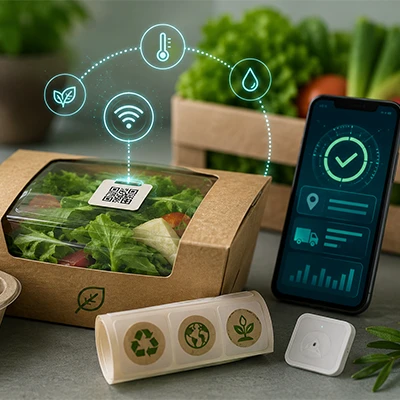
Smart packaging combines physical packaging materials with technologies such as radio-frequency identification (RFID), near-field communication (NFC), QR codes, sensors, connected software, and artificial intelligence.
For example, a food package may include a freshness indicator that helps identify changes in product conditions. A pharmaceutical package may use a connected label to improve tracking and authentication. A retail product may contain an NFC tag that allows customers to access verified information by using a smartphone.
These technologies are changing how manufacturers, retailers, logistics providers, and consumers interact with products.
American companies are also exploring digital product passports, advanced identification systems, and packaging solutions designed to support recycling and material traceability.
1. What Is Smart Packaging Technology?
Smart packaging refers to packaging that includes additional features designed to monitor, identify, communicate information about, or interact with the product it contains.
Unlike conventional packaging, which mainly provides physical protection and printed information, smart packaging can include digital identification, electronic communication, sensors, and indicators.
There are two commonly discussed categories.
Intelligent packaging
Intelligent packaging monitors information about a product or its surrounding environment.
Examples include:
- Temperature indicators.
- Freshness indicators.
- Time-temperature monitoring labels.
- Gas and moisture sensors.
- Product condition monitoring systems.
These features can help businesses understand whether products have been exposed to certain conditions during storage and transportation.
Active packaging
Active packaging interacts with the product or its surrounding environment to help maintain quality or extend shelf life.
Examples include oxygen absorbers, moisture-control materials, antimicrobial packaging components, and certain gas-regulating systems.
Active and intelligent packaging are related but not identical. One is designed to influence conditions, while the other is primarily designed to provide information about conditions.
Connected packaging
Connected packaging uses technologies such as QR codes, NFC, and RFID to link physical products with digital information.
A customer may scan a code to access product details, instructions, authentication information, or recycling guidance.
Together, these technologies are making packaging an increasingly important part of digital supply chains.
2. Artificial Intelligence Is Transforming Packaging Design and Manufacturing
Artificial intelligence is becoming an important tool in the packaging industry.
Packaging manufacturers deal with complex decisions involving material selection, product dimensions, printing, production speed, quality control, and transportation requirements.
AI systems can analyze large amounts of manufacturing and product information to support these decisions.
AI-powered packaging design
Design teams can use AI-assisted software to evaluate packaging dimensions, material requirements, and structural performance.
For example, a company shipping fragile electronic equipment may compare different packaging designs to identify options that provide sufficient protection while reducing unnecessary material.
AI tools can also help explore alternative packaging shapes and layouts.
Automated quality inspection
Packaging factories use cameras and computer vision systems to inspect products during manufacturing.
AI-powered inspection tools can help identify:
- Incorrect labels.
- Printing defects.
- Damaged packaging.
- Missing product information.
- Incorrect barcodes.
- Inconsistent seals.
- Packaging alignment problems.
These systems can support quality-control teams by identifying unusual patterns and highlighting products that may require further inspection.
Predictive maintenance
Packaging machinery operates at high speeds and may experience mechanical wear.
AI systems can analyze equipment information, operating temperatures, vibration, and production performance to identify possible maintenance issues.
This can help manufacturers plan inspections before equipment failures interrupt production.
Smarter material management
AI can also help companies estimate material requirements and analyze production waste.
Better forecasting may help manufacturers avoid unnecessary material purchases and improve inventory planning.
However, AI recommendations still require human review, especially when packaging must meet strict food-safety, pharmaceutical, and transportation standards.
3. RFID Technology Is Making Product Tracking More Efficient
Radio-frequency identification, commonly known as RFID, is one of the most established technologies used in smart packaging.
An RFID system uses radio waves to communicate with a tag attached to or embedded in an item.
Depending on the system, the tag can contain information that can be read using an RFID reader without requiring direct visual contact.
How RFID packaging works
An RFID system generally includes three components:
- An RFID tag attached to a product, package, or shipping container.
- A reader that communicates with the tag.
- Software that processes and organizes the collected information.
When a tagged item passes through an appropriate reading area, the reader can capture its identification information.
This makes it possible to identify products during receiving, storage, picking, and distribution.
Benefits for American retailers
Retail businesses manage large numbers of products across stores, warehouses, and distribution centers.
RFID can support:
- Inventory visibility.
- Faster stock checks.
- Product identification.
- Warehouse management.
- Supply-chain tracking.
- Loss prevention.
- Automated receiving processes.
RFID can be particularly useful in environments where businesses need to identify many products efficiently.
Avery Dennison’s RFID innovation
Avery Dennison is an important participant in the intelligent-label and identification technology market.
In April 2026, the company announced its AD IdentiFresh RFID inlay series, designed to support fresh food applications such as bakery, meat, deli, and produce.
The development highlights how RFID technology is expanding beyond conventional retail inventory applications into areas where product identification and freshness-related information can support store operations.
RFID does not automatically measure food freshness. The value of a particular system depends on the tag, sensor capabilities, supporting software, and the information being collected.
4. NFC Technology Is Connecting Physical Products With Smartphones
Near-field communication, or NFC, is a wireless technology that allows compatible devices to exchange information over a very short distance.
Many smartphones already support NFC, making it useful for connected packaging applications.
Unlike a traditional printed barcode, an NFC-enabled package can provide a direct digital interaction when a compatible smartphone is brought close to the tag.
Product authentication
Brands can use NFC tags to help customers access product verification information.
For example, a customer purchasing a premium product may tap the package with a smartphone to open a digital page containing information about the product, manufacturer, and authentication process.
The reliability of authentication depends on the security architecture behind the system. An NFC tag alone does not guarantee that a product is genuine.
Digital product information
NFC-enabled packaging can provide access to:
- Product instructions.
- Ingredient information.
- Warranty details.
- Product registration.
- Usage guidance.
- Recycling instructions.
- Brand communication.
Avery Dennison and flexible NFC labels
In February 2026, Avery Dennison expanded its NFC Connect portfolio with flexible integrated circuit technology featuring chips from Pragmatic Semiconductor.
The solution is designed to support connected packaging, authentication, digital identification, and digital product passport applications.
Flexible electronic components could help make connected identification more suitable for different packaging formats.
This development demonstrates how smart labels are evolving from simple identification tools into digital communication platforms.
5. QR Codes Are Becoming More Than Marketing Tools
QR codes have become common on food packages, beverage bottles, electronics, cosmetics, and other consumer products.
A smartphone camera can scan a QR code and open a digital destination without requiring specialized equipment.
In smart packaging, QR codes can serve as a bridge between physical products and online information.
Product transparency
Manufacturers can use QR codes to provide details about product ingredients, manufacturing locations, certifications, and instructions.
This can help consumers find information that may not fit on a traditional printed label.
Product traceability
Businesses can connect QR codes with digital records that provide information about product batches, production dates, and distribution activities.
The amount of information available depends on how the manufacturer organizes its data systems.
Beverage industry developments
In August 2026, Coca-Cola, Keurig Dr Pepper, and PepsiCo announced the nationwide expansion of a shared digital ingredient-transparency infrastructure using QR codes on beverage cans and bottles.
The initiative is designed to help consumers access information about beverage ingredients through a digital experience.
This illustrates how connected packaging can support consumer information and product transparency across major American beverage brands.
Safer digital interactions
QR codes also create security considerations.
Customers should be able to identify legitimate destinations and avoid fraudulent codes that redirect users to misleading websites.
Brands can help by using secure domains, maintaining consistent labeling, and monitoring digital links associated with their products.
6. Smart Packaging Sensors Can Help Monitor Food Freshness
Food waste is a major challenge for retailers, distributors, restaurants, and consumers.
Food products may experience changes in temperature, humidity, gas composition, and other environmental conditions during transportation and storage.
Smart sensors and indicators can provide additional information about these conditions.
Temperature monitoring
Temperature-sensitive products may require controlled storage and transportation.
Time-temperature indicators can show whether a product has experienced certain temperature conditions over a period of time.
These indicators can support cold-chain management for food and other temperature-sensitive products.
Freshness indicators
Certain smart packaging technologies are designed to detect changes associated with food quality or spoilage.
For example, sensors may respond to gases or chemical changes that occur as particular foods deteriorate.
The resulting signal may be displayed through a color change or digital reading.
Why freshness sensors matter
A freshness indicator could help businesses identify products that require closer inspection.
However, a sensor should not be treated as a universal food-safety test. Its accuracy depends on the food category, sensor design, calibration, and testing conditions.
Consumers should continue following appropriate food storage, handling, and expiration guidance.
7. Smart Packaging Is Improving Pharmaceutical and Healthcare Supply Chains
Pharmaceutical products require careful handling, accurate identification, and reliable supply-chain records.
Some medicines are sensitive to temperature, light, humidity, and other environmental conditions.
Smart packaging can support monitoring and traceability across these supply chains.
Temperature-sensitive medicine tracking
Connected sensors and temperature indicators can help provide information about the conditions experienced by pharmaceutical shipments.
This is particularly relevant for products that require controlled storage and transportation.
Product identification
RFID, NFC, and serialized identification systems can help manufacturers and distributors identify products and maintain records throughout distribution.
Counterfeit prevention
Counterfeit medicines create serious risks for patients and healthcare providers.
Digital authentication features can help support product verification, although effective protection requires secure identification systems, reliable databases, and appropriate supply-chain controls.
Better inventory management
Healthcare organizations must manage products with different storage requirements and expiration dates.
Smart identification systems can help improve inventory visibility and support stock-management procedures.
The technology does not replace regulatory requirements, professional handling procedures, or quality testing.
8. Digital Product Passports Are Creating a New Packaging Opportunity
A digital product passport is a structured digital record that provides information about a product and its lifecycle.
Depending on the product category and applicable requirements, it may include information about materials, manufacturing, repair, maintenance, recycling, and environmental characteristics.
Smart packaging can provide the connection between a physical product and its digital record.
How digital product passports work
A package or product may contain a QR code, NFC tag, RFID identifier, or another digital identification feature.
When a user scans or reads the identifier, an associated digital record can provide relevant information.
For example, a product record might include:
- Manufacturer details.
- Material composition.
- Product identification.
- Recycling instructions.
- Repair information.
- Relevant certifications.
- Supply-chain information.
SMX’s digital material passport platform
On September 8, 2026, SMX announced a four-layer Digital Material Passport Platform for plastics.
The platform is designed to connect physically marked plastic materials with digital identity records, lifecycle information, verification systems, and potential material-market applications.
The company’s approach aims to give plastic materials a persistent identity that can support traceability across different stages of their lifecycle.
The announcement represents a developing commercial platform, not proof that every plastic product can already be tracked through a fully operational global system.
Why this matters
Digital material identification could help businesses distinguish verified recycled materials from other materials and improve the information available to recyclers and manufacturers.
It may also support more transparent reporting about material sourcing and reuse.
9. Sustainable Smart Packaging Is Becoming a Business Priority
Smart packaging must solve more than digital communication problems. It also needs to address material use, waste management, recycling, and environmental performance.
Some connected packaging systems include electronic components, adhesives, batteries, or mixed materials that may complicate recycling.
Manufacturers therefore need to consider the complete lifecycle of a packaging product.
Recyclable materials
Companies are exploring packaging designs that use materials compatible with established recycling systems.
Paper-based packaging, recyclable plastics, and material-reduction strategies can all contribute to more sustainable designs when correctly implemented.
Reduced packaging waste
Digital information can sometimes reduce the need for printed inserts or additional labels.
However, replacing printed information with digital information must not make essential safety or product details inaccessible.
Reusable packaging
Smart labels can help identify reusable containers and track their movements between manufacturers, distributors, retailers, and customers.
This can support returnable packaging programs and help companies understand where reusable assets are located.
Designing for recycling
Packaging designers should consider whether different components can be separated and processed through available recycling infrastructure.
A package that contains advanced technology is not automatically environmentally friendly. Its material composition and end-of-life management remain important.
10. Smart Packaging in E-Commerce and Logistics
Online shopping has increased the importance of reliable packaging and shipment tracking.
Products may pass through fulfillment centers, sorting facilities, delivery vehicles, and multiple distribution points before reaching customers.
Smart packaging can help businesses manage these movements.
Shipment identification
RFID and QR-based systems can support package identification at different stages of the shipping process.
Condition monitoring
Selected sensor systems can provide information about temperature, humidity, shock, or other conditions that may affect sensitive products.
Reusable transport containers
Businesses can use connected identification systems to track reusable boxes, pallets, and containers.
This can help improve asset recovery and reduce the need to purchase replacement packaging.
Better warehouse visibility
When packaging identifiers are connected to inventory software, businesses can improve the visibility of items moving through warehouses and distribution centers.
These capabilities are particularly useful in complex logistics networks, but they depend on dependable scanning equipment, software integration, and accurate records.
11. Major Companies Driving Smart Packaging Innovation
Several companies are contributing to the development of connected packaging, identification systems, and advanced packaging materials.
Avery Dennison
Avery Dennison develops intelligent labels, RFID inlays, NFC solutions, and digital identification technology.
Its innovations support applications across retail, apparel, healthcare, food, and logistics.
Zebra Technologies
Zebra Technologies provides barcode scanning, RFID readers, mobile computers, and tracking solutions used by retailers, warehouses, and manufacturers.
Its technologies can support the identification and monitoring systems used in connected packaging environments.
Sealed Air
Sealed Air develops protective and food packaging solutions.
Its packaging technologies support product protection, food preservation, and logistics operations.
3M
3M develops materials, adhesives, films, and identification-related technologies used in industrial and commercial applications.
Its materials science capabilities are relevant to the wider development of advanced packaging systems.
Amcor
Amcor develops flexible and rigid packaging products for food, beverages, healthcare, and other markets.
Its work in packaging materials and design is relevant to the industry’s efforts to combine performance with sustainability.
These companies operate in different parts of the packaging ecosystem. Not every company provides a complete smart packaging platform, but their technologies can contribute to connected product and supply-chain systems.
12. Challenges Facing Smart Packaging Adoption in the USA
Despite its potential, smart packaging still faces several technical and commercial challenges.
Higher production costs
RFID tags, sensors, NFC components, and connected software can increase packaging costs.
For low-value products, manufacturers must carefully evaluate whether the additional functionality justifies the investment.
Data privacy and cybersecurity
Connected packages can link consumers to websites, applications, and product databases.
Businesses must protect customer information, secure digital platforms, and prevent unauthorized access.
Technology compatibility
Different retailers, manufacturers, and logistics providers may use different identification systems and software platforms.
Interoperability is important if connected packaging is expected to work across an entire supply chain.
Recycling difficulties
Electronic components and mixed materials may complicate packaging recycling.
Manufacturers need to design smart packaging with material recovery and end-of-life processing in mind.
Sensor accuracy
Freshness and condition-monitoring sensors must be tested for the specific products and environments in which they are used.
An inaccurate indicator could create confusion or lead to incorrect decisions.
Consumer adoption
Not every customer wants to scan a package or use a separate application.
Smart packaging should provide useful information without making the basic product experience unnecessarily complicated.
13. The Future of Smart Packaging Technology in the USA
The smart packaging industry is likely to become more connected, automated, and data-driven over the next several years.
Several developments deserve attention.
Wider adoption of NFC and RFID
Connected identification technology may become increasingly common in retail, healthcare, food distribution, and reusable packaging systems.
More advanced freshness sensors
Research into sensors that detect changes in food quality could create additional applications for grocery retailers and cold-chain operators.
Digital product passport development
Digital product identification systems may become increasingly important as companies respond to product transparency and material traceability requirements.
AI-powered packaging operations
AI may support packaging design, automated inspection, demand forecasting, and production optimization.
Better integration with recycling systems
Future packaging may combine digital identification with information about material composition and recycling instructions.
Growth in reusable smart packaging
Connected tracking could help businesses manage reusable shipping containers, transport packaging, and other returnable assets.
The most successful technologies will be those that provide clear benefits while remaining affordable, secure, practical, and compatible with existing operations.
Conclusion
Smart packaging technology is changing how products are identified, monitored, protected, and delivered across the United States.
RFID, NFC, QR codes, freshness indicators, connected sensors, and digital product passports are expanding the role of packaging beyond simple physical protection. These technologies can help businesses improve inventory visibility, product traceability, customer information, and supply-chain management.
Developments in 2026 show that the industry is moving toward more connected packaging systems. Avery Dennison is expanding intelligent labeling technology, major beverage companies are developing shared QR-based ingredient information infrastructure, and SMX is advancing digital material passport technology for plastics.
However, wider adoption will depend on affordability, sensor reliability, cybersecurity, interoperability, and recycling considerations.
Smart packaging should not be viewed as technology added simply to make a product appear modern. Its value comes from solving practical problems for manufacturers, retailers, logistics companies, and consumers.
As connected identification and sensor technologies become more accessible, packaging could become an important part of the digital infrastructure supporting American commerce.
The future of packaging will not be defined only by what a container is made from. It will also depend on the information that packaging can securely communicate throughout a product’s lifecycle.
Frequently Asked Questions (FAQs)
1. What is smart packaging technology?
Smart packaging uses technologies such as RFID, NFC, QR codes, and sensors to identify products, monitor selected conditions, and connect physical packaging with digital information.
2. How does RFID work in packaging?
RFID uses radio waves to communicate between a tag and a reader. The tag carries identification information that can be captured without necessarily scanning a visible barcode.
3. What is the difference between RFID and NFC?
RFID is a broader family of radio-frequency identification technologies. NFC is a short-range wireless communication technology that is commonly used for smartphone interactions and contactless applications.
4. How can smart packaging reduce food waste?
Certain freshness indicators and temperature-monitoring systems can provide additional information about product conditions. This may help businesses manage storage, transportation, and inventory more effectively.
5. What is a digital product passport?
A digital product passport is a digital record linked to a physical product. It can provide information about materials, manufacturing, identification, maintenance, and recycling.
6. Which US companies are involved in smart packaging?
Companies contributing to this industry include Avery Dennison, Zebra Technologies, Sealed Air, 3M, and Amcor, among other packaging and technology providers.
7. Can smart packaging prevent counterfeit products?
Authentication features such as secure NFC tags, RFID identifiers, and verified digital records can help businesses identify suspicious products. Their effectiveness depends on the security and reliability of the complete system.
8. Is smart packaging environmentally friendly?
It can support sustainability through improved material tracking, reduced waste, reusable packaging, and better recycling information. However, electronic components and mixed materials can also create recycling challenges.
9. How is AI used in smart packaging?
AI can support packaging design, manufacturing inspection, predictive maintenance, material planning, and analysis of information collected from connected packaging systems.
10. What is the future of smart packaging in the USA?
Future developments may include wider RFID and NFC adoption, improved freshness sensors, digital product passports, AI-powered production, and connected reusable packaging systems.


