




Introduction
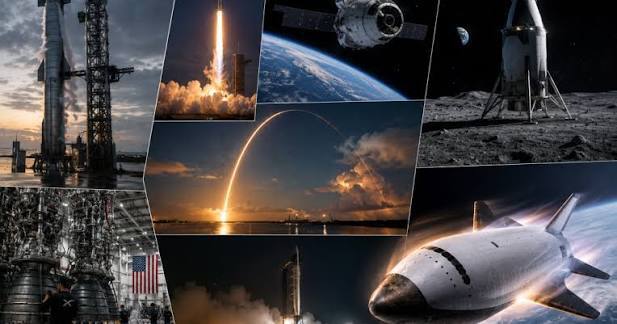
Space technology is becoming one of the most important areas of scientific research, engineering, and commercial innovation in the United States. What was once primarily a government-led field has developed into a broad industry involving private rocket companies, satellite operators, aerospace manufacturers, research institutions, and technology businesses.
In 2026, American space technology is advancing across several major areas, including human spaceflight, reusable rockets, satellite internet, lunar exploration, Earth observation, space-based communications, and advanced spacecraft engineering. These developments are helping scientists study the universe, improving connectivity on Earth, and creating new opportunities for businesses and researchers.
NASA remains a central part of America’s space exploration program, while private companies such as SpaceX and other aerospace organizations are developing technologies intended to make launches more capable and expand access to space.
One of the major milestones of 2026 was NASA’s Artemis II mission, which launched on April 1 and returned its crew safely to Earth on April 10 after a journey around the Moon. It marked the first crewed Artemis mission and an important step toward future human exploration of the lunar surface. NASA continues to develop the systems needed for subsequent Moon missions and its longer-term ambitions for Mars exploration.
Meanwhile, SpaceX is continuing to develop Starship, a next-generation launch system designed for ambitious missions involving satellites, cargo, and eventually human exploration. Satellite networks are also expanding their role in broadband internet, navigation, environmental monitoring, and emergency communications.
This article explores the most important space technology trends in the USA in 2026, the companies and agencies driving innovation, the challenges facing the industry, and the opportunities that may shape its future.
1. The Current State of Space Technology in the USA
The American space industry includes government programs, commercial launch providers, satellite manufacturers, aerospace contractors, software developers, and scientific research organizations.
NASA leads many civil space exploration and scientific research programs. The US Space Force supports national security activities in space, while the Federal Aviation Administration regulates commercial space transportation activities such as licensed launches and reentries. The Federal Communications Commission also plays an important role in regulating satellite communications and spectrum use.
Private companies contribute launch services, spacecraft, satellite networks, and other commercial capabilities. This partnership between public agencies and private industry allows the United States to pursue scientific missions while supporting a growing commercial space economy.
Several developments are especially important in 2026:
- Human spaceflight missions are advancing preparations for future lunar exploration.
- Reusable rocket systems are being developed to increase launch capability and potentially reduce costs.
- Satellite networks are supporting broadband connectivity and other communication services.
- Spacecraft and instruments are collecting scientific data about Earth, the Moon, planets, and the wider universe.
- Commercial companies are developing new services involving space transportation, satellite operations, and spacecraft technology.
The industry is not without challenges. Launch systems must pass extensive testing, spacecraft development can require years of engineering, and missions can face delays caused by technical issues, safety requirements, weather, and funding constraints.
Nevertheless, continued investment and innovation are making space technology an important part of America’s scientific and commercial infrastructure.
2. NASA Artemis II and the Future of Lunar Exploration
NASA’s Artemis program is designed to support a sustained human presence around and eventually on the Moon while developing capabilities that may support future missions to Mars.
Artemis II was a major milestone in this effort. The mission launched on April 1, 2026, carrying NASA astronauts Reid Wiseman, Victor Glover, and Christina Koch, together with Canadian Space Agency astronaut Jeremy Hansen. The crew traveled around the Moon aboard the Orion spacecraft before returning to Earth on April 10.
The mission tested important elements of NASA’s human deep-space exploration system. It also provided opportunities to evaluate spacecraft operations, crew performance, communications, and the experience of traveling beyond low Earth orbit.
NASA has continued analyzing observations and mission data following the crew’s return. In October 2026, the agency published preliminary lunar science reports and additional images, audio, and other materials from the mission.
Official mission information is available through the NASA Artemis II mission page.
Why Artemis II matters
Human missions beyond low Earth orbit involve challenges that differ from ordinary missions to the International Space Station.
Crews must operate farther from Earth, manage communication delays, work with spacecraft systems designed for deep-space conditions, and prepare for environments where emergency assistance cannot arrive quickly.
Artemis II provided valuable experience for NASA and its partners as they continue developing the systems required for future lunar missions.
The role of the Orion spacecraft
Orion is designed to carry astronauts on missions beyond low Earth orbit. It includes systems for crew safety, life support, communications, navigation, and reentry.
The spacecraft is part of a larger exploration architecture that includes NASA’s Space Launch System rocket and other systems needed to support future lunar operations.
Successful deep-space missions require all these components to work together. Rocket performance, spacecraft reliability, ground operations, and mission planning are all essential to a safe outcome.
What comes after Artemis II?
NASA is continuing work on subsequent Artemis missions and lunar exploration infrastructure. In October 2026, the agency reported progress on Artemis III hardware, including booster stacking activities at Kennedy Space Center.
Schedules and mission architectures can change as engineering work progresses. Readers should consult current NASA announcements for the latest confirmed milestones rather than assuming that a proposed launch date is guaranteed.
3. SpaceX and the Development of Reusable Rockets
SpaceX has become a major force in the commercial space transportation industry through its Falcon launch vehicles, Dragon spacecraft, and Starship development program.
Reusable rocket technology is one of the company’s most significant contributions to the modern launch market. Instead of discarding every major rocket component after a mission, reusable systems are designed to recover and fly selected hardware again.
The long-term goal is to reduce the amount of new hardware required for each launch and potentially improve launch frequency and economics. However, refurbishment, inspection, recovery operations, and hardware development still involve substantial costs.
How reusable rockets work
A traditional expendable rocket is generally designed to be used for a single launch. Reusable launch vehicles attempt to recover and reuse some or all of their major components.
A returning booster may perform controlled engine burns, adjust its orientation, and use guidance systems to reach a designated landing area. Engineers must manage enormous temperatures, forces, vibrations, and fuel requirements throughout the process.
Reuse is not simply a matter of landing a rocket. The recovered hardware must also be inspected, repaired where necessary, and certified for another flight.
Falcon 9 and commercial launches
SpaceX’s Falcon 9 has helped establish reusable first-stage boosters as a regular feature of commercial launch operations.
The rocket is used for satellite deployments, cargo missions, and human spaceflight activities. Repeated use of flight-proven boosters demonstrates how recovery and reuse can become part of an operational launch system.
This approach has helped change expectations about the economics and frequency of commercial launches, although costs vary depending on payload, mission requirements, recovery conditions, and launch arrangements.
Starship development in 2026
SpaceX’s Starship and Super Heavy system is designed to support much larger payloads and future missions to destinations such as the Moon and Mars.
In July 2026, SpaceX conducted Starship’s thirteenth flight test, which included deployment testing involving upgraded Starlink V3 satellites. The company has also described a new Starship development phase intended to support future orbital missions and additional testing of reusable systems.
These activities remain part of an ongoing development program. Individual successful test objectives do not mean that every planned capability has already been demonstrated or that routine commercial operations are guaranteed.
The official SpaceX Starship updates provide further information about the company’s development goals.
4. Satellite Technology Is Transforming Global Connectivity
Satellites play an essential role in modern communication infrastructure. They can provide broadband connectivity, television distribution, navigation-related services, emergency communication, and links to locations where terrestrial networks are limited.
Satellite technology has advanced considerably through improvements in spacecraft design, electronics, antennas, propulsion systems, and launch services.
One important development is the use of large constellations of satellites in low Earth orbit. These networks operate closer to Earth than traditional geostationary communication satellites, which can help reduce signal travel time for many applications.
Low Earth orbit satellite networks
Low Earth orbit, or LEO, refers to orbits relatively close to Earth compared with geostationary orbit.
Because LEO satellites move rapidly relative to locations on the ground, a constellation typically requires many satellites and coordinated ground infrastructure to maintain continuous service over broad areas.
These networks use satellite-to-satellite or satellite-to-ground links, depending on their architecture, to move information between users and internet infrastructure.
Starlink and satellite broadband
Starlink, operated by SpaceX, is one of the best-known satellite broadband services. It is designed to provide internet access in locations where conventional broadband may be unavailable, unreliable, or difficult to install.
Potential users include rural households, remote businesses, maritime operators, and organizations working in areas with limited terrestrial infrastructure.
Performance depends on factors such as network congestion, the user’s equipment, weather, local obstruction, service plans, and the availability of satellites and ground infrastructure.
Satellite broadband does not replace every fiber or cable connection. Wired networks may offer advantages in capacity, price, or consistency in many locations. Satellite service is especially valuable where geography makes terrestrial connectivity more difficult.
Satellite-to-phone communication
Another developing area involves direct communication between satellites and compatible mobile devices.
Such services may help extend certain communication capabilities to locations without conventional cellular coverage. Depending on the provider and device, supported functions may include messaging or other limited services.
The technology must overcome challenges involving signal strength, spectrum, satellite capacity, device compatibility, and regulatory approval. It should therefore be viewed as a complement to terrestrial mobile networks rather than a universal replacement for cell towers.
5. Earth Observation Satellites and Climate Research
Space technology is not limited to rockets and human exploration. Satellites also provide important information about the planet itself.
Earth observation systems collect data about weather, oceans, vegetation, land use, atmospheric conditions, wildfires, and other environmental processes.
These observations help scientists study long-term changes and allow organizations to monitor conditions that may affect communities, agriculture, infrastructure, and public safety.
Weather forecasting
Weather satellites observe cloud systems, atmospheric conditions, storms, and other features that help meteorologists analyze developing weather events.
Satellite data is combined with ground-based observations, ocean measurements, radar information, and computer models to produce forecasts.
Accurate and timely observations can improve understanding of hurricanes, severe storms, and other hazardous weather conditions.
Agriculture and water management
Satellite imagery can help farmers and researchers assess crop health, monitor vegetation, estimate soil moisture under suitable conditions, and identify changes in agricultural landscapes.
Water managers can use remote sensing to study reservoirs, snow cover, drought conditions, and changes in surface water.
These applications are particularly valuable across large geographical areas where continuous ground-based monitoring may be difficult or expensive.
Wildfire and disaster response
Satellite systems can help detect and monitor wildfires, map flood damage, and observe the effects of natural disasters.
Emergency managers may use this information to understand affected regions and coordinate response activities.
Satellite imagery does not replace local emergency services or field assessments, but it provides a broad perspective that can improve situational awareness.
The role of NASA and NOAA
NASA conducts scientific research and develops many Earth observation missions. The National Oceanic and Atmospheric Administration operates and manages important environmental monitoring systems, including weather satellites.
Together with research institutions and commercial providers, these organizations contribute to the data used by scientists, governments, businesses, and communities.
6. Artificial Intelligence Is Improving Space Technology
Artificial intelligence is increasingly relevant to the space industry because spacecraft and satellite networks generate large amounts of data and operate under complex conditions.
AI and machine-learning tools can support data analysis, mission planning, equipment monitoring, and certain autonomous operations.
Satellite image analysis
Earth observation satellites may collect vast quantities of imagery that would be difficult to inspect manually in real time.
AI systems can help identify patterns, classify land cover, detect changes, and flag unusual observations for further analysis.
For example, researchers may use machine learning to identify changes in vegetation or infrastructure across repeated satellite images.
The reliability of these results depends on data quality, model design, and validation. Automated outputs should be reviewed carefully when they are used for important decisions.
Spacecraft health monitoring
Spacecraft contain sensors that monitor temperature, power systems, propulsion, communications, and other equipment.
Machine-learning systems may help engineers recognize unusual behavior and prioritize potential problems.
Because spacecraft can operate millions of miles from Earth, identifying equipment issues early can be extremely valuable. However, safety-critical spacecraft operations require rigorous testing and carefully designed fallback procedures.
Autonomous operations
Some space missions require spacecraft to carry out tasks with limited direct intervention from Earth. Communication delays can make real-time control impractical for certain operations.
Autonomous navigation, onboard planning, and intelligent data processing can help spacecraft operate more effectively in these circumstances.
AI does not eliminate the need for mission controllers or engineers. Instead, it can support selected functions within a larger system of human supervision, verification, and operational safeguards.
7. Commercial Space Companies Are Expanding the Industry
The American space economy includes many organizations beyond NASA and SpaceX. Commercial companies develop launch vehicles, satellites, spacecraft components, engines, software, ground systems, and specialized services.
Blue Origin
Blue Origin is developing launch systems and space transportation technologies, including the New Glenn orbital rocket and the New Shepard suborbital vehicle.
Its long-term ambitions include reusable launch systems and technologies intended to support a broader space economy.
Like other aerospace companies, Blue Origin must demonstrate reliable performance through testing and operational missions. Development schedules and commercial capabilities can change as engineering work progresses.
Rocket Lab
Rocket Lab provides launch services and space systems. The company has developed the Electron launch vehicle for smaller payloads and also manufactures spacecraft components and satellite systems.
Its work illustrates how commercial space companies can specialize in particular market segments instead of competing only in the largest rocket category.
Small satellite launches and spacecraft manufacturing are important parts of the wider space industry because universities, research organizations, governments, and businesses all require access to orbit.
Aerospace suppliers and contractors
The space industry also depends on companies that manufacture propulsion systems, avionics, communications equipment, solar arrays, sensors, thermal protection systems, and ground support infrastructure.
These suppliers are essential because no single organization typically produces every component needed for a complex mission.
The growth of commercial space activities can therefore create opportunities across engineering, manufacturing, software, testing, logistics, and maintenance.
8. Space Technology and National Security
Space infrastructure supports many services that are important to national security and the broader economy.
Satellite communications, navigation, weather observation, missile warning, and Earth monitoring can all contribute to government operations and national resilience.
The US Space Force is responsible for military space operations, while other government organizations manage civil, scientific, and commercial activities.
Satellite communications and navigation
Military and civilian organizations rely on satellite-based services for communications, timing, navigation, and information gathering.
Navigation satellites provide signals that compatible receivers use to estimate location, speed, and time. These capabilities support transportation, logistics, mapping, agriculture, emergency response, and many other applications.
Space situational awareness
As more satellites and other objects enter orbit, tracking and understanding their movements becomes increasingly important.
Space situational awareness involves observing objects in space, estimating their orbits, and assessing potential risks such as close approaches or collisions.
This work helps satellite operators plan maneuvers and supports broader efforts to manage the increasingly crowded orbital environment.
Cybersecurity for space systems
Satellites depend on software, radio communications, ground stations, and data networks. These components can face cybersecurity threats, including unauthorized access, signal interference, compromised systems, and software vulnerabilities.
Operators must protect both spacecraft and the ground infrastructure used to control them.
Security measures may include authentication, encryption, access controls, monitoring, secure software development, and incident-response planning.
Because spacecraft can be difficult to repair after launch, robust security and reliability practices are particularly important.
9. The Challenges Facing the US Space Industry in 2026
Despite its progress, the American space industry faces significant technical and financial challenges.
High development costs
Building rockets, spacecraft, satellites, and launch infrastructure requires specialized facilities, skilled personnel, extensive testing, and substantial investment.
Even projects with strong technical potential may experience financial pressure if development takes longer than expected or launch costs exceed projections.
Companies must balance innovation with reliability, safety, and commercial demand.
Launch and reentry safety
Rocket launches involve powerful propulsion systems, high temperatures, complex guidance, and significant operational risks.
The Federal Aviation Administration oversees commercial launch and reentry licensing and related safety requirements within its jurisdiction.
In August 2025, the FAA announced that it had reached 1,000 licensed or permitted commercial space vehicle operations. This milestone illustrates the development of the commercial launch industry and the importance of regulatory oversight.
Testing and investigation can delay launches, but these processes are necessary to identify problems and improve safety.
Space debris and orbital congestion
Satellites and rocket components can remain in orbit after their useful lives. Collisions can produce debris that threatens other spacecraft.
As satellite constellations expand, operators must consider collision avoidance, end-of-life disposal, orbital planning, and coordination with other space users.
Responsible space operations require attention to the entire lifecycle of a satellite, not just its launch.
Space radiation and extreme temperatures
Spacecraft operate in environments with radiation, temperature extremes, and limited opportunities for physical repair.
Electronics and materials must be designed to withstand conditions appropriate to their mission. Crewed spacecraft also require systems to protect astronauts and maintain a habitable environment.
These engineering requirements contribute to the complexity and cost of space exploration.
Uncertain commercial demand
Not every space technology becomes a successful business. A company may develop a capable spacecraft but struggle to attract enough customers to support the required infrastructure.
Commercial success depends on launch reliability, pricing, market demand, competition, regulation, and the availability of financing.
10. Career Opportunities in American Space Technology
The space industry offers career opportunities for people with backgrounds in engineering, science, software development, manufacturing, project management, and technical operations.
Aerospace engineering
Aerospace engineers help design and test aircraft, rockets, spacecraft, propulsion systems, and other flight hardware.
Their work may involve structural analysis, aerodynamics, thermal protection, materials science, guidance, and vehicle performance.
Software and robotics
Software developers build systems used for spacecraft control, mission planning, simulation, satellite communications, image processing, and autonomous operations.
Robotics specialists may work on robotic arms, lunar exploration systems, inspection equipment, and other mechanisms designed to operate in challenging environments.
Data science and AI
Data scientists and machine-learning engineers can contribute to satellite image analysis, scientific research, equipment monitoring, and mission operations.
These roles often require a combination of programming, statistics, domain knowledge, and careful validation.
Manufacturing and quality assurance
Space hardware must meet demanding performance and reliability requirements. Manufacturing technicians, quality engineers, inspectors, and test specialists help ensure that components are built and verified correctly.
Many of these roles require specialized training and experience with regulated or high-reliability production processes.
How to prepare for a space technology career
Students and professionals interested in the industry can build relevant skills through engineering programs, physics, computer science, electronics, robotics, and applied mathematics.
Practical experience is also valuable. Robotics competitions, satellite projects, software portfolios, research internships, and engineering design projects can help demonstrate technical ability.
Applicants should review each employer’s education, citizenship, security clearance, and other eligibility requirements, particularly for government or defense-related positions.
11. The Future of Space Technology in the USA
The future of American space technology will likely be shaped by the interaction of government research, commercial innovation, scientific discovery, and international cooperation.
Several developments deserve close attention.
More capable launch systems
Reusable rockets and improved manufacturing techniques may increase launch capacity and reduce some costs over time. However, the financial benefits depend on successful reuse, refurbishment requirements, launch frequency, and the overall economics of each vehicle.
Continued lunar exploration
NASA’s Artemis program is developing capabilities for future human missions to the Moon. These efforts require reliable rockets, spacecraft, surface systems, communications, navigation, and life-support technologies.
Long-term lunar exploration may also require power generation, habitat systems, surface transportation, and resource-management capabilities.
More advanced satellite networks
Satellite constellations are likely to remain important for broadband, Earth observation, communications, and other services.
As these networks develop, operators will need to manage spectrum, interference, orbital congestion, cybersecurity, and end-of-life disposal.
Greater use of AI
AI tools may help researchers analyze larger datasets and help spacecraft and satellite operators manage increasingly complex systems.
The most useful applications will be those that provide measurable improvements while maintaining appropriate human oversight and operational reliability.
New scientific discoveries
Space missions can expand scientific knowledge about the Moon, Mars, planets, stars, galaxies, and the origins of the universe.
New instruments and spacecraft may also help researchers better understand Earth’s climate, natural hazards, and changing environment.
The pace of progress will depend on funding, technical performance, commercial demand, international partnerships, and the ability to manage the risks associated with complex missions.
Conclusion
Space technology in the USA in 2026 is advancing through a combination of government exploration programs, private rocket development, satellite connectivity, AI-assisted operations, and Earth observation systems.
NASA’s Artemis II mission demonstrated important human deep-space capabilities, while preparations for future lunar missions continue. SpaceX is developing reusable launch systems intended to support larger payloads and more ambitious missions. Satellite networks are expanding their role in internet connectivity, environmental monitoring, and communications.
The industry also faces significant challenges, including development costs, launch safety, space debris, cybersecurity, and uncertain commercial demand. Progress requires careful testing, engineering expertise, responsible regulation, and long-term investment.
For businesses, the space economy offers opportunities in spacecraft manufacturing, satellite services, data analytics, software, and communications infrastructure. For researchers, it provides tools to study the universe and monitor Earth. For the public, it can deliver practical benefits through better environmental data, navigation, connectivity, and scientific discovery.
As technology continues to advance, the American space industry is likely to remain an important source of innovation. Its future will depend on turning ambitious engineering goals into reliable, useful, and economically sustainable systems.
Frequently Asked Questions (FAQs)
1. What is the latest space technology in the USA in 2026?
Major developments include NASA’s Artemis lunar exploration program, reusable rocket systems, satellite broadband, Earth observation, AI-assisted space operations, and improvements in spacecraft technology.
2. What was NASA’s Artemis II mission?
Artemis II was NASA’s first crewed Artemis mission. It launched on April 1, 2026, carried four astronauts around the Moon, and returned safely to Earth on April 10.
3. What is SpaceX Starship?
Starship is a launch and spacecraft system being developed by SpaceX for missions involving Earth orbit, satellites, cargo, and future human exploration of the Moon and Mars. Its capabilities continue to be tested and developed.
4. How does reusable rocket technology work?
Reusable rockets are designed to recover and reuse selected components after launch. Recovery systems, guidance, propulsion, inspection, and refurbishment all play important roles in determining whether reuse is practical.
5. How do satellites provide internet access?
Satellite internet systems transmit data between user terminals, satellites, and ground infrastructure. Some networks use large constellations in low Earth orbit to provide connectivity to customers in a wide range of locations.
6. How is artificial intelligence used in space technology?
AI can support satellite image analysis, equipment monitoring, data processing, mission planning, and selected autonomous operations. These applications require testing and validation, especially when used in safety-critical systems.
7. What are the biggest challenges for the US space industry?
Important challenges include high development costs, launch safety, technical reliability, orbital debris, cybersecurity, funding, and the uncertainty of commercial demand.
8. What careers are available in the American space industry?
Career areas include aerospace engineering, software development, robotics, data science, satellite communications, manufacturing, quality assurance, and mission operations.
9. Why is satellite technology important for everyday life?
Satellite systems support navigation, weather forecasting, internet connectivity, emergency communication, agriculture, environmental monitoring, and many transportation and logistics services.
10. What is the future of space exploration in the USA?
Future developments may include additional lunar missions, more capable reusable rockets, advanced satellite networks, new scientific spacecraft, and technologies designed to support longer human missions beyond Earth.


