




Introduction
The construction industry plays a major role in the American economy. From residential neighborhoods and commercial buildings to highways, hospitals, factories, and energy infrastructure, construction projects help shape how people live and work. However, the industry faces several long-standing challenges, including rising material prices, labor shortages, complicated project schedules, and increasing demand for affordable housing.
Traditional construction methods remain essential, but they are gradually being supported by advanced technologies that can improve planning, manufacturing, and on-site operations.
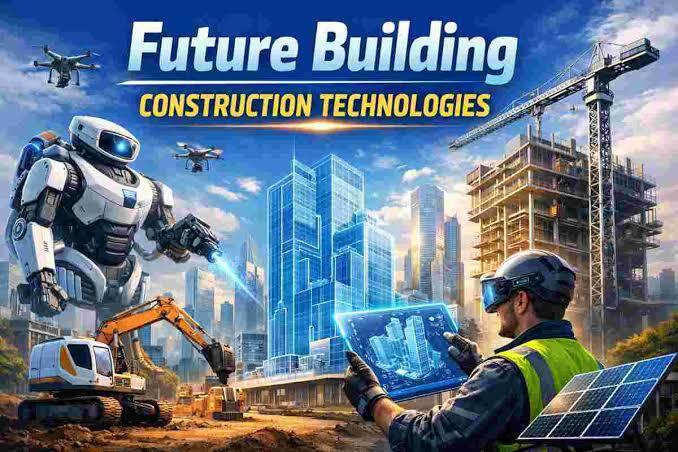
In 2026, construction technology in the United States is developing rapidly. Artificial intelligence, robotics, modular construction, 3D printing, digital twins, and automated manufacturing are changing how some buildings are designed and produced. Companies are exploring ways to manufacture building components in controlled factory environments, use robots for repetitive tasks, and apply digital tools to identify problems before they become expensive construction delays.
These developments are especially important as American communities look for faster and more efficient ways to build homes, offices, industrial facilities, and public infrastructure.
Technology will not eliminate the need for skilled construction professionals. Instead, it is creating new opportunities to combine human experience with automation, accurate data, and modern manufacturing processes.
This article explores the most important construction technology trends in the USA in 2026, the companies contributing to innovation, the challenges facing adoption, and what the future could look like.
1. Artificial Intelligence Is Transforming Construction Planning
Artificial intelligence is becoming a useful tool throughout the construction process. Large projects involve architects, engineers, contractors, suppliers, inspectors, and property developers. Coordinating these activities can be difficult, particularly when project information is spread across multiple systems.
AI-powered software can analyze large amounts of project information and help teams make more informed decisions.
Smarter project scheduling
Construction schedules depend on many factors, including material deliveries, weather, equipment availability, workforce requirements, and inspection dates.
AI systems can examine these factors and help identify potential scheduling conflicts. For example, if a material delivery is delayed, project managers can evaluate how the change may affect other activities and consider alternative schedules.
Construction cost estimation
Estimating project costs requires information about materials, labor, equipment, transportation, and site conditions.
AI-assisted estimation tools can help organize this information, identify unusual cost patterns, and compare different project scenarios. However, professional review remains necessary because estimates depend on accurate quantities, local prices, and project-specific requirements.
Risk identification
AI can also help identify potential risks by analyzing project documents, schedules, and historical information.
A system might flag an unusually tight deadline, a possible material shortage, or a mismatch between different project documents. These warnings can give project teams an opportunity to investigate before problems become more serious.
2. Construction Robotics Are Moving Beyond Factory Floors
Robotics is becoming one of the most interesting areas of construction innovation.
Unlike manufacturing plants, construction sites are constantly changing. Workers must deal with uneven surfaces, different building layouts, changing weather, and unexpected obstacles. Developing robots that can operate reliably in these conditions is therefore challenging.
Nevertheless, new systems are being designed for specific construction activities.
Robotic material handling
Construction workers frequently move heavy materials around job sites. Robotic transport systems can assist with repetitive material movement, helping crews focus on more specialized activities.
Automated layout systems
Some construction robots can transfer digital building plans onto physical floors. These systems help mark locations for walls, electrical components, and other building features.
Accurate layout information can reduce measurement mistakes and improve coordination between different construction teams.
Robotic finishing and installation
Robots are also being developed for tasks such as drywall finishing, drilling, welding, and component installation.
These applications are particularly useful when a task is repetitive, physically demanding, or requires consistent precision.
The importance of human supervision
Construction robots are generally most useful when they support trained professionals rather than operate without supervision. Workers still need to prepare sites, monitor equipment, inspect completed work, and handle unexpected situations.
As robotics becomes more common, training in equipment operation, maintenance, and digital construction systems will become increasingly valuable.
3. Modular Construction Is Changing How Buildings Are Made
Modular construction is one of the most promising approaches to improving building efficiency.
In traditional construction, most building activities happen directly at the final project location. Modular construction moves some of this work into a factory.
Building sections or modules are manufactured in controlled environments and transported to the site for assembly.
These modules may include structural components, walls, flooring, electrical systems, plumbing, and interior finishes, depending on the project design.
Why modular construction matters
Factory-based production offers several potential advantages:
- More controlled manufacturing conditions.
- Better coordination of repetitive production tasks.
- Reduced exposure to outdoor weather during component manufacturing.
- Opportunities to use automated equipment.
- More predictable production schedules.
- Less material waste when processes are properly designed.
The Modular Building Institute reported that the US permanent modular construction market reached approximately $20.5 billion in 2025, representing around 5.1% of construction activity in the market segments covered by its report. Its 2026 industry analysis projects annual growth of approximately 6.5% through 2030.
These figures suggest that modular construction is becoming a more established part of the American building industry.
Where modular buildings are being used
Modular construction can be applied to residential housing, schools, healthcare facilities, offices, workforce accommodation, and commercial buildings.
It can be especially useful when a project requires repeatable designs or when completing part of the work off-site offers practical scheduling advantages.
However, transportation, local building codes, site access, foundation design, and crane requirements must all be considered.
4. 3D Printing Is Creating New Possibilities for Homebuilding
Construction-scale 3D printing uses specialized machines to deposit building material in controlled layers. Depending on the system, the process can produce walls and other structural elements based on a digital design.
The technology has attracted attention because it may reduce some repetitive construction activities and provide greater flexibility in building shapes.
How 3D construction printing works
A construction team begins with a digital building model. The model is converted into instructions that guide a large printer or robotic system.
The machine deposits suitable material layer by layer, creating the designed structure. Workers then complete other necessary activities, such as installing reinforcement where required, electrical systems, plumbing, roofing, windows, doors, and interior finishes.
A printed wall is not automatically a complete, ready-to-occupy home. The finished building must still meet applicable engineering requirements, safety standards, and building codes.
ICON’s Titan system
Austin-based construction technology company ICON announced its Titan program in March 2026. The system is designed to make construction-scale robotic printing technology available to other builders.
ICON says its platform can produce multistory wall systems at an estimated cost of roughly $20 per square foot, potentially representing a substantial reduction compared with conventional wall systems. This is a company-reported estimate, not a guaranteed total construction cost or a verified saving for every project.
The announcement reflects a broader effort to move 3D printing from individual demonstration projects toward wider commercial use.
Potential applications
3D printing may support:
- Residential housing.
- Community development projects.
- Disaster-recovery construction.
- Military and specialized facilities.
- Architectural structures with complex designs.
The technology still faces challenges involving material standards, permitting, financing, insurance, workforce training, and large-scale production.
5. Digital Twins Are Improving Building Design and Project Management
A digital twin is a virtual representation of a physical building, asset, or construction process.
It can combine information from building models, sensors, equipment, and operational systems to create a digital view of a real-world project.
Digital twins are related to Building Information Modeling (BIM), but they can extend beyond the design stage by incorporating information from actual construction and building operations.
Finding design conflicts early
Large construction projects involve many systems, including electrical wiring, plumbing, ventilation, structural components, and fire protection.
A digital model can help teams identify potential conflicts between these systems before installation begins.
For example, a model may reveal that a ventilation duct conflicts with a structural beam. Finding the issue digitally can be easier and less expensive than discovering it after construction work has progressed.
Monitoring construction progress
When connected with suitable project information, digital twins can help managers compare planned progress with actual site conditions.
This can improve visibility and support communication between contractors and project owners.
Supporting building maintenance
After a building is completed, digital information may continue to help facility managers monitor selected systems, plan maintenance, and understand equipment performance.
The usefulness of a digital twin depends on the accuracy and quality of the information used to maintain it.
6. AI-Powered Prefabrication Is Supporting Large Homebuilders
Prefabrication involves manufacturing building components before they are transported to the final construction site.
Modern prefabrication facilities are increasingly combining industrial robots, software, digital designs, and automated production equipment.
This approach can make it easier to manufacture similar building components repeatedly while maintaining consistent production processes.
D.R. Horton and Promise Robotics
One notable development in October 2026 involved D.R. Horton, a major American homebuilder, and Promise Robotics.
The companies announced a multiyear agreement to explore AI-powered robotic manufacturing for components supporting more than 1,250 homes.
The project uses a factory-based approach in which building components are manufactured with automated equipment before being transported to construction locations for assembly.
The partnership is significant because it demonstrates interest from a major US homebuilder in industrialized construction.
It also highlights an important difference between factory manufacturing and on-site construction: automated production can take place in a controlled environment, while the final building still requires site preparation, assembly, inspections, and finishing.
7. Smart Building Materials Are Improving Construction Performance
Construction technology is not limited to software and machines. New materials are also changing how buildings are designed and maintained.
Engineers and manufacturers are exploring materials that provide improved durability, energy efficiency, fire resistance, and structural performance.
High-performance insulation
Modern insulation systems can help reduce heat transfer through walls, roofs, and floors. Better insulation can improve indoor comfort and reduce the energy required for heating and cooling.
Advanced glass technology
Smart glazing and advanced window systems can help manage sunlight and heat entering buildings. Some technologies can change their optical properties in response to electrical signals or environmental conditions.
Self-healing concrete research
Researchers are studying concrete formulations that may repair certain small cracks through chemical or biological processes.
These technologies are still developing, and their performance depends on the materials, environmental conditions, and intended application.
Recycled construction materials
Recycled aggregates, reclaimed building components, and materials made using industrial byproducts can help reduce demand for certain virgin resources.
The challenge is to ensure that alternative materials meet appropriate quality and safety requirements.
8. Drones and Computer Vision Are Improving Construction Site Monitoring
Drones are becoming useful tools for collecting visual information from construction sites.
Instead of relying exclusively on ground-level inspections, project teams can use aerial images to review large areas and compare site conditions over time.
Progress monitoring
Drone photographs can help construction managers understand whether site work is progressing according to the schedule.
When combined with mapping software, the images can provide useful information about earthmoving, building progress, and material storage.
Site surveying
Drones equipped with suitable cameras or sensors can collect data that supports surveying and mapping activities.
The accuracy of these results depends on equipment quality, flight planning, ground control, and professional processing.
Safety inspections
Drones may help inspect roofs, tall structures, and difficult-to-access areas. This can reduce the need for workers to enter certain hazardous locations for initial visual checks.
Drones do not replace required professional inspections, but they can provide additional information for construction teams.
9. The Business Benefits of Construction Technology
Construction technology can offer benefits to contractors, developers, building owners, and workers.
Improved productivity
Automation can support repetitive tasks and help construction teams organize their work more effectively.
Better project visibility
Digital platforms can bring together schedules, drawings, budgets, and site information. This can make it easier for managers to understand project conditions.
More consistent manufacturing
Factory-based production can create controlled environments for manufacturing building components.
Reduced material waste
Digital planning, accurate cutting, and controlled production can help limit avoidable material waste.
Better worker safety
Robotics and remote inspection tools may reduce exposure to certain hazardous or physically demanding activities.
More flexible building methods
Modular construction and 3D printing can provide additional options for projects with specific design, scheduling, or location requirements.
It is important to recognize that these benefits depend on project conditions. Technology does not guarantee lower costs or faster completion in every situation.
10. Challenges Facing Construction Technology Adoption in the USA
Although the industry is becoming more digital, adopting new construction technology is not always easy.
High upfront investment
Robots, automated manufacturing systems, digital platforms, and specialized equipment can require substantial initial investment.
Smaller contractors may find it difficult to justify these costs without reliable demand or long-term project opportunities.
Workforce training
Modern construction requires a combination of traditional trade knowledge and technical skills.
Workers may need training in robotic equipment, digital drawings, automated production, data systems, and maintenance procedures.
Building codes and regulations
Construction projects must comply with local, state, and national requirements. New building methods may require additional testing, documentation, and approval.
Technology integration
Companies often use different software systems for design, estimating, scheduling, procurement, and project management.
Connecting these systems can be difficult when information formats and standards are inconsistent.
Reliability in real-world conditions
Construction sites are not controlled factory environments. Dust, rain, uneven surfaces, temperature changes, and unexpected obstacles can affect automated equipment.
Technology providers must demonstrate that their systems can operate safely and consistently under practical conditions.
Cybersecurity and data protection
Connected construction systems may store building plans, financial information, access details, and project records.
Companies should use secure accounts, access controls, backups, software updates, and suitable cybersecurity policies.
11. The Future of Construction Technology in the USA
The next stage of construction innovation will likely involve greater cooperation between AI, robotics, digital manufacturing, and traditional building expertise.
Several developments deserve attention.
More AI-assisted construction management
AI tools may become more widely used for estimating, scheduling, document review, and project risk analysis.
Growth in robotic manufacturing
Automated factories may produce more walls, frames, structural components, and other building elements.
Wider use of 3D printing
As materials, equipment, and building approvals improve, construction printing may become more practical for selected residential and commercial projects.
More connected construction sites
Drones, sensors, digital models, and connected machinery may provide project managers with better visibility into site operations.
Greater interest in modular housing
Factory-built construction may attract further investment as developers look for more predictable ways to deliver housing and commercial facilities.
Human skills will remain essential
Engineers, architects, electricians, plumbers, inspectors, project managers, and skilled construction workers will continue to play important roles.
The future is more likely to involve people working alongside advanced technology than a complete replacement of human construction teams.
Conclusion
Construction technology in the USA is entering an important period of development. Artificial intelligence, robotics, modular construction, 3D printing, digital twins, and smart materials are creating new ways to design and build homes, commercial properties, and infrastructure.
Developments in 2026 demonstrate that these technologies are moving beyond research and isolated demonstrations. Major homebuilders are exploring robotic manufacturing, construction technology companies are commercializing advanced printing systems, and the modular building industry is reporting significant market activity.
However, successful adoption requires more than purchasing advanced equipment. Companies must consider costs, workforce training, building regulations, project requirements, cybersecurity, and long-term maintenance.
The most effective construction strategies will combine proven building practices with technology that solves real problems. As these solutions mature, they could help the United States improve construction productivity, support housing development, and build more adaptable infrastructure.
The future of American construction will not be defined by machines alone. It will be shaped by how effectively people, technology, materials, and modern manufacturing work together.
Frequently Asked Questions (FAQs)
1. What is construction technology?
Construction technology refers to the tools, software, machinery, materials, and digital systems used to improve building design, planning, manufacturing, and construction.
2. How is AI used in construction in the USA?
AI can support project scheduling, cost estimation, risk identification, document analysis, equipment planning, and construction progress monitoring.
3. What is modular construction?
Modular construction is a building method in which sections or components are manufactured in a factory and transported to a site for assembly.
4. Can 3D printing build houses?
Yes. Construction-scale 3D printers can produce building walls and selected structural components. However, additional work is required for foundations, utilities, roofing, windows, doors, inspections, and finishing.
5. What are construction robots used for?
Construction robots can assist with material handling, drilling, welding, layout marking, inspection, finishing, and automated manufacturing.
6. What is a digital twin in construction?
A digital twin is a virtual representation of a physical building or construction process. It can combine design information, sensor data, and operational records to support monitoring and planning.
7. Is modular construction growing in the USA?
Yes. The Modular Building Institute’s 2026 industry report estimates that the US permanent modular construction market reached approximately $20.5 billion in 2025 and projects annual growth of around 6.5% through 2030.
8. Does construction automation eliminate jobs?
Not necessarily. Automation can change job responsibilities and reduce certain repetitive tasks, but the industry still needs skilled workers for installation, maintenance, supervision, inspection, and specialized construction activities.
9. Which companies are developing construction technology?
Companies and organizations involved in this area include ICON, ABB Robotics, D.R. Horton, Promise Robotics, and Dextall. Their products and business models cover different areas, including 3D printing, robotic manufacturing, and prefabricated building components.
10. What is the future of the American construction industry?
The industry is likely to adopt more AI-assisted planning, modular manufacturing, robotics, connected equipment, digital twins, and advanced building materials. Adoption will depend on cost, regulation, workforce readiness, and proven project performance.


